
On 10-8-2025, Bruce Conti had an interesting afternoon at Odiorne Point State Park in Rye, NH and posted this unusual story to the NH Birds Google Group with a link to his fascinating photos and a question:
The most exciting encounter of the day was a Peregrine Falcon, first spotted dragging its prey across the water because it was too heavy to take flight. The prey was a gull, which the falcon feasted upon once it was able to perch on a rock. The Raptor ID group in Facebook suggests that it is a subspecies, Arctic Peregrine Falcon. A rare bird?

Peregrine Falcon swimming, photographed by Bruce Conti at Odiorne Point State Park.
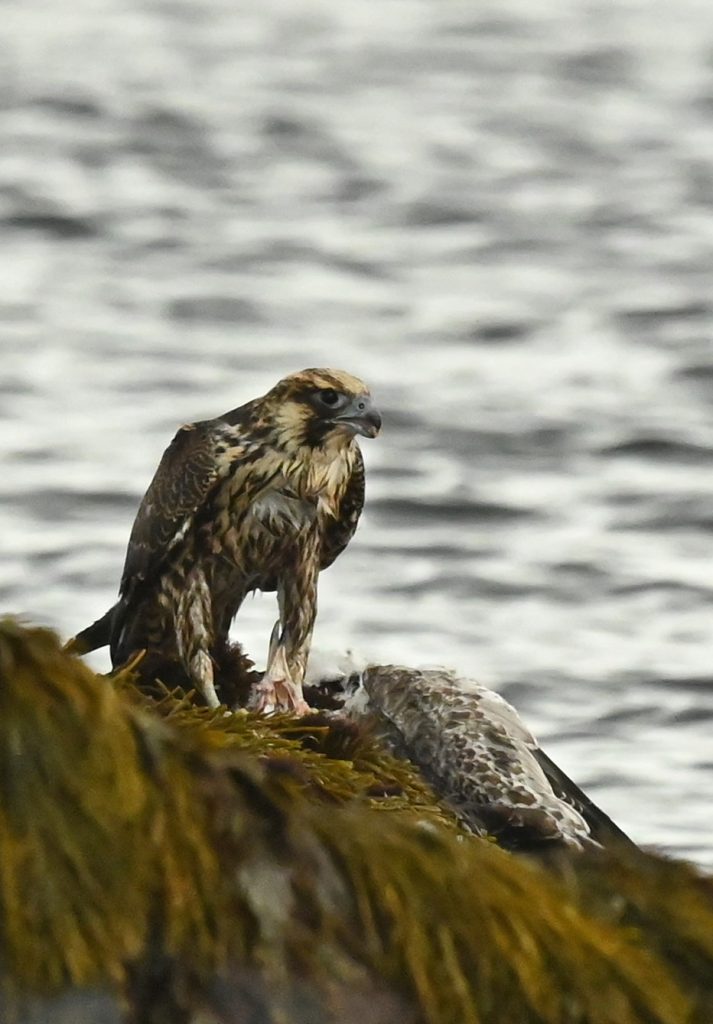
Look at this stunning view of the falcon with its prey. Photo by Bruce Conti.
The following day, Steve Mirick posted this interesting reply, along with a question of his own:
Remarkable photos Bruce! A Herring Gull is a huge prey item for the Peregrine Falcon. The “Arctic Peregrine Falcon” is a subspecies of the Peregrine Falcon (Falco peregrinus tundrius). Immature birds are identified by the pale buffy crown of the bird. This subspecies is the most common one seen in migration along the coast. Peak migration time for Peregrine Falcons is right now in early October. Here is a link to information about the subspecies.The local breeding population is different, but I’m not sure how. Possibly a mix of subspecies? Chris Martin, what do you think?
Chris Martin, NH Audubon’s emeritus raptor biologist, promptly replied to the Google Group with some intriguing information:
With the old anatum subspecies wiped out by the massive, continent-wide use of DDT (banned domestically in December 1971), Peregrine Falcon breeding and reintroduction efforts in the 1970s and 1980s relied on eggs from a variety of mostly captive falcons from all around the globe. Our current eastern US breeding population is multiple generations removed from those original reintroduced birds, but what genes work best in today’s environment is still being sorted out by differential reproductive success and survivorship. Natural selection and time are slowly working to shape a ‘new’ mid-latitude subspecies of eastern Peregrine Falcon. What we do already know is that most eastern US breeding Peregrines either migrate short distances (100-400 miles) or remain on breeding territories year-round, unlike their Arctic (tundrius) cousins who travel the entire length of the US east coast.
Enjoy this field note? Check out other field notes from Fall 2025!
- A Curious Eastern Bluebird Nest by Alison Rhodes
- A Congregation of Great Egrets by Karen Dudra
- Grouse Identification Puzzle by Kathryn Frieden
- A Hummingbird Named Hoglet by Evy Nathan
Want even more? Visit our “From the Field” page.