
Themes of the 2026 spring birding season include:
- A fantastic week of waterfowl birding along the Connecticut River valley in March.
- A remarkable shorebird fallout from the same area in May.
- A terrific day of coastal storm birding at Rye Harbor State Park in late May.
- A first state breeding record of Black Vulture.
- A preview of perhaps the next species to be discovered breeding in New Hampshire.
Spring birding in New Hampshire usually resembles a chronological run through the taxonomic charts, starting with geese in March and ending with warblers in May.
March
It was a particularly good season for goose diversity, with six species recorded, five within the space of a few days along the lower Connecticut River Valley–New Hampshire’s goose highway. Relatively high numbers of Snow Geese passed north through the valley mid-month, with several triple-digit flocks, including a high count of 280 birds recorded on March 16 by Joseph Sefter at Chickering Farm in Walpole. The much rarer Ross’s Goose sometimes travels incognito, hidden amongst flocks of the more common Snow Geese. This spring, at least five individuals were recorded along the Connecticut River valley from Walpole north to Charlestown, a remarkable datapoint given that the first state record was less than 20 years ago.
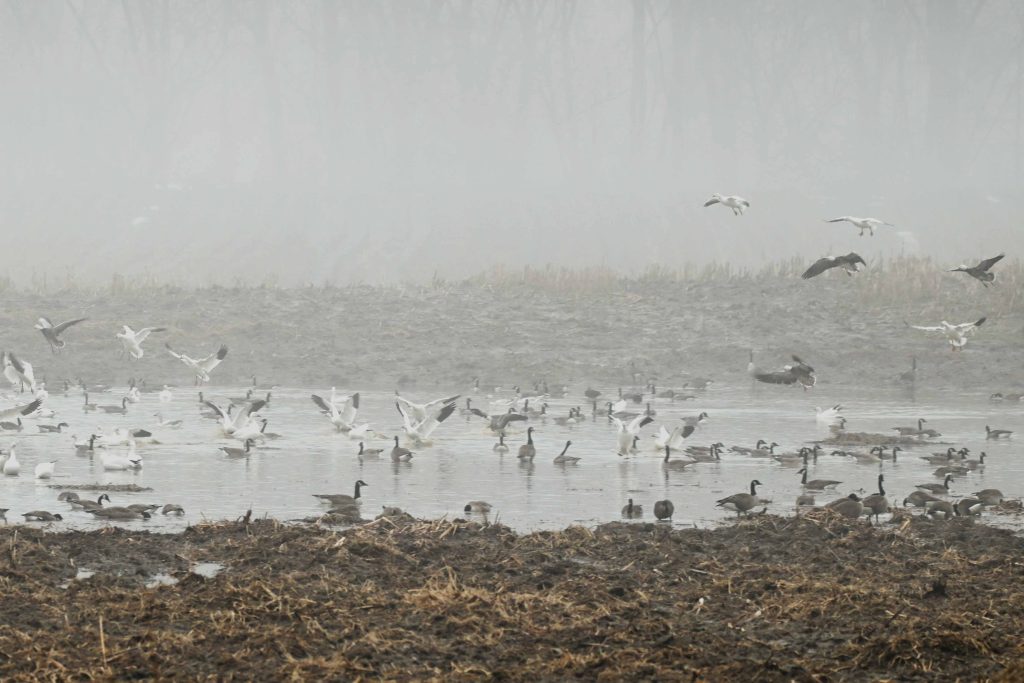
Snow Geese by Joseph Sefter, 3-16-2026, Chickering Farm, Walpole, NH.
In contrast to Ross’s Goose, Greater White-fronted Goose is trending in the opposite direction, and the species drew a blank this spring for the first time in more than 20 years. The Greenland race, which is the form most often recorded in New Hampshire, has seen a catastrophic global decline, with numbers down by about 50% (Fox et al. 2025). Birders generally consider rarity from a local perspective, and with fewer than ten records, the rarest goose this spring was the Barnacle Goose found by Donna Keller in Walpole on March 14, which stayed long enough to delight multiple observers You can read the full story of Keller’s wild goose chase here. A couple of Cackling Geese were also documented along the same stretch of river. If you missed the action this year, make sure to get out to experience mid-March Madness along the lower Connecticut River next spring.
Resisting the urge to move north, a stunning drake King Eider stayed along the New Hampshire coast from winter through spring, continuing into summer. More frequently found on Great Bay, a drake Eurasian Wigeon on the Connecticut River in Plainfield was an excellent find by Bernard Foy on March 18. Single Redheads were found nearby in Lebanon (March 24, Elaine Faletra) and Charlestown (March 17, Eric Masterson) and also on the Connecticut River. A Canvasback in Durham was the only unusual species of waterfowl reported from the Great Bay region (March 11, Marc Estes).
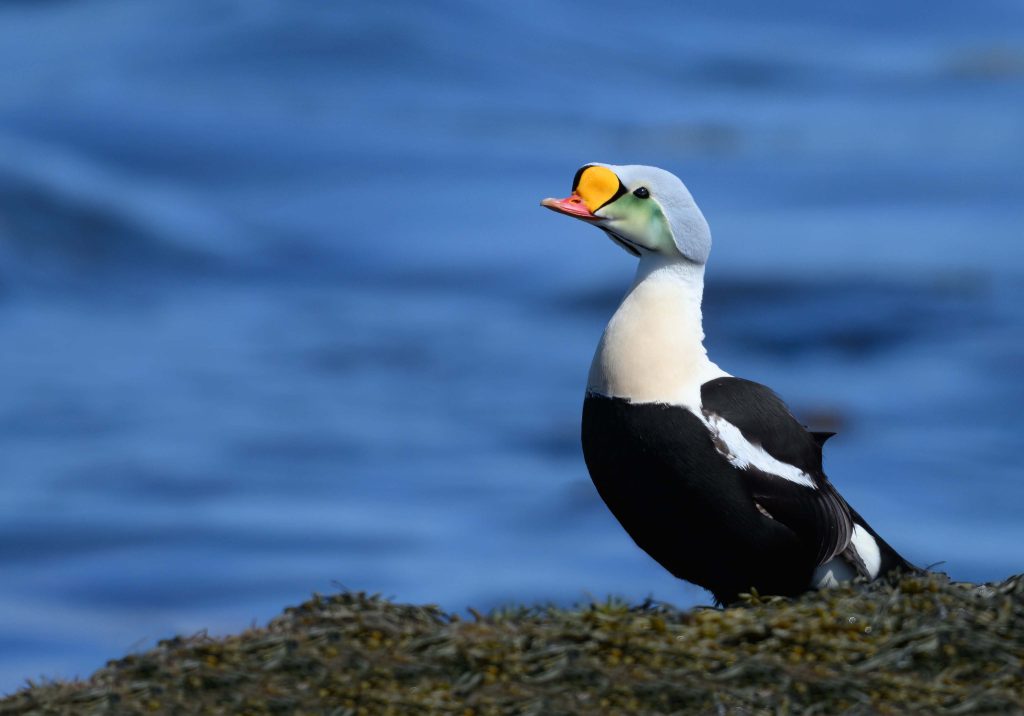
King Eider by Len Medlock, 4-28-2026, Rye, NH.
Caspian Tern is an early migrant relative to other tern species, but a bird first seen by Wendy Ward and Donna Keller on the Connecticut River on March 27 set a record early arrival date. A Lesser Black-backed Gull found by Jacob Rhodes in Concord on March 26 was the only record away from expected locations in the southeast coastal plain. Rough-legged Hawks were reported in early March from Lebanon, Concord, and Lyndeborough, and a Short-eared Owl was reported from Grafton County by Kyle Jones on March 14.
April
Different month, different haystack, different needle. If the March challenge was to pick out Ross’s Goose from amongst the Snow Geese, then April’s challenge came from the other side of the state, where birders had to search through large flocks of Glossy Ibis to pick out the very similar White-faced Ibis, with at least one bird present along the coast from late April through May. The first ones to manage this feat were Steve and Jane Mirick along with Ashton Almeida on April 20 at Huckleberry Lane in Hampton.
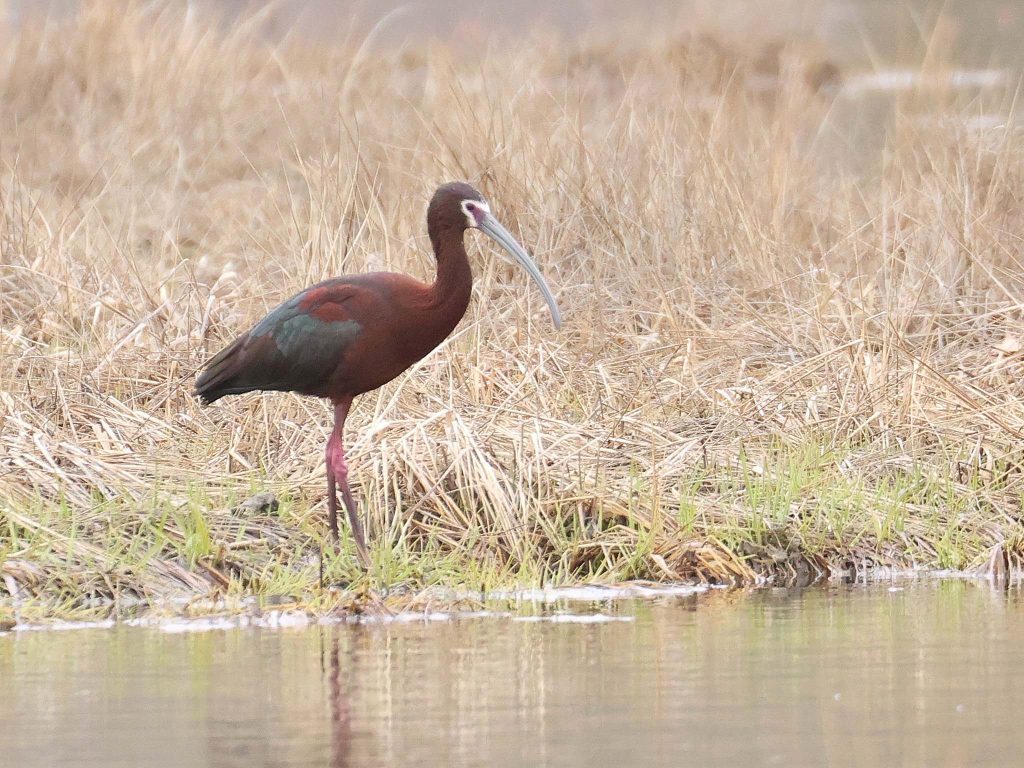
White-faced Ibis by Steve Mirick, 5-3-2026, Rye, NH.
A Western Cattle Egret found by Mara Palos standing on a roof in Newmarket on April 26 was the only record for the season. By contrast, Black Vultures are now too numerous to warrant mention, that is unless you find the evidence of breeding. Nate Marchessault documented New Hampshire’s first Black Vulture nest on April 27 when he inadvertently flushed an incubating bird from a cave in the Monadnock Region while searching for ferns. You can read all about this exciting discovery in Nate’s first person account.
Portending the shorebird extravaganza to follow, a Baird’s Sandpiper was found in Hinsdale on April 22 by Wendy Ward reappearing a few miles further north in Vermont’s Retreat Meadows the next day. This species migrates north through the central US and is an uncommon fall migrant in New Hampshire, with roughly a half-dozen juveniles recorded every year, but it remains exceptionally rare in spring, with this being only the third spring record in New Hampshire.
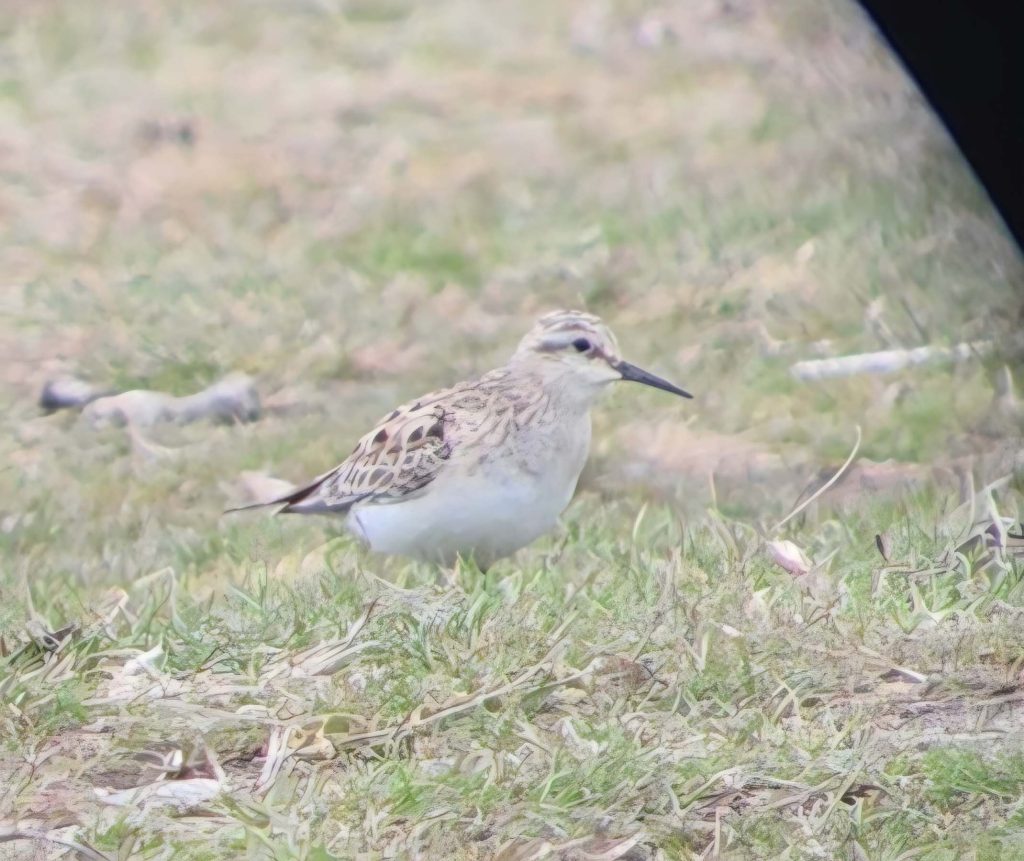
Baird’s Sandpiper by Wendy Ward, 4-22-2026, Hinsdale Setbacks, NH.
Multiple Caspian Terns were reported during the first half of April, especially from the Connecticut River Valley and nearby waterbodies, including four birds from Spofford Lake and three birds from Surry Lake. The species has become a more frequent spring migrant through the western part of New Hampshire in the last few years, perhaps a consequence of the increased number of birds breeding on Lake Champlain. By contrast, there was only one spring report from the coast.
A large flock of 60 Bonaparte’s Gulls was seen at Elm Brook Recreation Area in Hopkinton on April 3, a notable number, though the species is a regular spring migrant through the interior of the state. Laughing Gull by contrast is much more closely tied to the coast, with the species recorded inland fewer than 20 times. A bird seen by Matt Tarr’s group in Concord on April 10 was an excellent record.
May
A sighting of a Black-crowned Night Heron in Success by Levi Burford on May 7 was a rare report from Coos County. Numbers of Little Blue Herons, present along the coast since mid-April, increased so that there was a minimum of three birds seen at any time by the end of May.
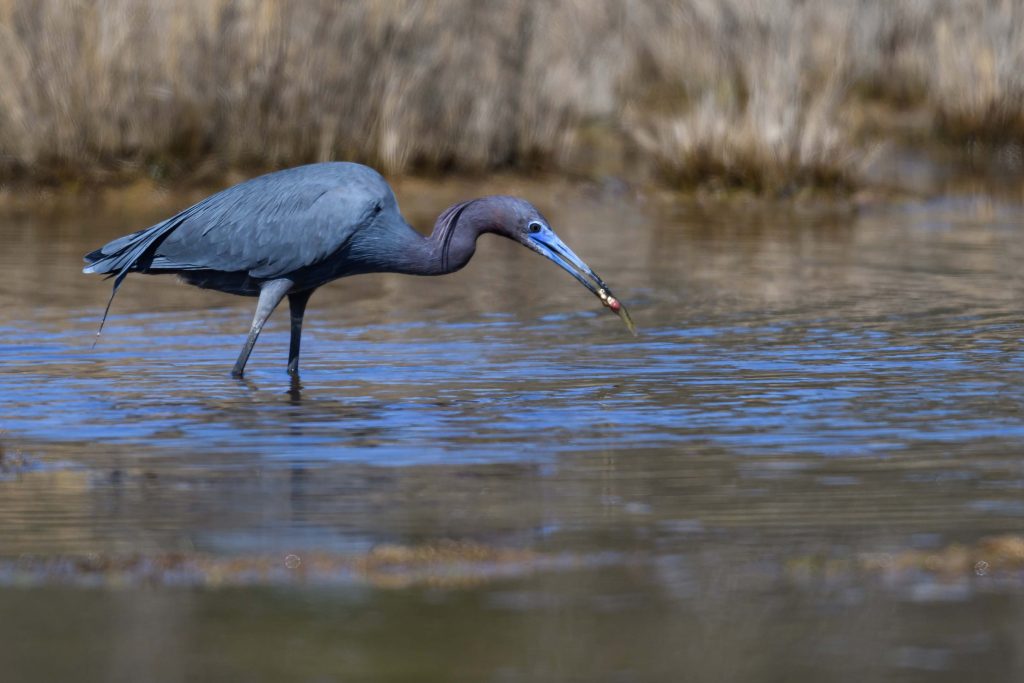
Little Blue Heron by Len Medlock, 4-28-2026, Rye, NH.
Glossy Ibis have increased along the coast thanks to the reestablishment of a breeding colony on nearby Appledore Island in Maine; however, it would be a stretch to credit this colony with the upsurge of sightings in interior New Hampshire. Clearly something regional is happening. This spring, in addition to single birds recorded in Peterborough and Concord (the latter in April), a remarkable flock of 20 birds was photographed in a Hopkinton field on May 15 by Daniel Calder and Donna Ellis.
Steve and Jane Mirick found a pair of Wilson’s Phalaropes in Hampton on May 18, the first spring record since 2021. Heat haze made photography difficult, but Leo McKillop still managed to get some good photos.
The shorebird headlines this spring, however, came from New Hampshire’s “western coastline” in late May, when an extended weather system collided with migrants aloft to deliver a shorebird fallout for the ages. A total of 17 species were documented from the Connecticut River flyway, from Northfield in Massachusetts a few miles south of the border north to Charlestown (18 species if you include the Baird’s Sandpiper seen in April). The pattern of occurrence showed the shorebirds were clearly following the river valley north, and for the purposes of this narrative, I am including all records from the river channel and the immediately adjacent fields in both New Hampshire and Vermont. Highlights included eight Hudsonian Whimbrel and six Red Knot in a cornfield on the Vermont side of the river on May 24, with one Whimbrel seen again in Walpole on May 29. A spectacular flock of 39 Black-bellied Plovers rode out the storm in a Walpole cornfield, with smaller numbers reported from Charlestown, Surry, Concord, Laconia, and Strafford. An equally astonishing flock of more than 100 Dunlin put down in the aforementioned Vermont cornfield, with smaller numbers reported from Surry and Charlestown. Short-billed Dowitchers were also grounded in high numbers, but with a more widespread distribution compared to the other impacted species.
In addition to numerous smaller flocks along the Connecticut River Valley, 112 Short-billed Dowitchers were documented from Magill Bay in Dummer by Paul and Lori Charron. You can read about the Dummer birds in Janice Landry’s field note. 140 Short-billed Dowitchers were reported by Kyle Wilmarth at World End Pond in Salem, which also hosted a first site record of Ruddy Turnstone. Five Ruddy Turnstones were also reported from Herrick’s Cove on the Vermont bank of the Connecticut River on May 30. To put the fallout in perspective lest you think the phenomenon was remarkable only for being inland, a report of two Hudsonian Whimbrel from Seal Rocks in Rye on May 22 was the first New Hampshire spring record since 2016 (Scott and Heather Mardis) and more Red Knots were recorded in this one event on the Connecticut River than throughout the whole state last year.
The effect of weather on shorebird migration is more obviously seen in the interior of New Hampshire, where many species of shorebirds are generally rare. It’s harder to gauge along the coast, where multiple species are plentiful during migration regardless of weather conditions. Birders at Rye Harbor State Park on May 30 experienced a tremendous morning of storm birding as a series of rarities stopped into the harbor to seek brief respite from the storm, including a Little Gull, two Black Terns, and seven Arctic Terns, while a Leach’s Storm-Petrel and five more Arctic Terns were seen from Hampton Harbor on the same day.
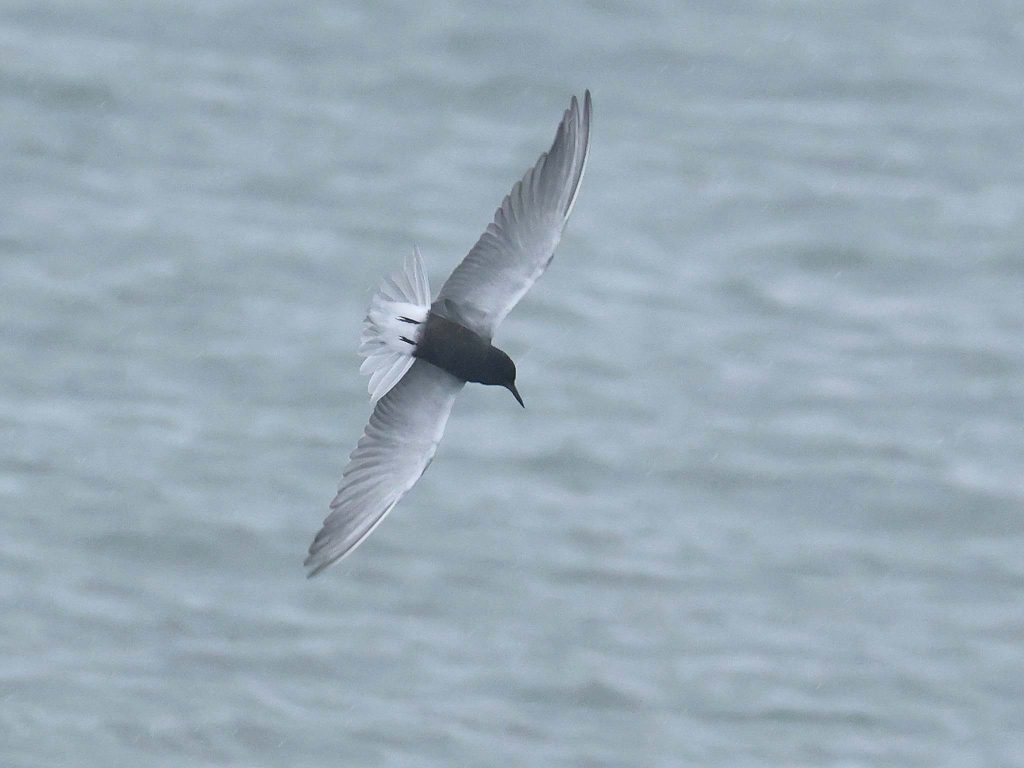
Black Tern by Steve Mirick, 5-30-2026, Rye Harbor State Park, NH.
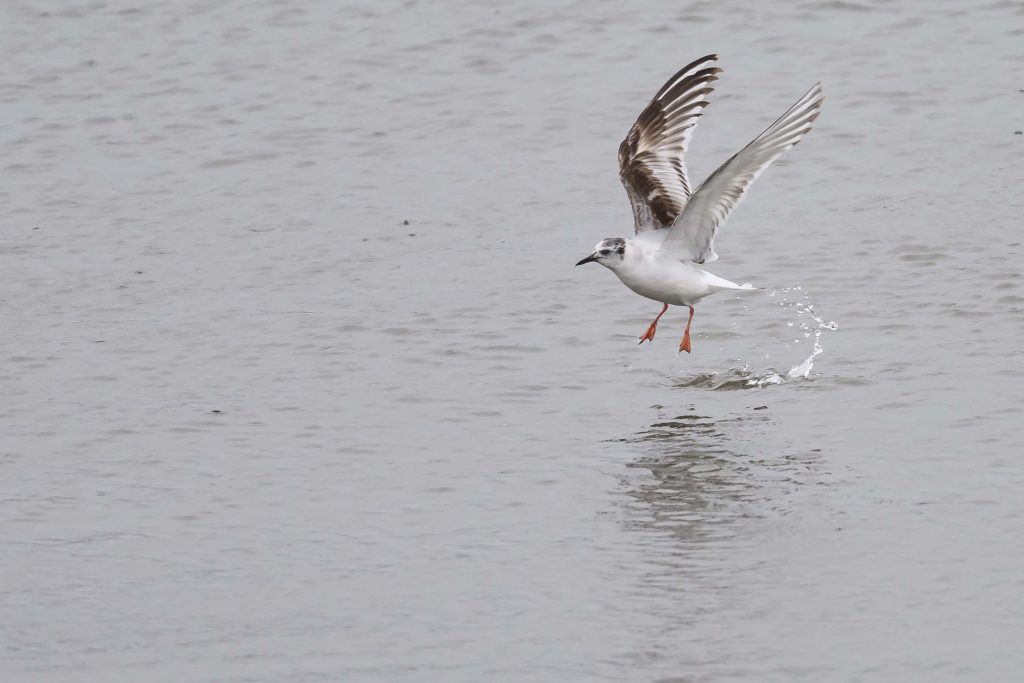
Little Gull by Len Medlock, 5-30-2026, Rye Harbor, NH.
A Parasitic Jaeger was photographed on Jeffreys Ledge on May 28, while three Atlantic Puffins were seen from Seavey Island on May 24 and a Thick-billed Murre was seen from Rye Harbor State Park on May 30. Presumably, it was the same recurring Bridled Tern that put in a brief appearance at the Seavey Island tern colony on May 9 for the third successive year before returning to stay later in the month. The species is so visually distinctive that a group of birders on adjacent Star Island were able to see (and photograph) it at a distance of almost a mile!!! Maine had “Troppy” the Red-billed Tropicbird, which returned for almost 20 years to islands off mid-coast Maine. If the Bridled Tern continues to return to Seavey each year, we just might have to give it a name.
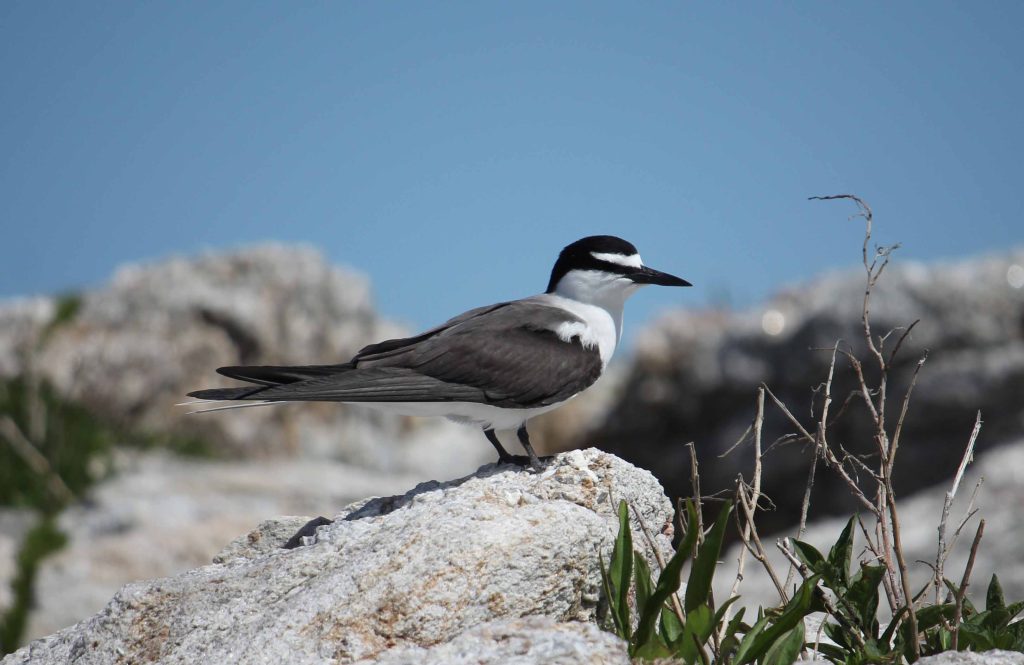
Bridled Tern by Skylar Cook, 5-22-2026, Isles of Shoals, White and Seavey Islands, Rye, NH.
A remarkable seven White-eyed Vireos were recorded in New Hampshire this spring, including two birds in Concord, one in Exeter, two in Odiorne Point State Park in Rye, one on Star Island, and one in Seabrook Town Forest. There was some discussion as to whether the Odiorne Point birds were attempting to nest, as their presence spanned a month, with the first bird showing up April 18, later joined by a second bird on May 9. White-eyed Vireos breed in southeastern Massachusetts, and the species is expanding its range into western parts of the state. Their occurrence in New Hampshire as a spring migrant is increasing from an average of a bird every other spring to becoming annual within the last five years. Based on the current trend, I recommend familiarizing yourself with this species’ song.
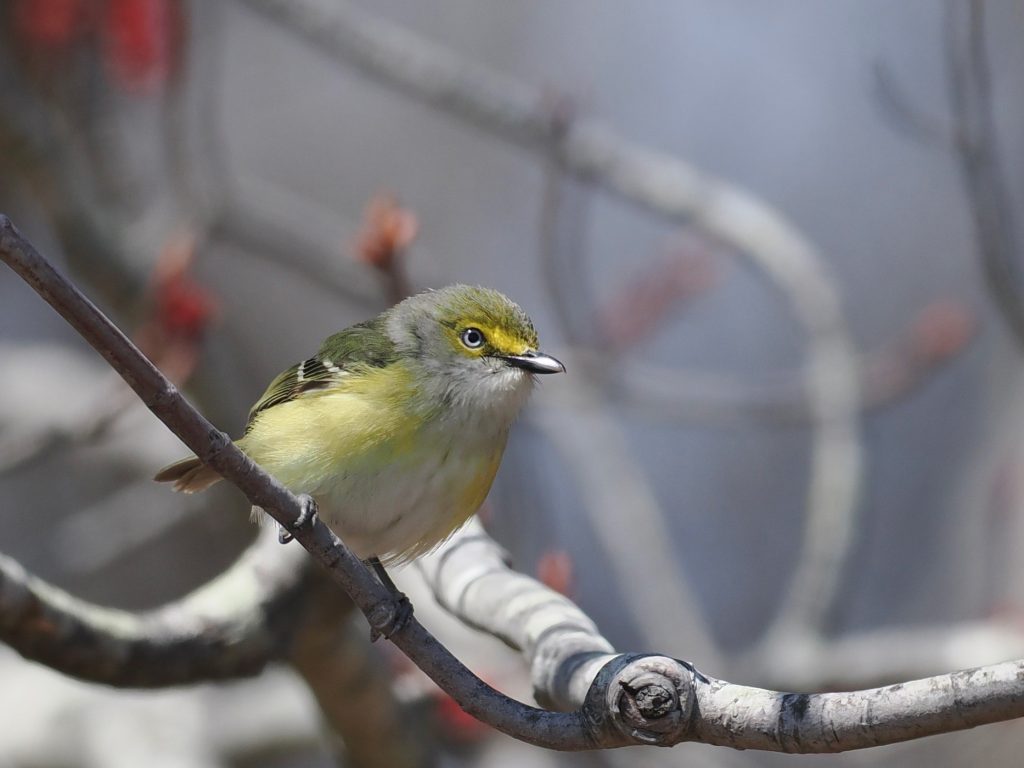
White-eyed Vireo by Jim Sparrell, 4-18-2026, Odiorne Point State Park, Rye, NH.
Three Yellow-breasted Chats were documented from Star Island, Portsmouth, and Concord. Sam Walsh photographed a Yellow-throated Warbler at his Sanbornville feeders on May 13. A Hooded Warbler in Old Monson Village found by Deborah Gebhardt delighted multiple observers from May 23 through the end of the month, with two more birds recorded mid-month in Exeter (May 10, Kirk Elwell) and Odiorne State Park (May 17, Brian Tucker).
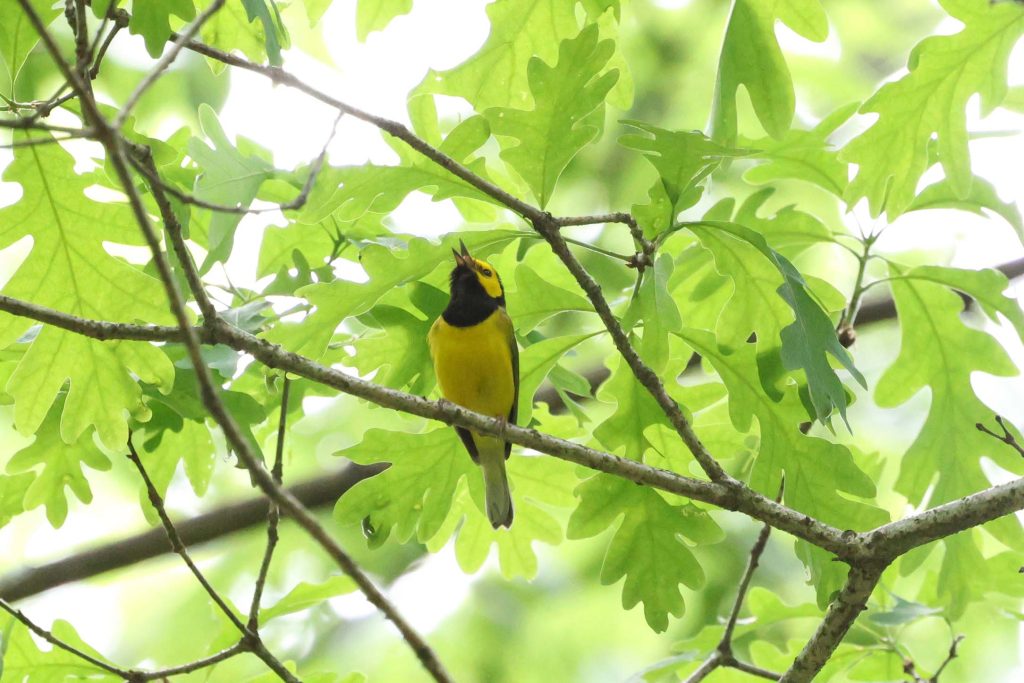
Hooded Warbler by Donna Ellis, 5-28-2026, Old Monson Village, Hollis-Milford, NH.
A Cerulean Warbler returned to a known site in Hinsdale from May 13 through the end of the month, and a spectacular male was seen and photographed by multiple observers on Star Island on May 11, a first island record. Two Prothonotary Warblers were recorded, a male in Hudson on May 3 by Laura Pagano and a second bird in Epping on May 17 by Paul Kursewicz. Orange-crowned Warblers were reported from Seabrook and Sandwich, with another more surprising record from the north end of the state in Pittsburg, all three in early May.
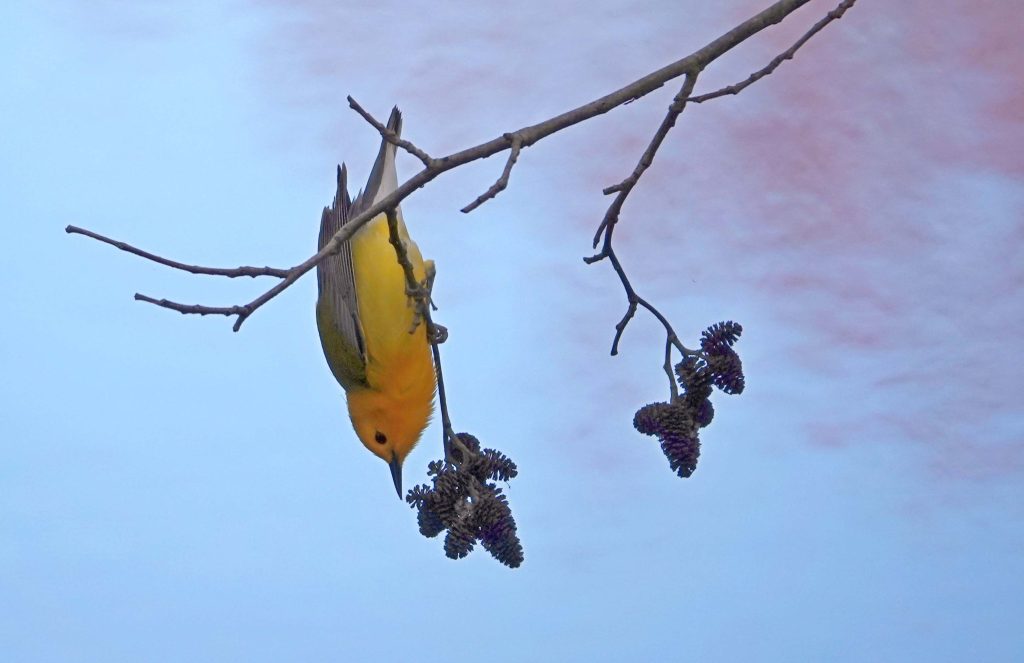
Prothonotary Warbler by Sophia Wong, 5-3-2026, Benson Park, Hudson, NH.
Two rare tanagers showed up in the state in early May. A Western Tanager was found by Cadi Smith in Brentwood on May 3, and a female Summer Tanager was found by Jackie Nicoletti and photographed by Cole Parker on Star Island on May 10. What better bird than Painted Bunting to close out a season review. Fortunately, it seems someone, somewhere in New Hampshire, finds a stunning male in their yard every spring, and this year Rebecca Elliott won the Painted Bunting lottery when she photographed one through her window in Rindge on May 21. You can read more about her experience in the Field Notes.
References
Fox, A., A. Walsh, D. Stroud, I. Francis, D. Norriss, H. Wilson, S. Kelly, A. Schindler, and M. Weegman. 2025. Can the Greenland White-fronted Goose be saved? British Birds 118: 431–445.