
All photos are by Kathryn Carson, taken in April 2026, at her home in Freemont, NH.
One morning in late April, my husband came in from working on his latest outdoor project. “There’s a Cooper’s Hawk in the yard!” he said, with noticeably more excitement in his voice than there would have been if he had been reporting a goldfinch or a chickadee. I took a look, and sure enough, there was a hawk on a low branch of a tree on the edge of the lawn. I grabbed my camera and went out to take a few pictures. The hawk was actually not a Cooper’s but a Broad-winged, given away by the broad white stripe across the tail, and it didn’t seem to mind me. I went back inside, worrying about the lives of my feeder birds that were only a few wingbeats away, and hoping the hawk would fly away. He did for a time. Later in the afternoon, I noticed him on a different branch in a different tree, but he looked darker. He still wasn’t interested in the feeder birds, but his eyes were diligently scanning the yard. He looked very intimidating in that hawk way. As the day went on, I glanced out from time to time and almost always saw the hawk on one branch or another. To me he looked fierce and dangerous, but the feeder birds seemed unperturbed. My hope was that he would be gone in the morning, and I would not awaken to a pile of feathers and bones on the deck.
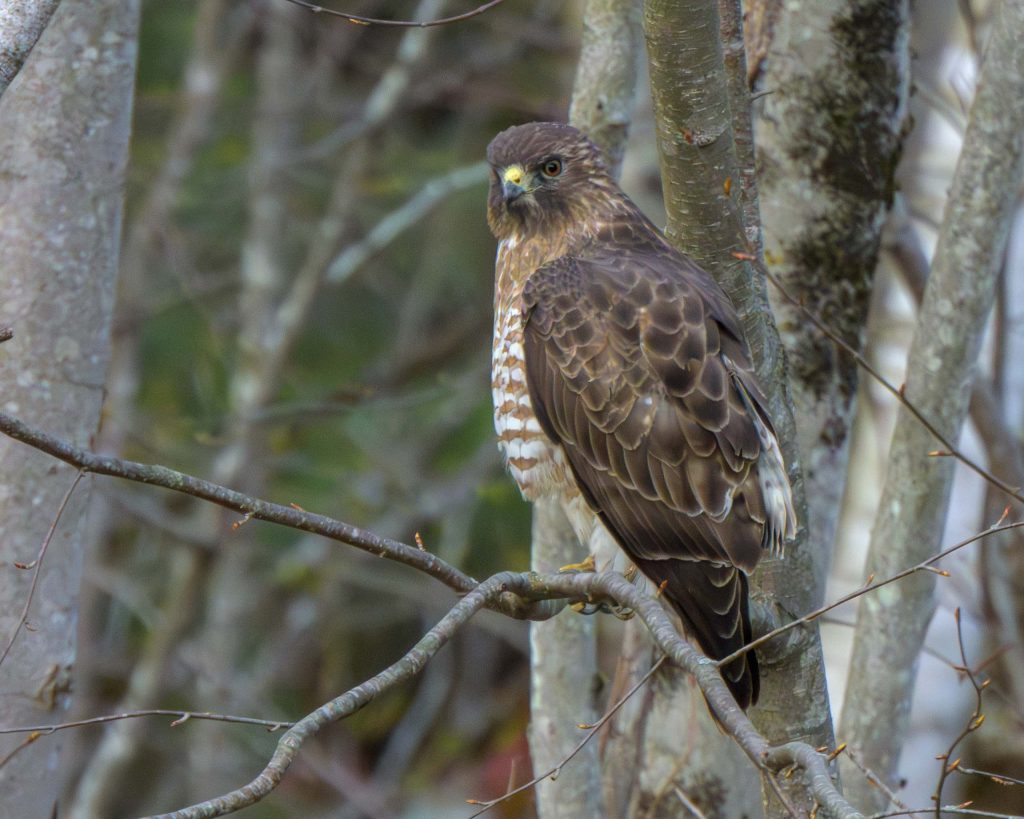
The Broad-winged Hawk by Kathy Carson. Notably darker than the one she saw earlier in the day.
My first thought the next morning was the hawk. Imagine my surprise when I looked out the window and saw two of them sitting in close proximity to each other on the same branch. That explained the color differences I thought I had imagined. The pair continued to fly in and out of the yard, always ending up on a branch in one tree or another that marked the border between the lawn and the woods. They were usually not together. Finally, as I watched the one closest to the deck, he lifted off the branch with what looked like mighty purpose. This is it, I thought. There’s going to be one less finch. As I watched, he swooped down to the grass and snagged…. a worm! What a shock! Time after time over the next few days, I watched the pair repeat their attacks. I did a little research and consulted with a few experts, and indeed the Broad-winged Hawk is an opportunistic eater who may eat small mammals, amphibians and reptiles, very small birds such as nestlings, and worms! The worms in my yard didn’t have a chance. They were doomed.
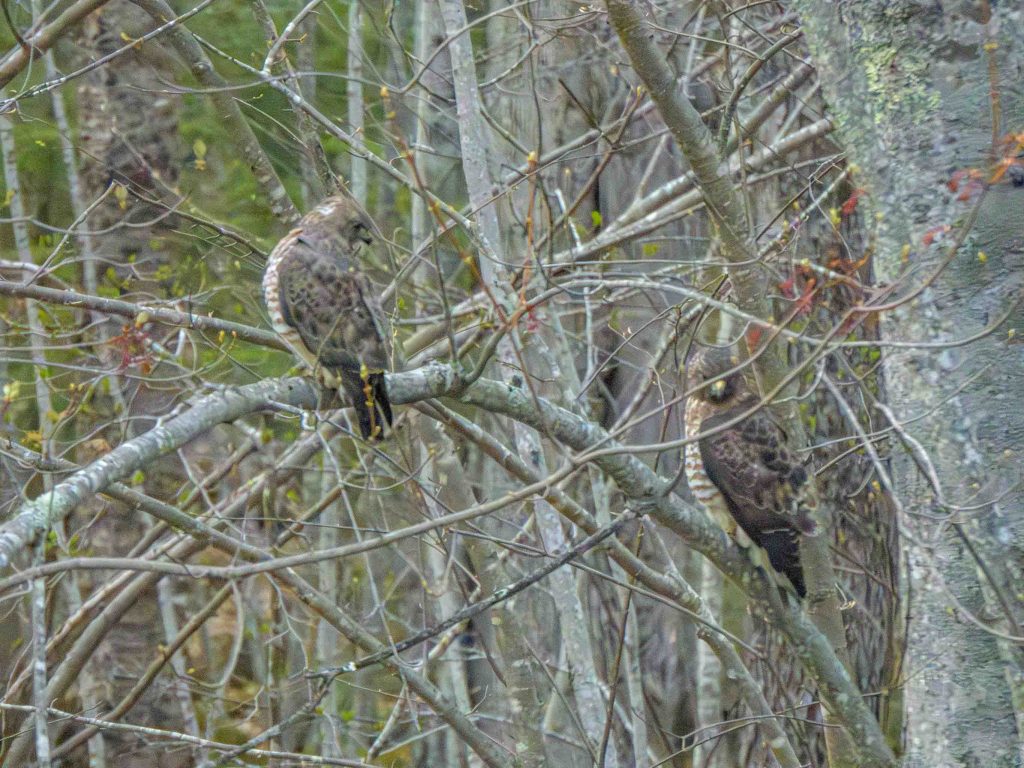
The Broad-winged Hawk pair.
Over the next nine days, we watched the Broad-wingeds repeat this hunt, as they expanded their territory to include the front yard and the neighbor’s yard across the street. They came and went independently from each other but got together to mate a few times on the branches of a big oak in our side yard. The darker one was the female. As far as I could see, they continued to eat nothing but worms but were becoming irritated by my observations of these attacks. They began screeching at me as soon as I came outside.
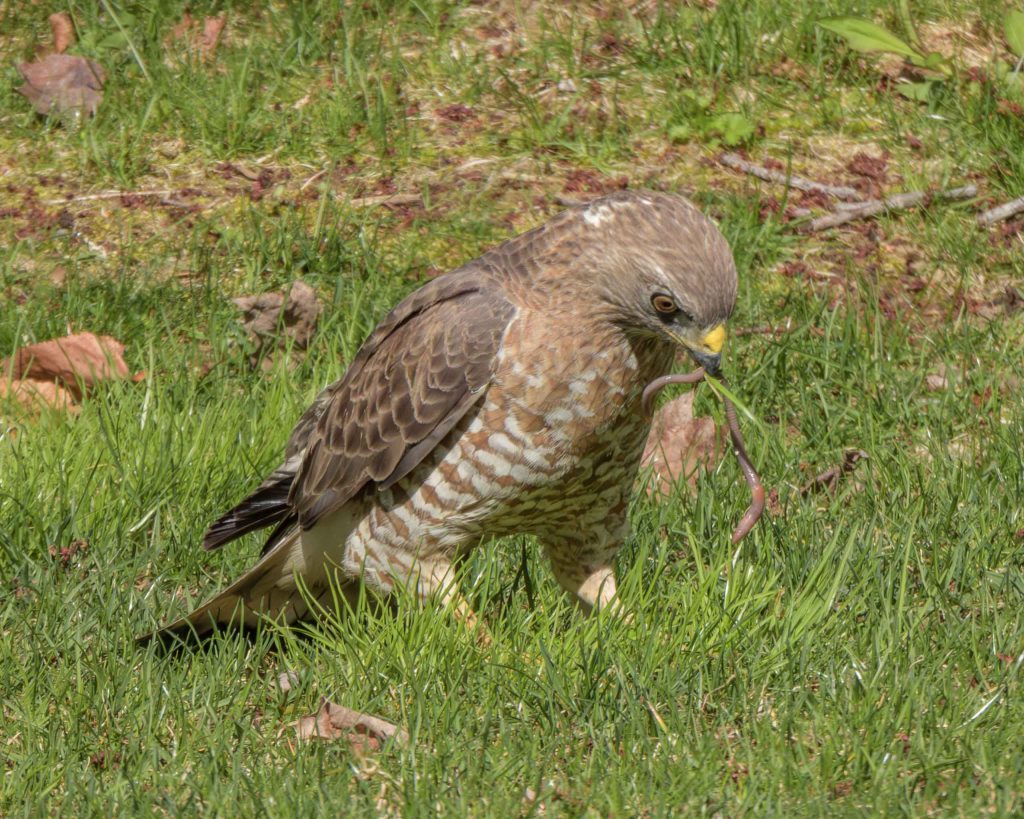
A Broad-winged Hawk captures a worm!
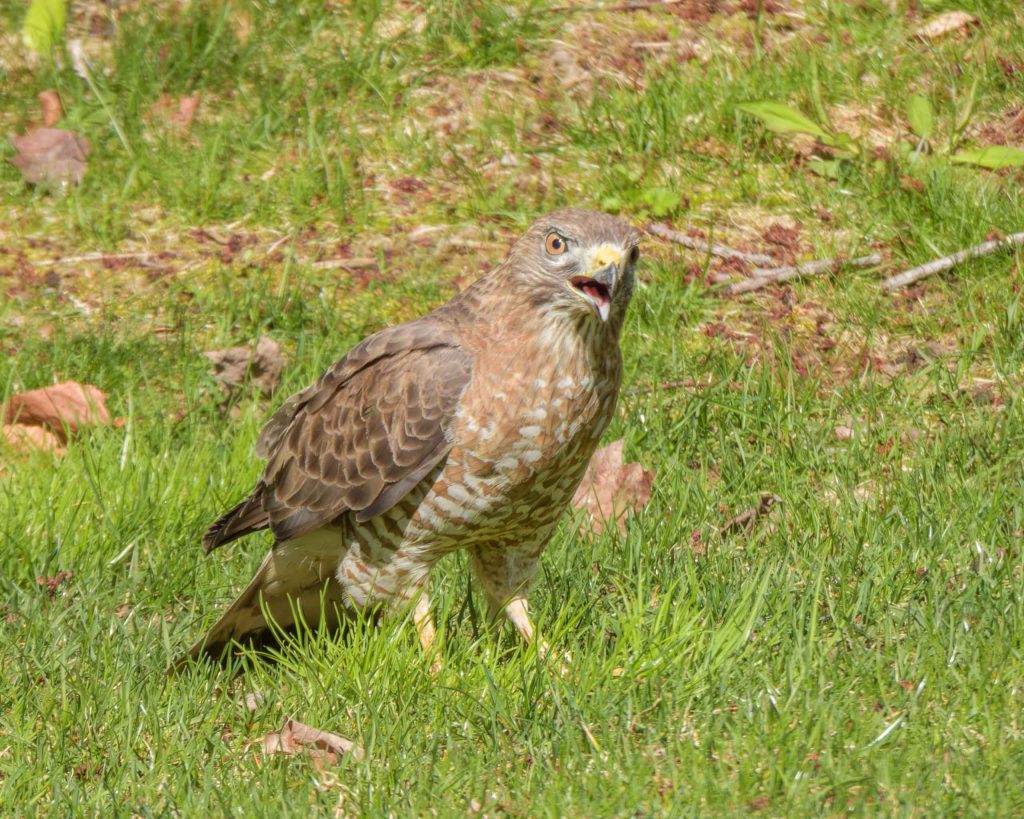
The Broad-winged Hawk expresses its distaste with being watched by Kathy.
Eventually there was a day we didn’t see them anywhere. They returned sporadically for a few more days, but not for long periods. One day, I heard that familiar whistle and looked up to see them soaring. We haven’t seen them since. I hope there are still some worms for the robins.
Enjoy this field note? Check out other field notes from Spring 2026!
- Bohemian Rhapsody by Kurk Dorsey
- Lawrence’s Warbler by Tony Baldasaro
- American Herring Gull Eats a Snake by Kathryn Frieden
- Season of the Ticks by Cameron Johnson
- Orchard Oriole in Coos County—Again! by Lori Charron
- The Little White Bird by Cameron Johnson
- Painted Bunting—a Random Rare Sighting by Rebecca Elliott
- Short-billed Dowitchers in Dummer by Janice Landry
Want even more? Visit our “From the Field” page.