
Reveal Answer
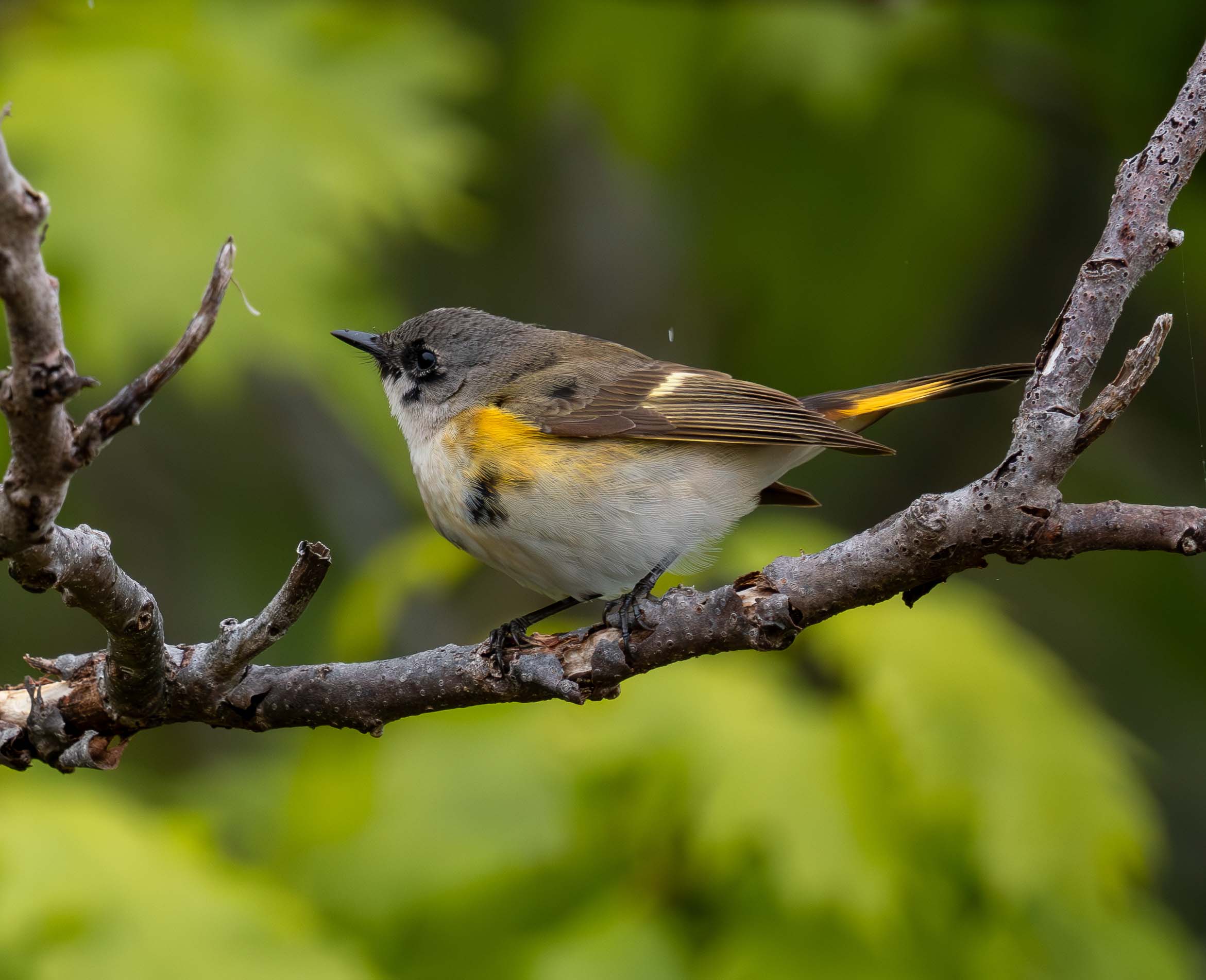
This bird is a male American Redstart, hatched during the summer of 2024. In spring 2025 (when this photo was taken) it would be considered a second-year (SY) male. Most warblers are sexually dimorphic, with males showing more vibrant plumage than females, and that is definitely the case with this species.
Immature American Redstart males, however, are often mistaken for females, but in this case, there are enough hints to let you know what you are looking at. Notice the darker feathering beginning to appear in the plumage. A female would not have those markings.
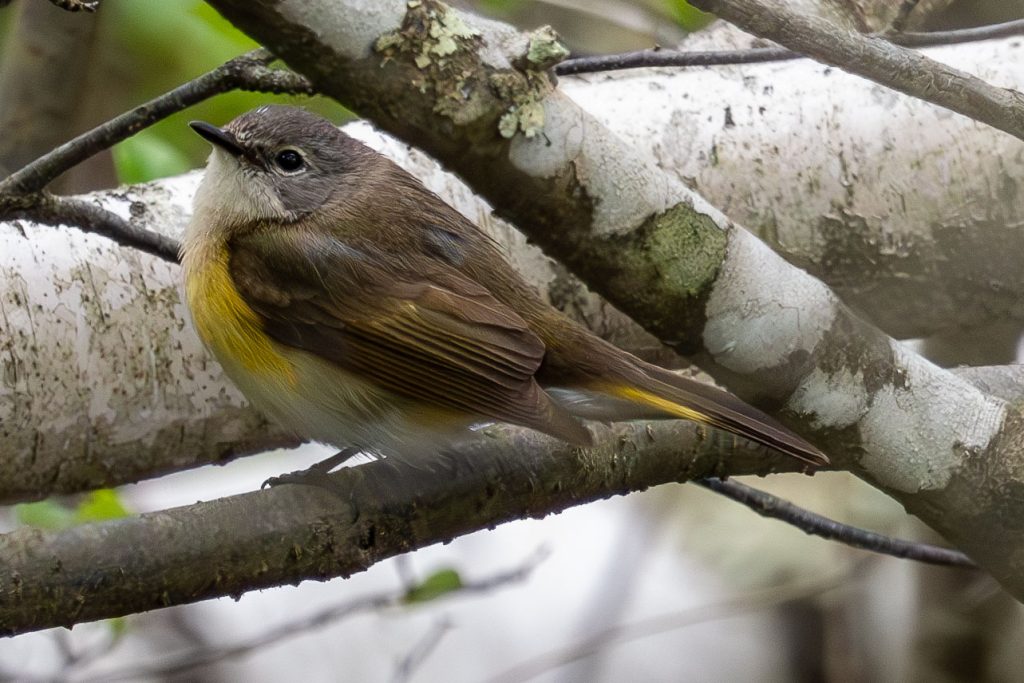
Female American Redstart by Pam Geiger.
If the male returns to New Hampshire this year (Spring 2026), it will have undergone a dramatic transformation, showing the bold black and orange plumage typical of an adult male American Redstart. Bird banders would classify that plumage as after-second-year (ASY). Females, by contrast, retain their yellow-and-gray plumage throughout life, though adult females can appear slightly brighter than younger birds.
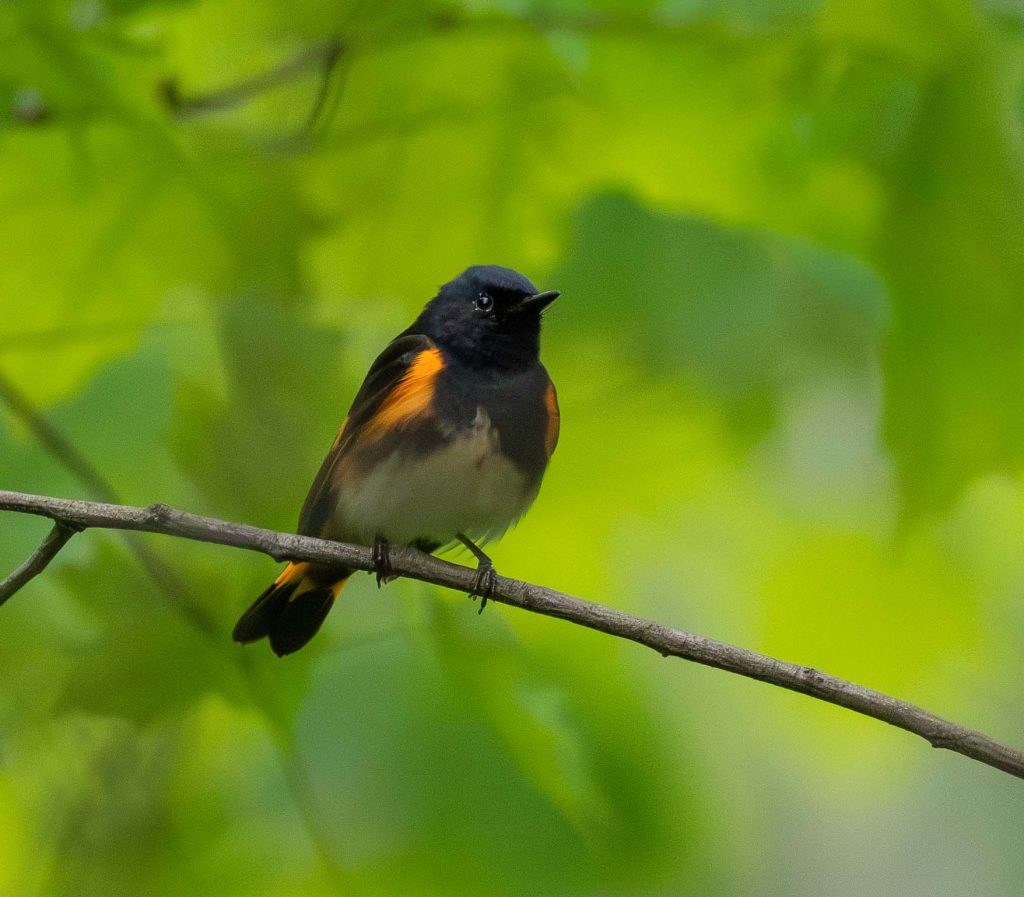
American Redstart male in definitive plumage by Pam Geiger.
Now, can you think of a warbler or two that are not sexually dimorphic?
Editor’s Note: To learn more about the terms for aging birds (e.g. SY and ASY) the McGill Bird Observatory provides an excellent introduction.