
Overall, the fall season was characterized by dry, mild weather, with moderate drought persisting through much of the season and leaving water levels unusually low. Without the strong weather systems that often concentrate migrants, many birds passed through the state with little fanfare. Even so, birders enjoyed an outstanding fall highlighted by several remarkable rarities.
Top Rarities
Without a doubt the most notable report from the fall season was a juvenile Cuculus cuckoo, almost certainly a Common Cuckoo, that was photographed by Tori Simpson-Tucker on November 21 at the South Street Cemetery in Portsmouth. This Eurasian species has only been documented a few other times in eastern North America. Four records exist in eBird. Remarkably, one of these records came about a month earlier when one showed up on Long Island, New York!
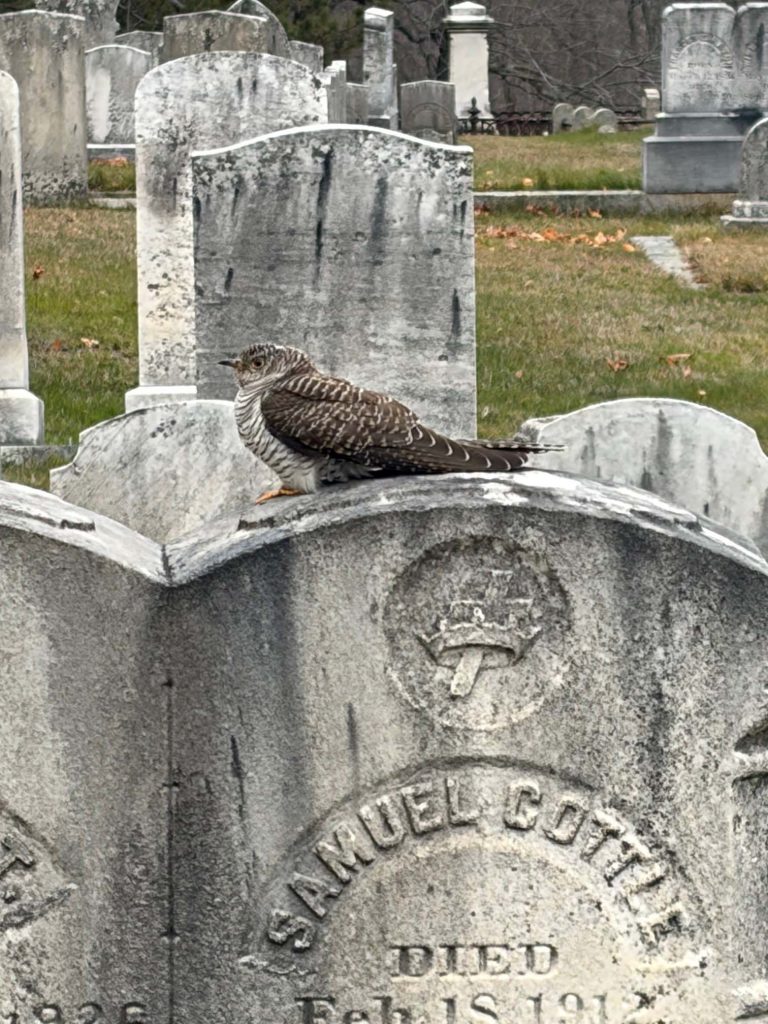
Common Cuckoo by Tori Simpson-Tucker, 11-23-2025, Portsmouth, NH.
Although the Common Cuckoo stole the show, several other birds from the fall season also excited the birding community:
A Trumpeter Swan photographed on the Magalloway River in Errol on November 6 by Jessica Dufour-Champagne was only the second record for the state. This species has expanded its range eastward as the result of an extremely successful reintroduction program in the Great Lakes.
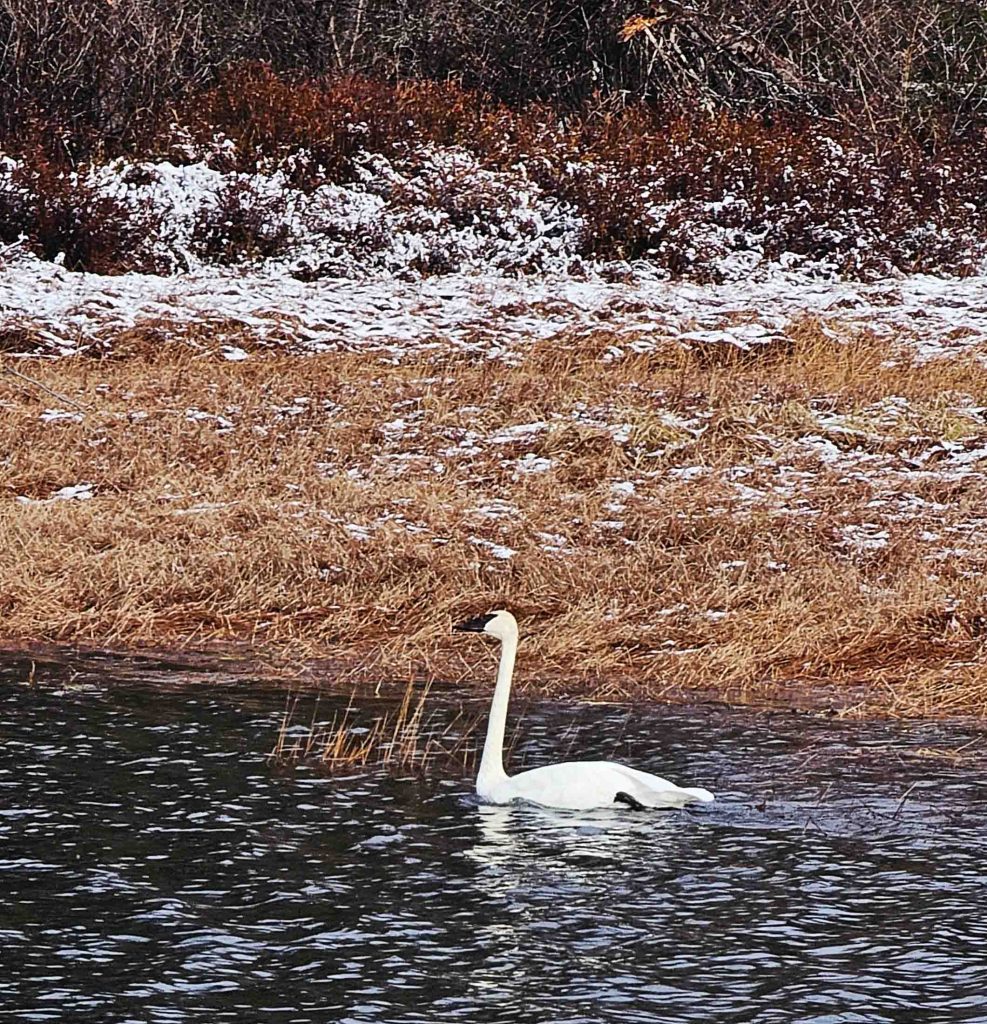
Trumpeter Swan by Jessica Dufour-Champagne, 11-9-2025, Errol, NH.
A Bell’s Vireo found by Brett Hillman on November 3 that spent several days at Odiorne Point State Park in Rye was only the fourth state record. Although the bird spent much of its time skulking, many people were able to see this southwestern rarity. The most recent record was also at Odiorne Point State Park back in 2009.
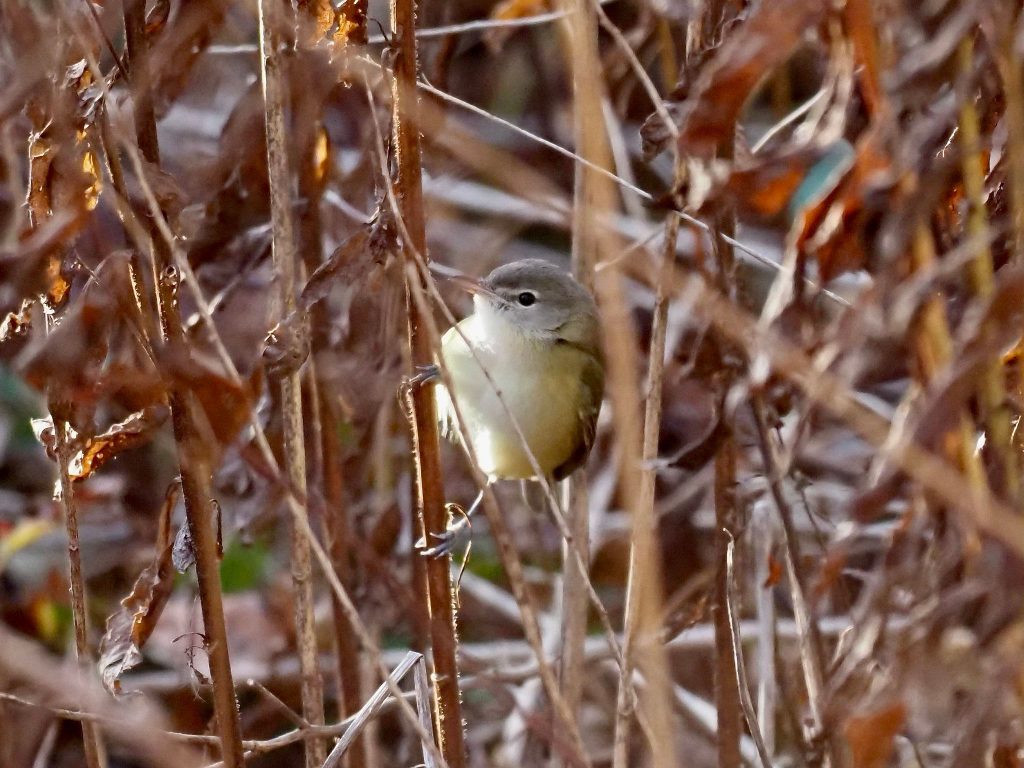
Bell’s Vireo by Jim Sparrell, 11-7-2025, Odiorne Point State Park, Rye, NH.
Swallow-tailed Kite reports from Marlow on the first and second of August and from Andover on August 10 were likely the same individual. Swallow-tailed Kites have expanded north and in recent years have been reported almost annually. Indeed, there was another record from near Concord in July 2025! Swallow-tailed Kites are now suspected of breeding on Cape Cod with six reported together in 2025.
A Loggerhead Shrike found by Magill Weber at the Exeter Wastewater Treatment Plant on August 3 was the fourth in the state since 2020. In the preceding 30 years, there had been only a single state record. Since 2003, captive-bred Loggerhead Shrikes have been released in Ontario, and perhaps these New Hampshire visitors are the fruit of this recovery effort. Hopefully, this means there will be more to come.
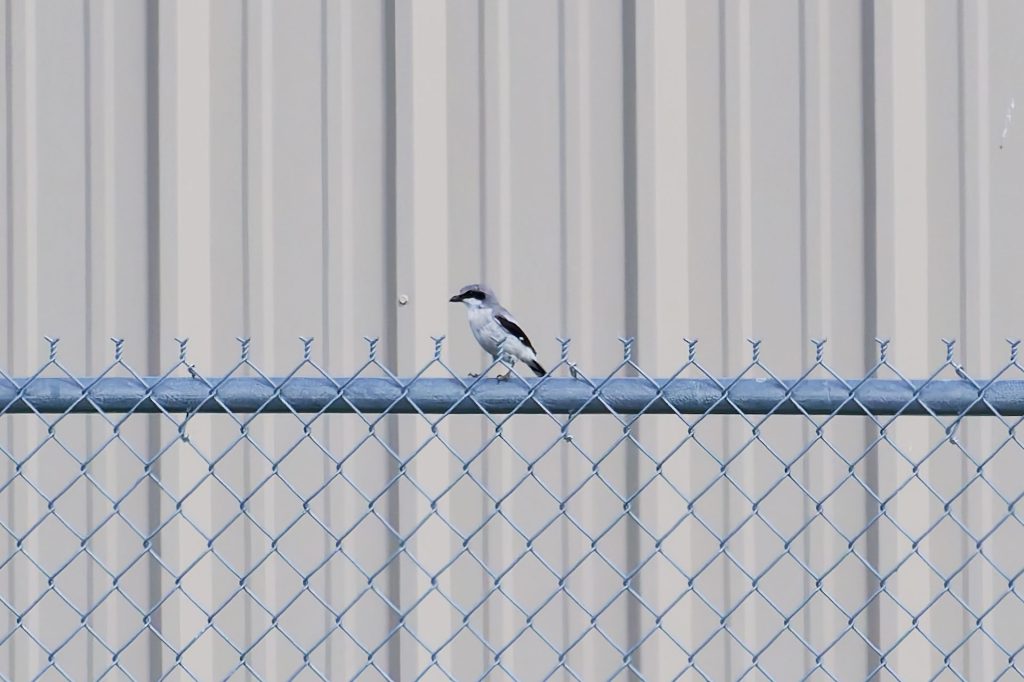
Loggerhead Shrike by Leo McKillop, 8-31-2025, Exeter Wastewater Treatment Plant, NH.
A Brown Booby photographed on Square Rock in the Isles of Shoals on September 29 by Annie Brown is yet another species that has increased in the northeast. This sighting represents the third record for the state and is part of a larger northward expansion of the species across its entire range, as it becomes more common throughout the continental US.
The LeConte’s Sparrow found by Steve Mirick on October 4 at Goss Farm in Rye was the fifth record for the state since 2018, and seventh overall. Two of these records have come from Goss Farm and another two have come from Woodmont Orchard in Hollis. These are perhaps the two best sparrow hotspots in the state! Unlike the other rarities that have been showing up more frequently, it seems this one is most likely the result of birders’ improved ability to find the species, as its distribution hasn’t changed elsewhere.
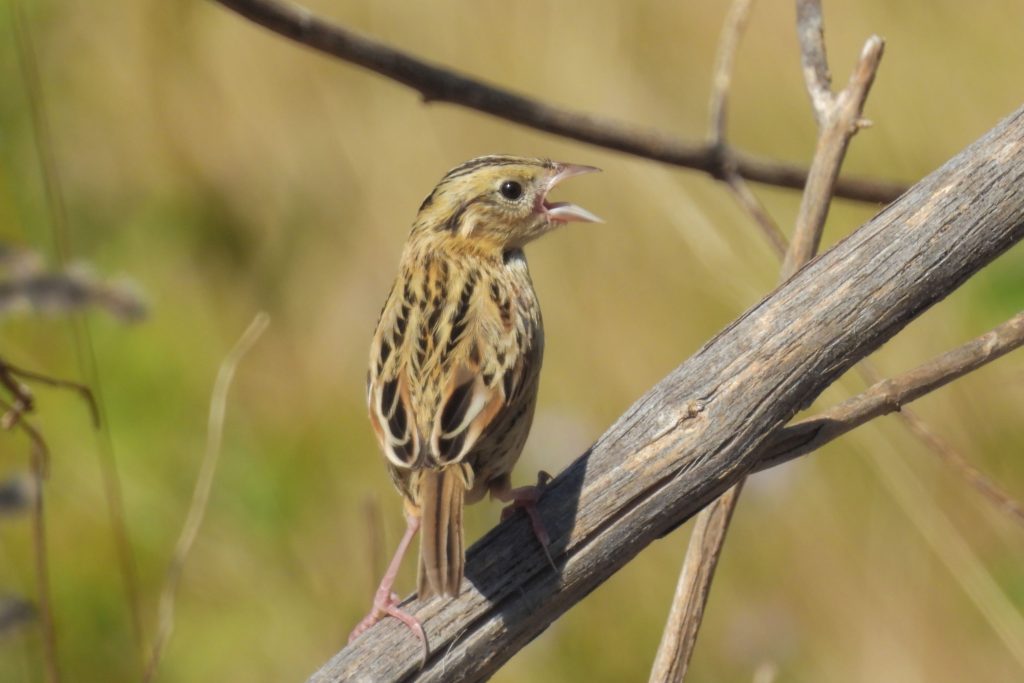
LeConte’s Sparrow by Donna Ellis, 10-6-2025, Goss Farm, Rye, NH.
The Bridled Tern that was seen during the summer season on White and Seavey Islands in the Isles of Shoals continued until August 1, just making it into the fall season This is likely the same bird seen there during the previous summer.
An American Avocet photographed by Alison Rhodes near Odiorne Point State Park in Rye on September 14 was the first record since 2019 and only the seventh record since 2000. Unfortunately, nobody was able to relocate it.
Western Kingbirds are less than annual, but somewhat regular in the state with five records in the past ten years. Unfortunately, kingbirds are well known for their brief stays, and one photographed by Donna Ellis on October 25 at the Elm Brook Recreation Area in Hopkinton was unable to be relocated.
Cave Swallows have developed a highly predictable occurrence in New England following a very specific weather sequence. Typically, several days of strong southwesterly winds push Cave Swallows into the Great Lakes in November. When those winds shift to the northwest, the birds are then pushed toward the Atlantic coast. The two records from this fall, one found by Dylan Jackson on November 8 and four found by Leo McKillop on November 10, fit this pattern perfectly.
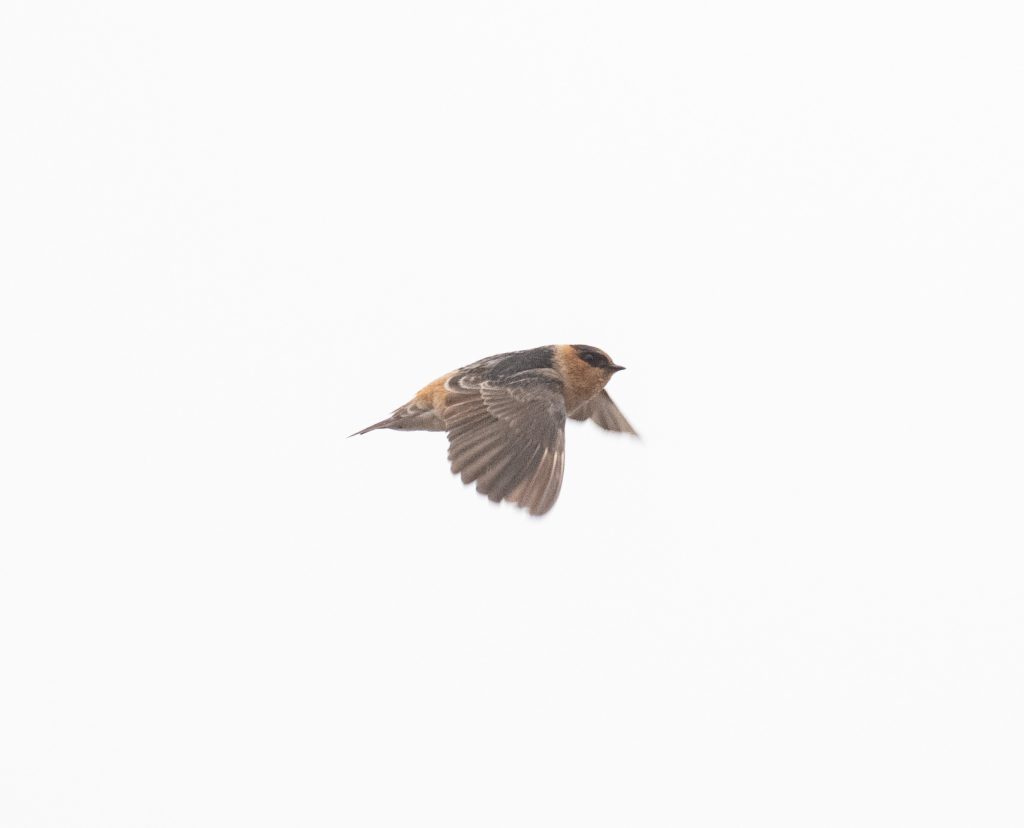
Cave Swallow by Leo McKillop, 11-10-2025, Hampton Beach, NH.
A seemingly moribund Purple Gallinule was found in the Lebanon Walmart parking lot by Nick Colaiacomo on November 15. Much like Cave Swallows, Purple Gallinules have a history of being pushed northward in the late fall and winter. Unfortunately, they’re often in very poor condition and rarely survive. Indeed, only one of New Hampshire’s approximately seven records survived for more than a day in the wild. Happily, despite its poor condition, this bird was rehabilitated and then flown down to South Carolina!
A Bizarre Sighting
It wasn’t a great year for seabirds offshore, but a Manx Shearwater inside Hampton Harbor reported by Iain MacLeod and Win Shafer on August 18 was a truly bizarre sighting. As with other “tubenoses,” this species is rarely seen from shore, much less on the west side of Route 1A.
Scarcities and Surprises
It was a good year for Baird’s Sandpipers, with five reported during the fall season. Most notable was an inland record from Surry on August 29 (Eric Masterson) and a late individual that was last seen in Rye on November 2 (Steve Mirick).
Although generally scarce, Forster’s Terns occasionally stage for migration in Hampton Harbor in late fall, but in some years the species can be absent. This year as many as 13 were seen.
Buff-breasted Sandpipers were reported from three locations during the fall season. Pease International Tradeport in Newington remains the most reliable location for the species, with up to five present in the fall of 2025. Two other locations each had reports of a single bird, the Exeter Wastewater Treatment Plant and Rye Beach.
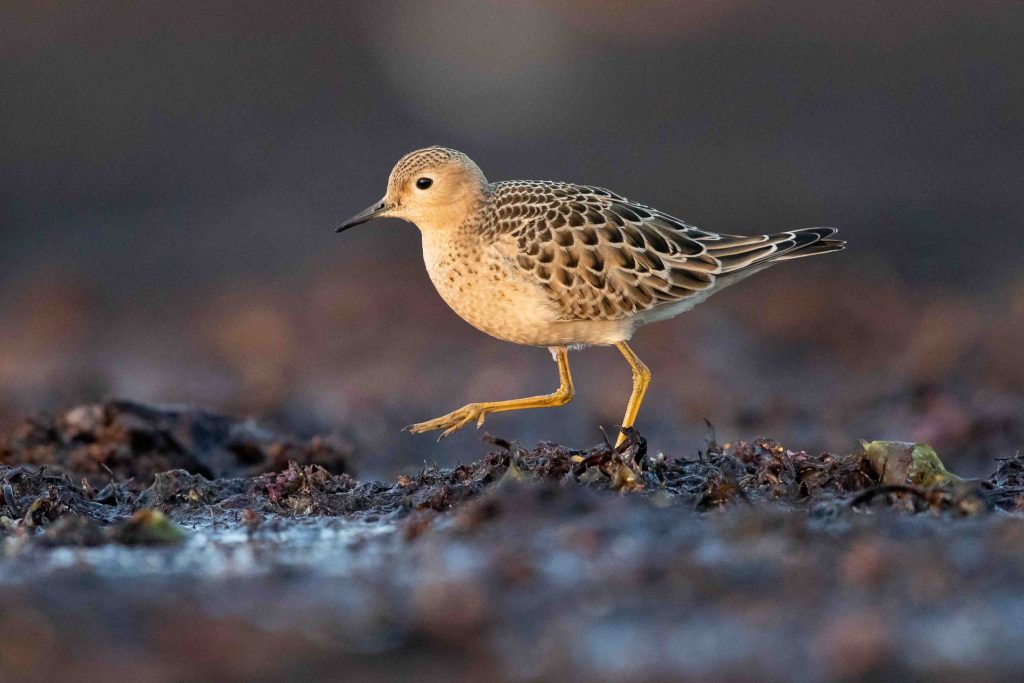
Buff-breasted Sandpiper by Cameron Johnson, 9-14-2025, Jenness-Sawyers Beach, Rye, NH.
Western Sandpipers had an average year with reports from Plaice Cove in Hampton and Jenness Beach in Rye.
In contrast to recent years, a Hudsonian Godwit first found on September 1 by Steve and Jane Mirick remained in Hampton Harbor through much of September.
Long-billed Dowitchers have been recorded more reliably in recent years. Part of this is due to an increased ability to detect adults as our knowledge of dowitcher identification improves. This was the case with a sighting by Susan Wrisley and Leo McKillop on August 31 in the Hampton Salt Marsh. You can see their photos and description of important fieldmarks in this eBird entry. As many as five of the birds seen in October and November were juveniles, which are easier to detect at that point since most Short-billed Dowitchers have left by then.
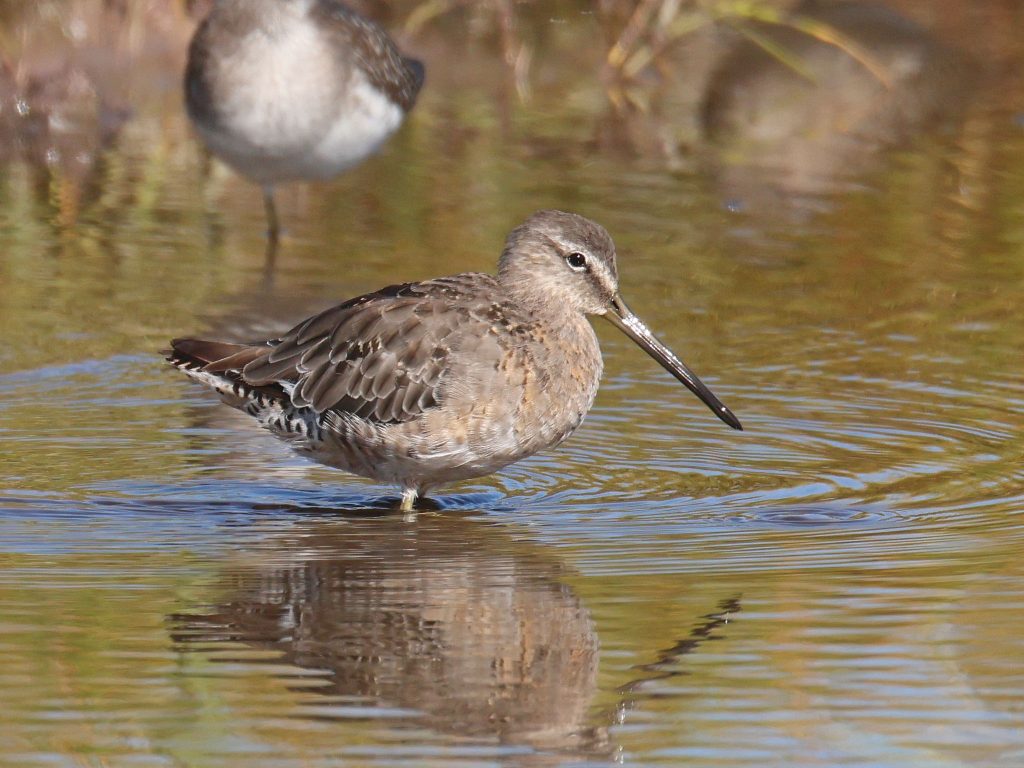
Long-billed Dowitcher by Steve Mirick, 9-4-2025, Hampton Salt Marsh Conservation Area, NH.
The vast majority of New Hampshire’s Yellow-breasted Chats are found either at Star Island or Odiorne Point State Park in Rye where it can be hard to tell just how many different birds are involved, and that was again the case this fall. There were two birds reported elsewhere, both from Portsmouth.
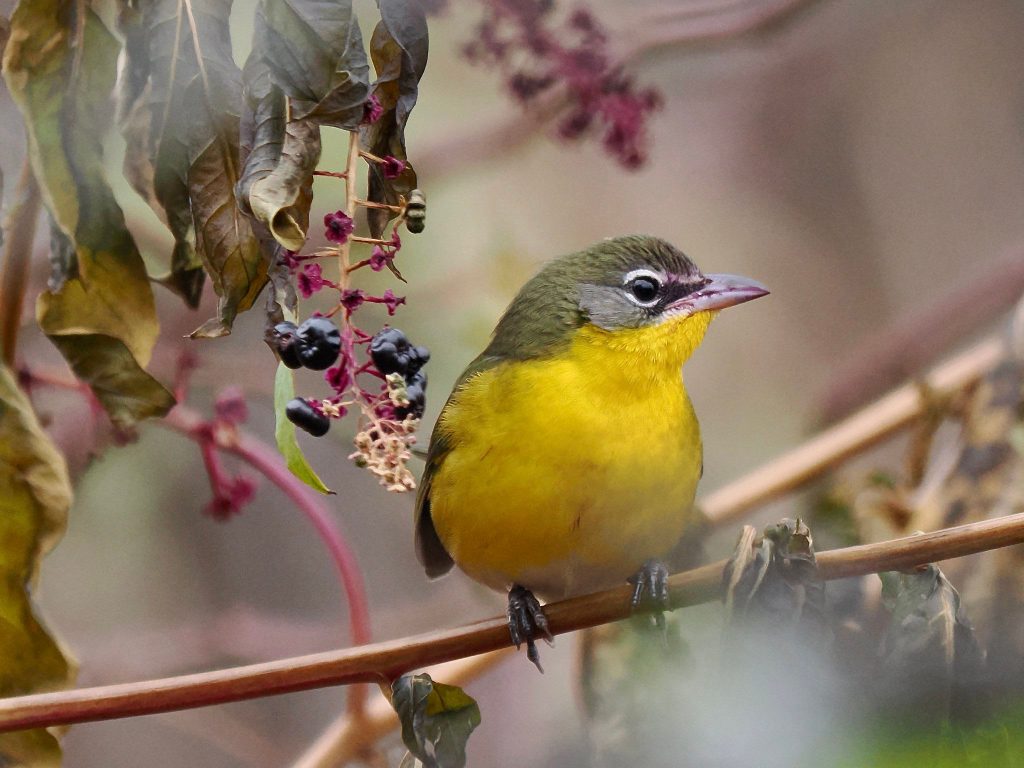
Yellow-breasted Chat by Jim Sparrell, 11-25-2025, South Mill Pond, Portsmouth, NH.
Dickcissels were reported from at least fifteen different locations around the state, including several at private feeders as well as at more traditional hotspots.
Four Lark Sparrow records was about average for the fall season, with three predictably along the coast, and the fourth inland in Surry.
Multiple different White-eyed Vireos were reported for the season. As is typical, these were primarily in the southeastern part of the state, but records from Lebanon and Woodsville broke that pattern.
Three Connecticut Warblers were reported during the fall. Two of these came from locations that seem to consistently get the species: Woodman Farm in Durham and Odiorne Point State Park. The third record came from near the Lake of the Clouds hut, a location that does not get heavy birder traffic at any time of year, but particularly not during migration.
It was an excellent year overall for Clay-colored Sparrows, with at least 15 different birds reported. Generally, more common on the coast, this fall all but three were reported from coastal areas.
Parasitic Jaegers have been rare in recent years, and the two reported this fall (both from the coast) exceeds recent averages.
Two Red-headed Woodpeckers were documented by photos this fall season, one on October 4 on Star Island by Stuart Varney and the second in Lyme on October 25 by many birders visiting a homeowner’s backyard. Jeanne-Marie Maher had a third Red-Headed Woodpecker in North Conway on October 29 documented by a well-described sight report in eBird. This species is never common in the state and seems to show up in backyards as often as birding hotspots, with the one in Lyme fitting this pattern.
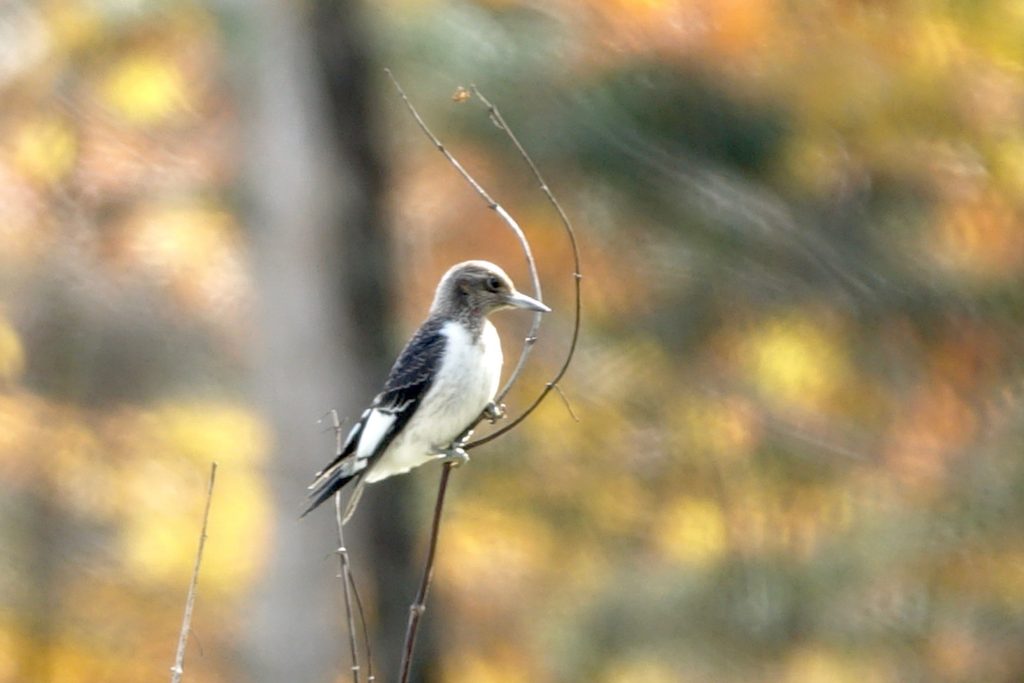
Red-headed Woodpecker by Elaine Faletra, 10-25-2025, Lyme, NH.
A Harlequin Duck in Rye found by Steve and Jane Mirick on October 15 was notable not only for being a scarce species, but for showing up on the early side as well.
Three Western Cattle-Egrets were reported for the fall season. This species is most regular in the state during November when variable numbers disperse northward.
Three Cackling Geese and one Snow Goose were reported during the fall season, the only rare geese of any species reported. All species of geese have taken a significant population hit as a result of avian flu, but the decline in Snow Geese also predates the avian flu outbreak.
Two Long-eared Owls were photographed in Hillsborough County. This is the second report in two years, after only two fall records in the 23 previous years! This corresponds with an overall increase in reports in other seasons, which in turn may be a result of an increase in observers submitting data of a hard-to-find but easy-to-identify species.
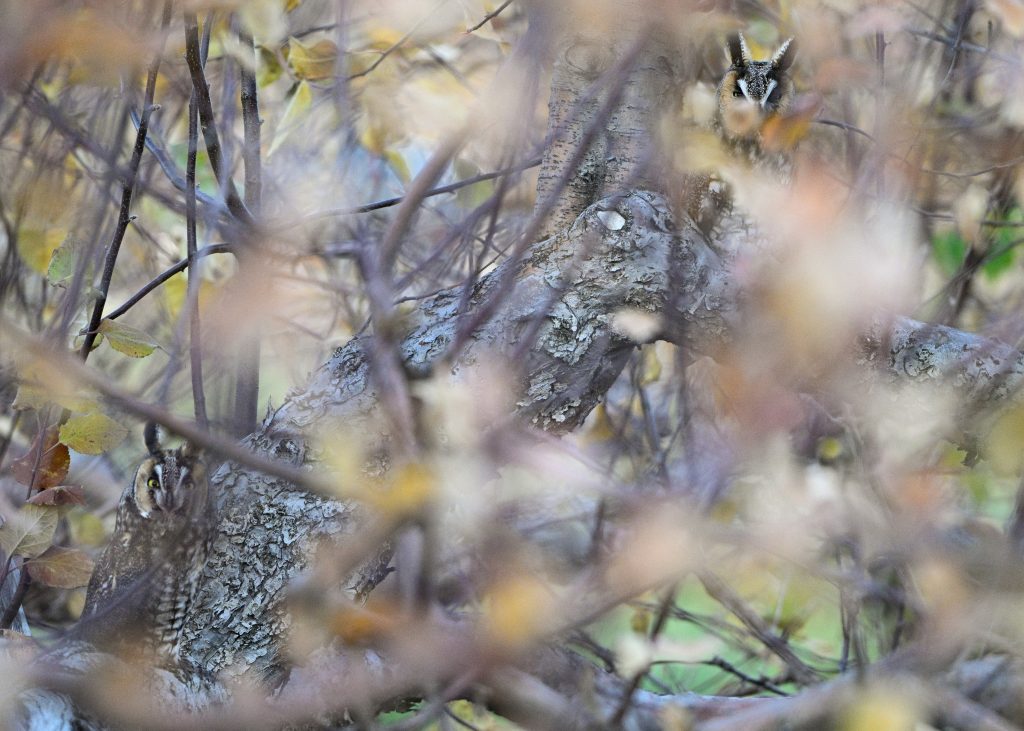
Can you spot the owls? Long-eared Owls by Susan Wrisley, 11-15-2025, Hillsborough County, NH.
Other Notable Records
Snowy Egrets are rare (but increasingly regular) inland, so one photographed by Danielle Martin in Boscawen on August 22 was notable.
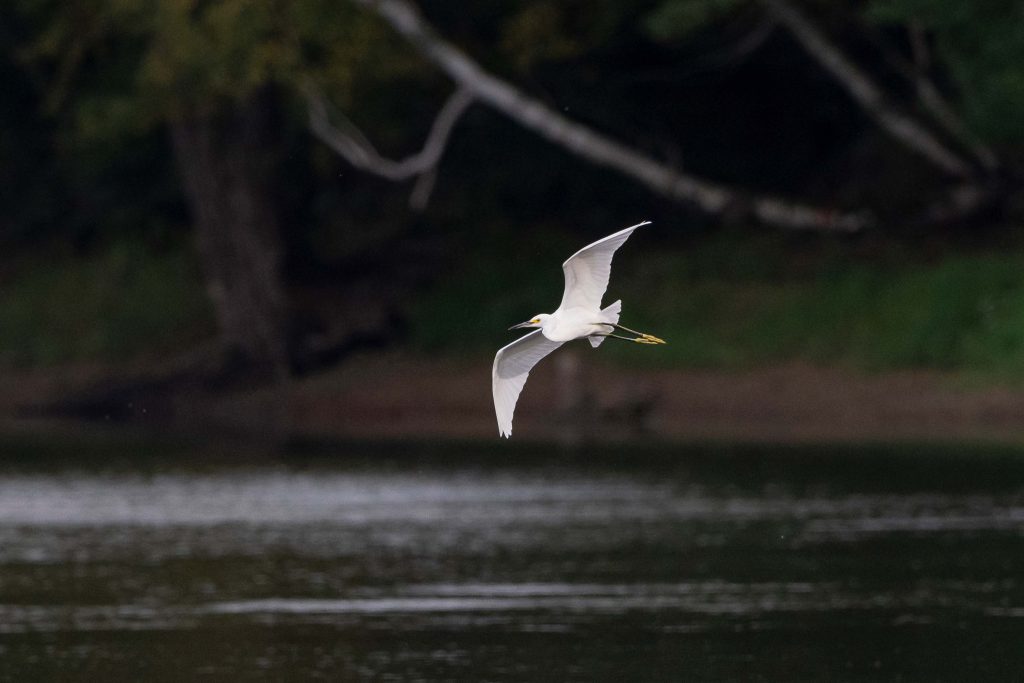
Snowy Egret by John Welch, 9-7-2025, Jamie Welch Field, Boscowan, NH.
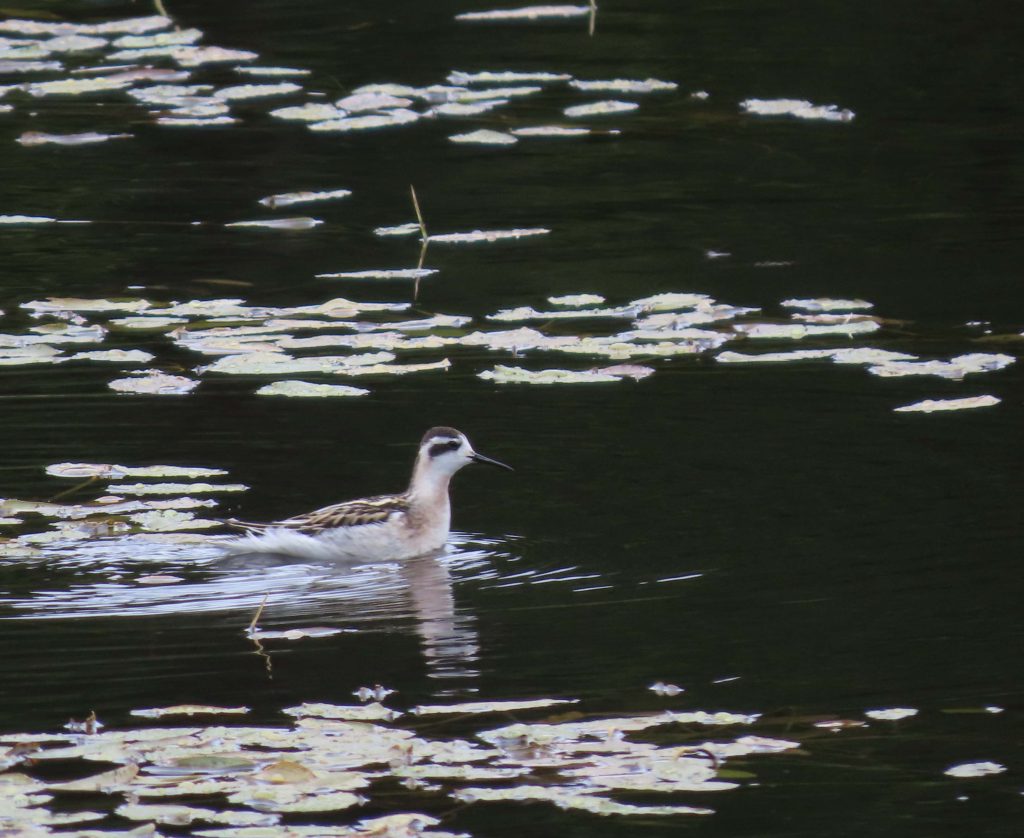
Red-necked Phalarope by Tom Young, 8-30-2025, East Inlet, Pittsburg, NH.
Normally found on pelagic trips, Red-necked Phalaropes were reported from two inland locations: Pittsburg and Whitefield.
A Common Goldeneye that was first noted by Jim Sparrell on August 19 at Odiorne Point State Park in Rye was very early for a species that normally doesn’t arrive on the coast until late October when fresh water to the north freezes.
High Counts
A remarkable total of 82 migrating Caspian Terns patiently counted over four hours by Steve and Jane Mirick on September 25 in Rye nearly doubled the previous high count (of 48) for the species.
A count of 500 Ring-necked Ducks on October 2 on Lake Umbagog by Bob Quinn was the highest fall count of these birds, although several higher counts have been tallied in spring when the species often forms large flocks.
A mind-boggling 22,960 Double-crested Cormorants were counted by Steve and Jane Mirick migrating on October 12 along the coast. This is more than double the previous high count of 10,404! Check out their written description of the count.