
Shorebirds as they migrate south through New Hampshire can be a challenge to identify, with most adult birds moving through the state mid-molt. We seldom get to see adult birds in either full breeding plumage or full winter plumage. When you add juvenile birds into the mix it can get quite confusing to try to compare the bird you are seeing in front of you to the birds that are illustrated in the field guides. Ben Griffith led a trip for the NH Audubon Seacoast Chapter on August 17, 2025, that focused on field marks and behaviors that help birders sort these shorebirds out.
We began the trip at Plaice Cove in Hampton, with a 6 am start to avoid weekend beach-goers. With over 1,000 shorebirds roosting at near high tide, there were a lot of birds to scan through. About 50% of the birds were Semipalmated Sandpipers and 50% Semipalmated Plovers. We got some good looks and were able to see the partially webbed toes that give the “semipalmated” birds their names.
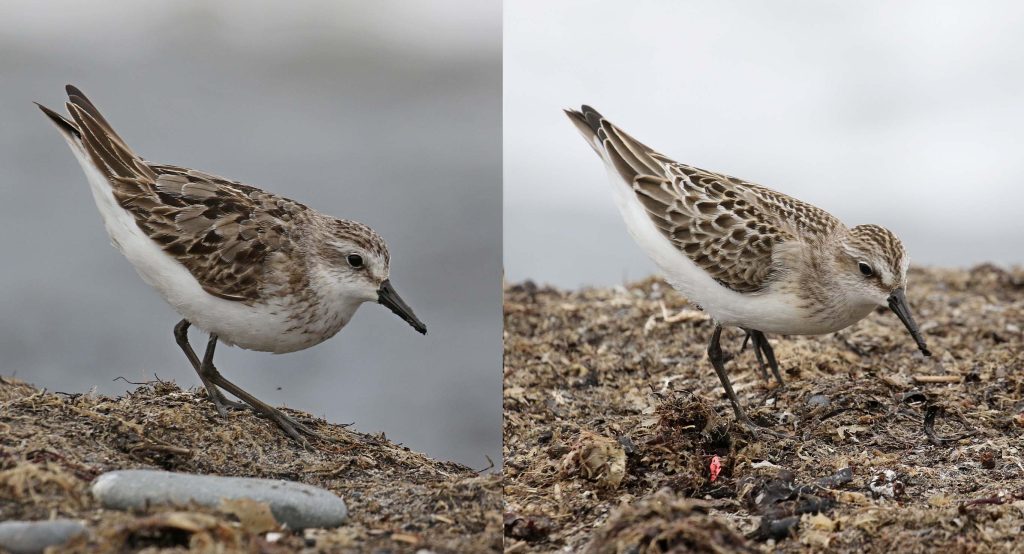
Semipalmated Sandpiper adult (left) and juvenile (right) by Steve Mirick.
Among the crowd, Ben pointed out a half dozen White-rumped Sandpipers. After spending some time focusing on field marks, everyone was able to identify the longer legs, long wings, and more prominent white eyebrow of the White-rumped Sandpiper, even when we couldn’t always see the white rump.
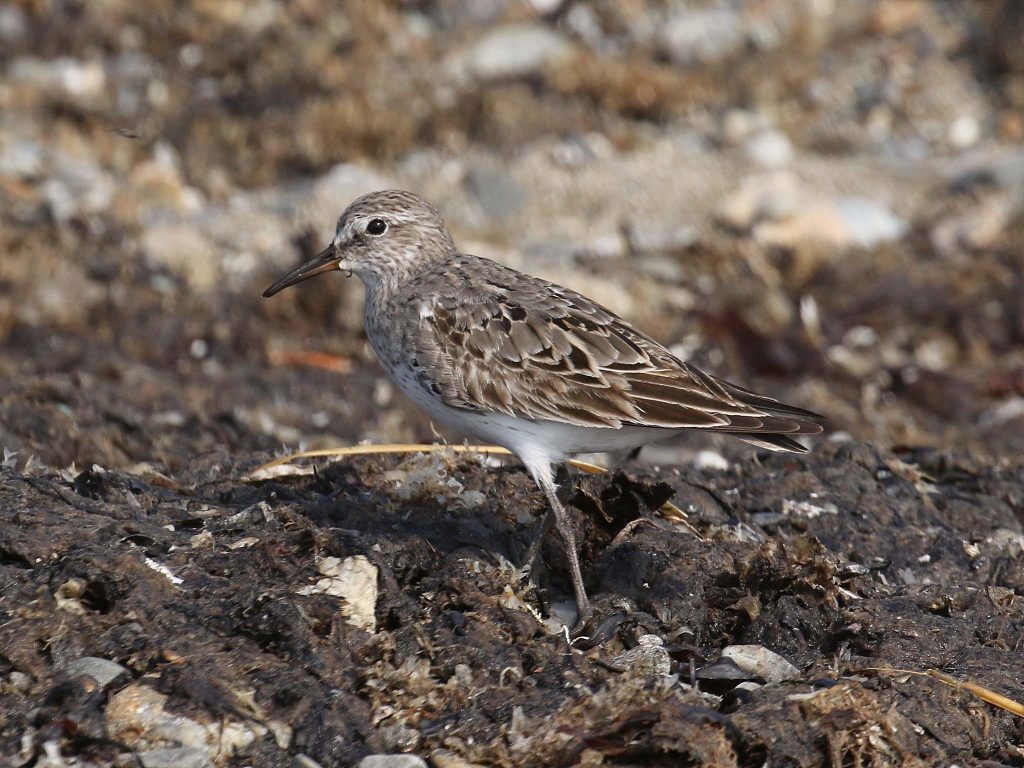
White-rumped Sandpiper by Steve Mirick. Note the longer wings and legs, with the distinctive white eyebrow.
There were also a couple of juvenile Least Sandpipers, showing their darker, warmer brown feathers and yellow legs. Ben says that yellow legs are his “least” favorite field mark for Least Sandpipers, since their legs are often covered in mud as they probe for invertebrates.
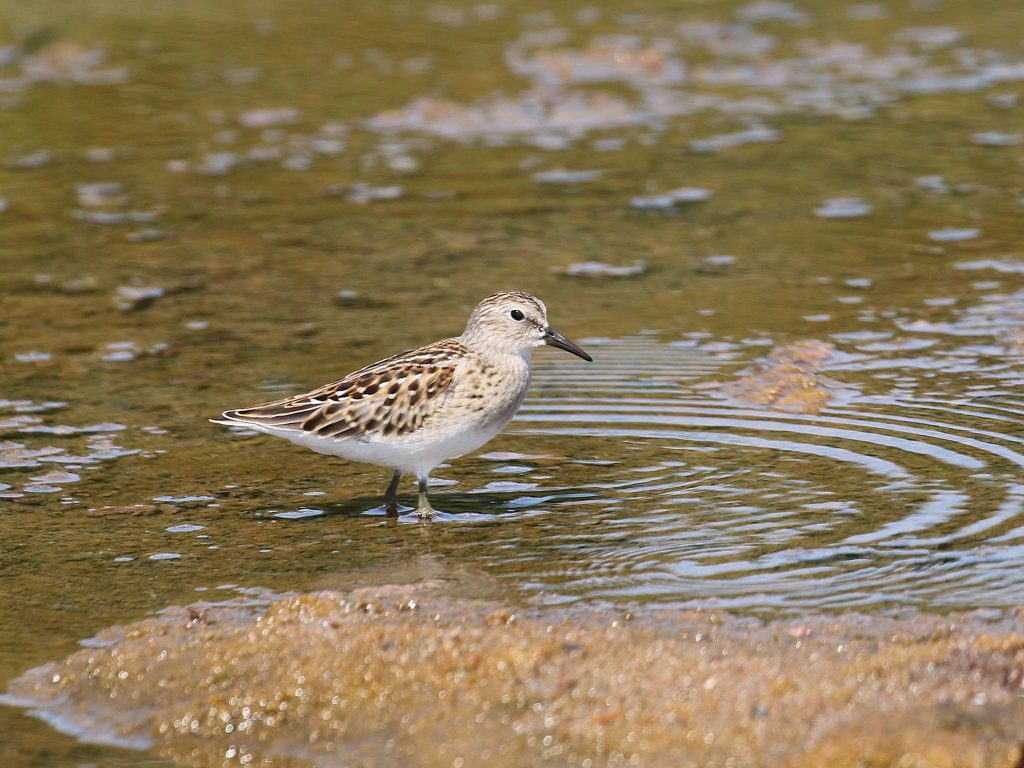
Least Sandpiper by Steve Mirick. Do these legs look yellow to you?
A few Spotted Sandpipers, a Black-belled Plover, Killdeer, and a couple of Ruddy Turnstones stood out among the peeps (birder lingo for one of the five smallest North American sandpipers), but perhaps the highlight was a quick look at a Caspian Tern as it flew quickly south–flashing its dark underwing.
Our next stop was at Marsh Road in Rye. There the birds were in good light and were more spread out making them easier to see. The group was able to use their new-found knowledge to pick out the White-rumped and Least Sandpipers from among the majority Semipalmated Sandpipers.
We didn’t locate the Stilt Sandpiper that had been seen the day before (and was seen later in the day) but a cooperative Pectoral Sandpiper provided a good comparison to the smaller peeps and we added both Lesser and Greater Yellowlegs to the list.
From Marsh Road we moved a bit further north to scope the pools south of Odiorne in a successful search for two Little Blue Herons among the 120 Snowy Egrets, 30 Great Egrets, and several Great Blue Herons. We then headed back south to Hampton Harbor. We didn’t find the Piping Plover that Ben had scouted the day before, but there were numerous Black-bellied and Semipalmated Plovers and a few Least and Semipalmated Sandpipers. A Sanderling was a new shorebird for the list. Another of the day’s highlights was good looks at a Roseate Tern in a large group of Common Terns. Ben pointed out the field mark of the white edge to the bird’s primaries which created a white stripe along its side as the bird perched. Endangered in New Hampshire, the Roseate Tern breeds on Seavey Island in the Isles of Shoals.
For people who had a little extra time, there was a trip extension to look for a shorebird not found on the shore. We ended the trip at Pease Airport looking for Upland Sandpipers. Pease is the only spot in New Hampshire where Upland Sandpipers still breed; however, the six birds we saw in the middle of the airport fields were most likely birds migrating from Maine or Canada. The Upland Sandpiper was our second bird of the day on New Hampshire’s Endangered species list, making it a nice sighting for the end of the trip.
Many thanks to Ben Griffith for sharing his deep knowledge of the intricacies of both bird identification and their life histories.
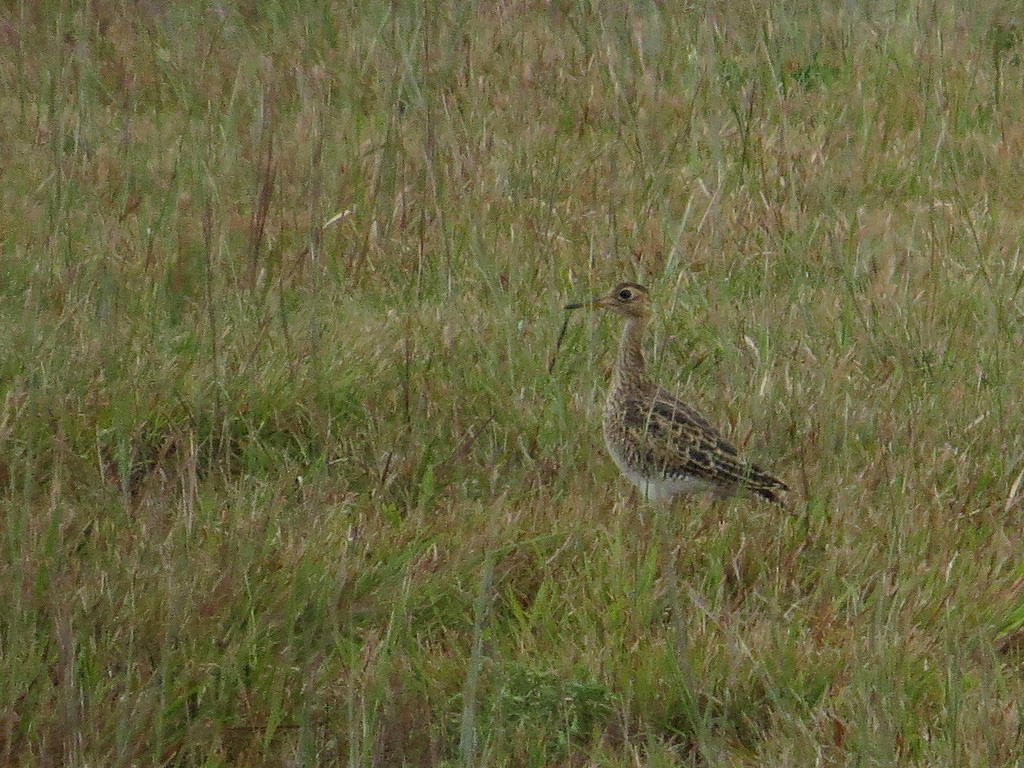
Upland Sandpiper by Steve Mirick. In New England, Upland Sandpipers breed almost exclusively at airports, where the shorter grass they prefer can be found.