
Native plants are vital for the birds we all love and enjoy. Here are just some of the species you can plant to attract birds to your yard and help them in the process.
If you purchase these plants from a nursery, be sure to check that you have a native cultivar. There are cultivars of non-native species with similar names. Check the latin name and talk to the nursery staff.
For more information on plants to attract birds and wildlife:
- UNH Cooperative Extension: New Hampshire’s Native Trees, Shrubs, and Vines With Wildlife Value.
- Bringing Nature Home by Douglas W. Tallamy
- Native Plant Trust
- Morton Arboretum
- North Carolina State University Extension
Goldenrod
by Becky Suomala and Susan Burkhardt
Goldenrod (Solidago sp.) is a late-summer blooming plant that is a wildlife super-food. Its composite flowers produce pollen for bees and butterflies, including Monarchs in migration. It also has a wealth of caterpillars for birds to fuel their fall migration, even after the blooms have gone to seed. Don’t confuse it with ragweed, which is responsible for our fall allergies but looks quite different. There are many goldenrod species (genus Solidago) and Professor Doug Tallamy in his book, Nature’s Best Hope, refers to is as the “top-ranked genus in terms of hosting the ecologically valuable caterpillars that feed our breeding birds and fall migrants.”
Native varieties of goldenrod including Rough Goldenrod (Solidago rugosa), Gray Goldenrod (S. nemoralis), Flat-top Goldenrod (S. graminifolia), Sweet Goldenrod (S. odora) and others are typically hardy to at least Zone 3. They prefer sun but will tolerate partial shade and thrive in average to dry soil conditions. Goldenrods range in height up to four feet and some will spread aggressively. They are generally resistant to salt and deer predation.
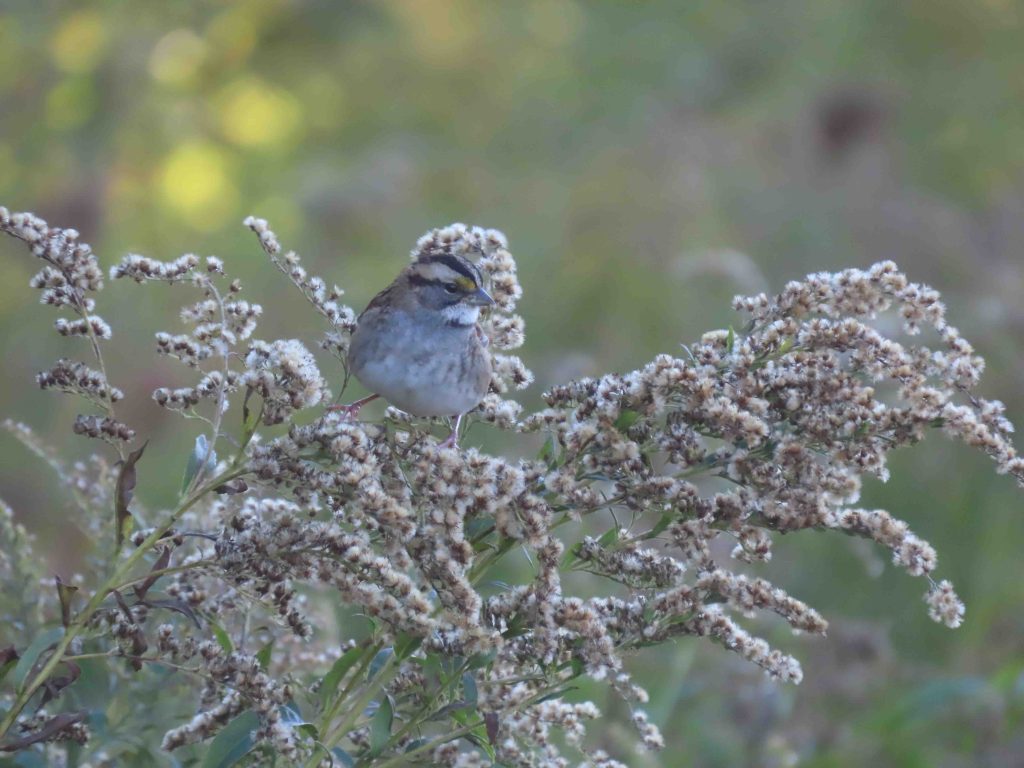
White-throated Sparrow on goldenrod by Rebecca Suomala. Ragweed can often be confused with goldenrod but ragweed is the one responsible for allergies.
Bayberry
by Diane De Luca and Susan Burkhardt
Bayberry (Myrica pensylvanica) is a deciduous shrub native to North America where it is primarily found growing along the eastern coast in dunes, pine barrens, dry forests, and along the margins of bogs and swamps. This versatile shrub can also be used in woodland gardens or shrub borders.
Leaves may remain on the plant through the winter and provide shelter for wildlife. Female plants produce abundant small, blue-grey, waxy fruit in the fall. The fruits are retained well into winter and are an excellent food source for many wildlife species. Tree Swallows are known to feed heavily on bayberries during their fall migration. Yellow-rumped Warblers will also forage on bayberry late into fall and early winter.
The highly scented fruit of the bayberry was also a source of wax for early settlers. The scent is still used in candle making.
Bayberry is hardy in Zones 3 to 7 and grows to a height of 5-10 feet. It is easily grown in average, dry to medium, well-drained soils in full sun to part shade. It prefers moist, peaty or sandy acidic soils, but tolerates a wide range of growing conditions including poor soils, wet soils, drought, high winds, and salt spray. It looks best in groups that include at least one male plant to facilitate pollination. The flowers are not showy. Shrubs tend to produce suckers and can form sizeable colonies in optimum conditions. It is tolerant of salt which makes it a good choice near roads that get salt in the winter.
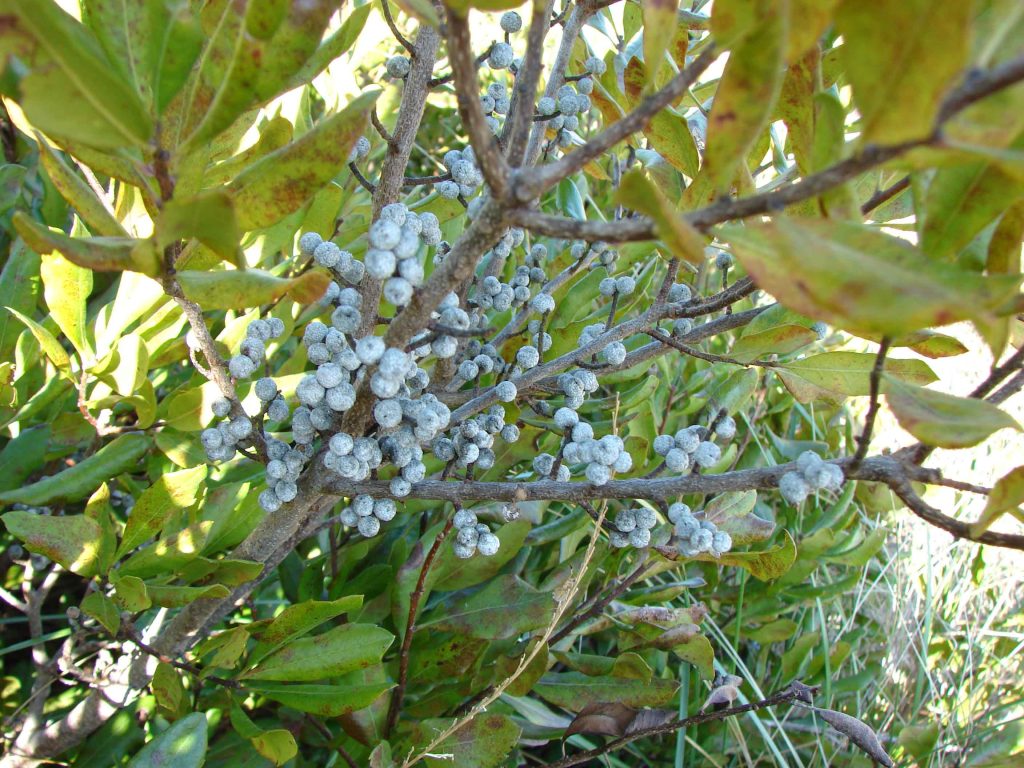
Bayberry berries by Pam Hunt.
Staghorn Sumac
by Diane De Luca and Susan Burkhardt
Staghorn Sumac (Rhus typhina) is a native deciduous shrub that can be important winter cover and sustenance for many species. Bright red clusters of fuzzy berries ripen in the fall and persist through the winter. The berries are winter food for ruffed grouse and wild turkey along with a wide diversity of songbirds that include the Eastern Bluebird, Northern Cardinal, Purple Finch, Dark-eyed Junco, and American Robin. Large and small mammals such as the cottontail and White-tailed Deer will also feed on sumac berries.
Greenish yellow flowers bloom from May through July, and produce large amounts of nectar and pollen. The small open cluster of flowers makes them accessible to a number of different insect species. Pollinators include bees, wasps, and flies. Sumac is considered an important nectar source for honeybees.
Sumac is found throughout the eastern half of the US and prefers upland sites like open fields, fence rows, and roadsides. It commonly forms thickets with compound leaves along crooked branches that become quite colorful in the fall. In winter the bare, forking, hairy twigs resemble deer antlers in velvet, hence the common name.
Staghorn Sumac is hardy in Zones 4 to 8 and is one of the largest native sumacs, up to 25 feet tall. It forms open colonies and spreads with runners. It is often found growing on rocky slopes, dry forest edges and sandy lake shores. Male and female flowers are on separate plants. It does best in full sun and well-drained soil although it will tolerate most growing conditions, including drought and salt but will not grow in wet soil. It is susceptible to leaf spot, rust, and verticillium wilt.
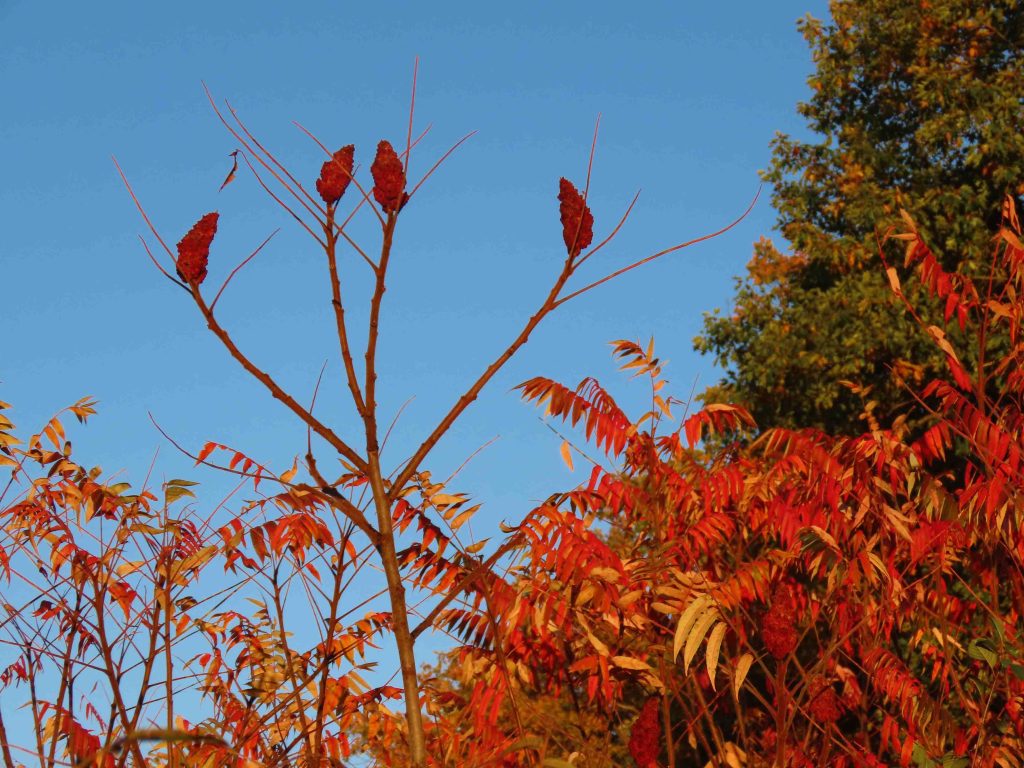
Sumac fall foliage and fruit by Rebecca Suomala.
Common Evening Primrose
by Diane De Luca and Susan Burkhardt
Common Evening Primrose (Oenothera biennis) is a native plant that attracts bees, birds, moths, and butterflies. Bright yellow, fragrant flowers bloom from June through October. The flowers are partially to fully closed during the day and open in the evening. Fertilization is primarily by night-flying moths that are attracted to their lemon fragrance and by bees during the early morning before closure. Hummingbirds visit the flowers to obtain nectar and insects.
Common Evening Primrose is a biennial that produces a rosette of leaves in the first year with yellow flowers growing along an upright stalk in the second year. This plant grows to 3-5 feet with large seed capsules that persist through the winter even though the plant dies after setting seed. The seeds provide food for many birds through the winter. The photo depicts a Swamp Sparrow feeding on the seed capsules.
Common Evening Primrose is widespread across the US where it grows in dry open fields, roadsides, waste areas and open woods. Care should be taken to avoid takeover by this plant in smaller garden spaces. It may spread by self-seeding in a somewhat weedy fashion.
Hardy in Zones 4 to 9, it grows easily in medium to well-drained soils in full sun but tolerates some afternoon shade and some drought. It grows well in gravelly or sandy soils.
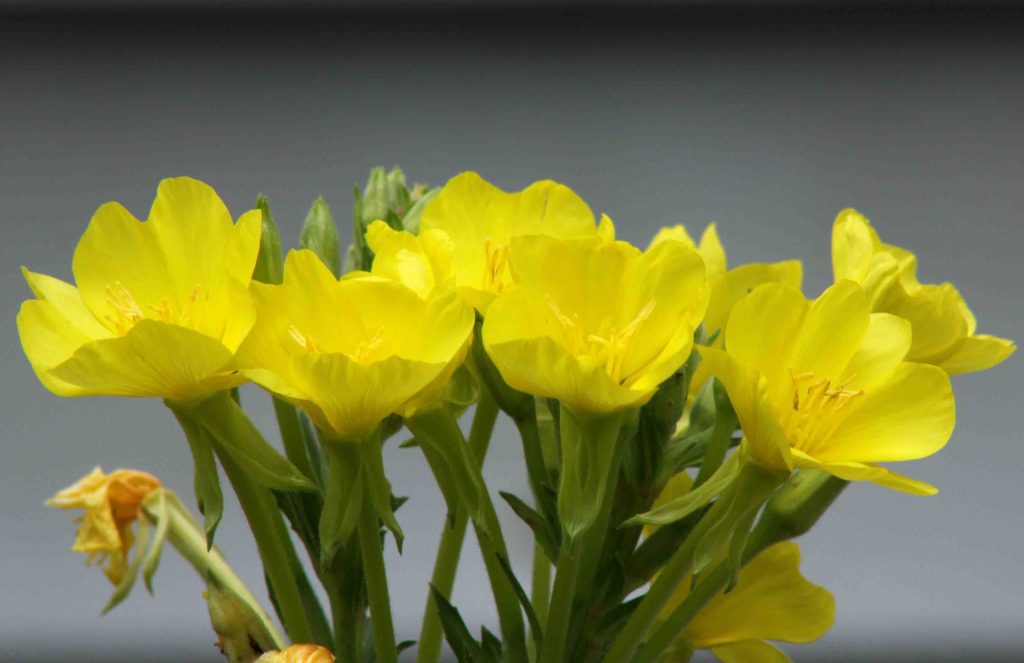
Evening Primrose blossom by Scott Hecker.
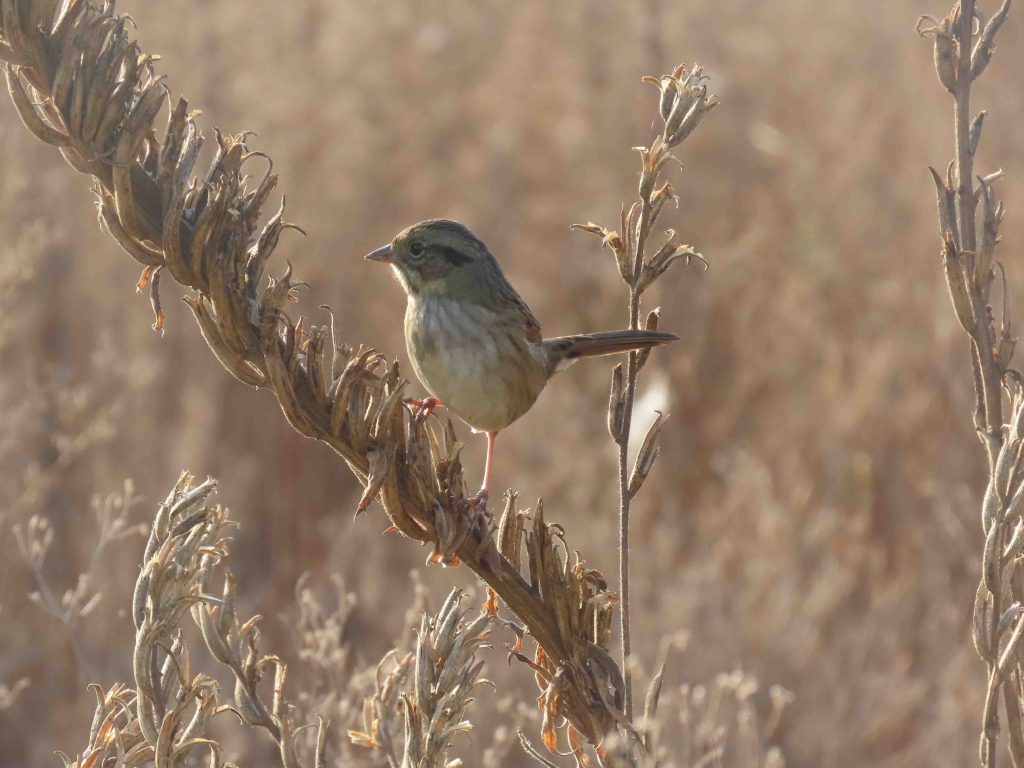
Evening Primrose seeds are enjoyed by a variety of sparrows by Rebecca Suomala.
Crabapple
by Diane De Luca and Susan Burkhardt
The Crabapple tree is closely related to the apple tree with the distinction being size of the fruit. Crabapple fruit is 2 inches or less in diameter; fruit greater than 2 inches is an apple. All crabapples are technically edible but most are quite bitter, hence the name “crab”. They are small deciduous trees that blossom in spring and provide an important and reliable early food source for honeybees, mason bees, and bumblebees. Three species of Crabapple are native to North America.
Crabapples are tough and adaptable, but full sun will maximize flower and fruit development. They are favored as a landscape planting that provides wildlife benefits. Many species of birds will feed on the persistent berries. Crabapples will often attract large flocks of songbirds such as Cedar Waxwings and Eastern Bluebirds in late fall and winter. A photo from the fall of 2020 shows a Pine Grosbeak feeding on the fruit. At times, even turkeys are observed perched along the fruit laden branches.
In addition to their showy blossoms and persistent fruit, Crabapples also provide strong foliage in summer and fall that can be used for nesting and cover. Some varieties of crabapple have impressive fall leaf color ranging from yellow to orange to red and purple.
Sweet Crabapple (Malus Coronaria) is the variety native to North America and most likely to be at home in New Hampshire. Its native range extends from New York west to Missouri, south to Georgia and north into central Canada. With a maximum height of 25 feet, it is hardy in Zones 4 to 8. Pink buds open to white flowers and produce yellow-gold fruit in September and October. Other crabapples growing wild in New England are native to east Asia having spread from cultivation.
Crabapples will do best in full sun and well-drained, slightly acidic soil (pH 5.5 to 6.5) but will tolerate a range of soil types. Some pruning may be required. Thinning the crown to admit light will improve flowering. Suckers at the base should be cut at ground level.
Nectar from flowers attracts native bees and honey bees. Fruits are a food source for birds as well as raccoons, rabbits, opossum, squirrel, and foxes.
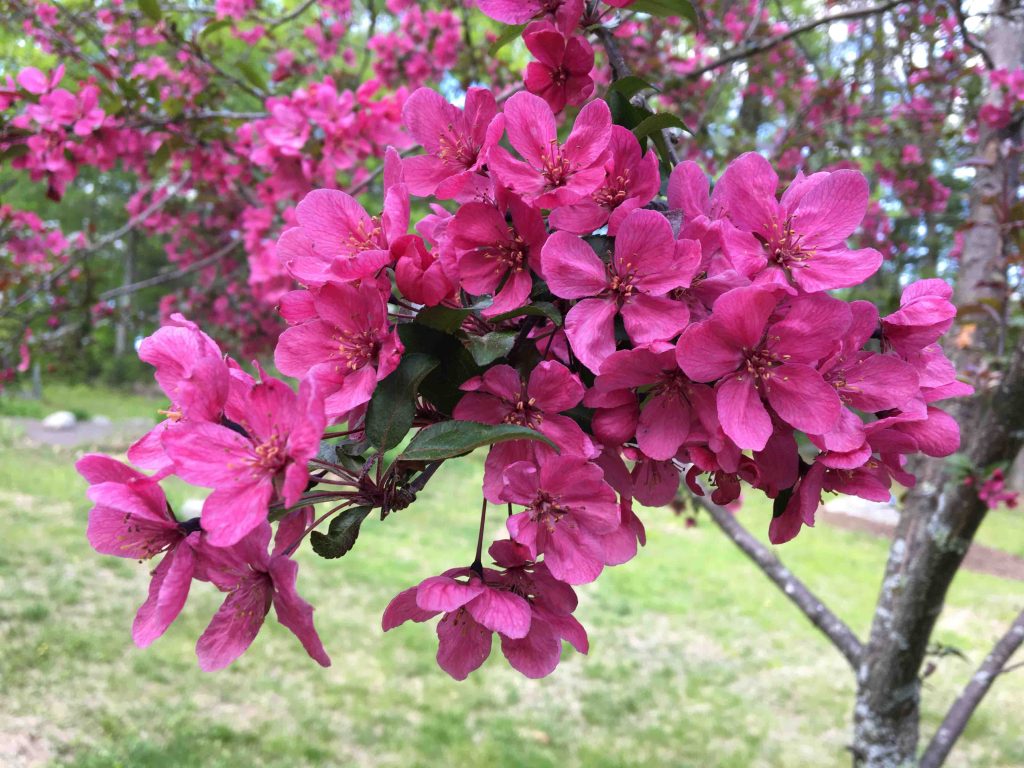
Showy crabapple blossoms by Diane De Luca.
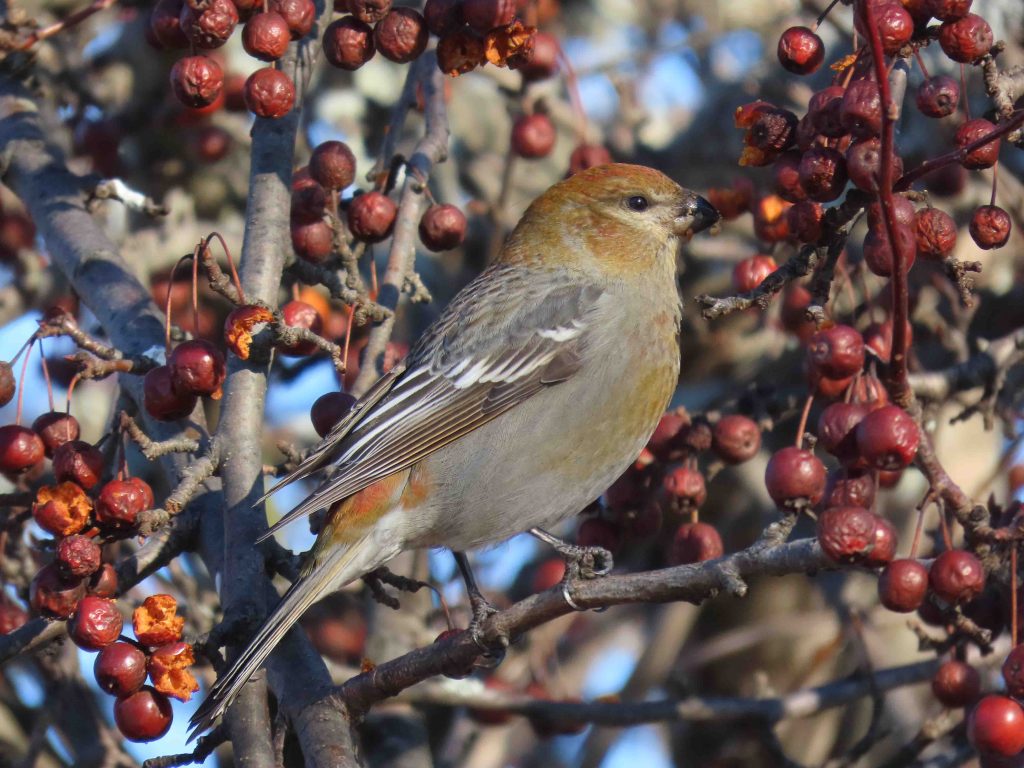
Pine Grosbeak enjoying crabapples by Rebecca Suomala.
Hawthorn
by Diane De Luca and Susan Burkhardt
Hawthorns, as evidenced by their name, have thorny branches. The thorns are smaller branches, typically 1-3 inches, and tend to be sharp. There are many different varieties of hawthorns found around the world, with the Downy Hawthorn (Crataegus mollis) being native to the northeast. This small tree grows well in moist, fertile soil in full sun, but is adaptable to a range of conditions making it suitable for naturalized areas and gardens.
Profuse clusters of white flowers bloom from April to May. Hummingbirds, butterflies, and native bees all gather nectars from the blooms. It is a larval host plant for the Gray Hairstreak and the Viceroy butterflies. Pollinated flowers will develop persistent red “berries” called haws. This fruit serves as a food source for many songbirds, wild turkey, and small mammals.
The Hawthorn is the center of many folkloric tales and legends where it is endowed with special or magical properties. For example, in Gaelic folklore, the hawthorn symbolized the entrance into the otherworld and was strongly connected with fairies. Other cultures note that the hawthorn thorns were used to slay vampires.
Downy Hawthorn will grow to a mature height of 20 to 30 feet with a spread of 20 to 40 feet in USDA Zones 3 to 6. They prefer full sun and moist soil but will tolerate part sun and average or even dry soil. Hawthorns are deer, drought and salt resistant and tolerate pruning. They should be sited carefully in consideration of their 1-2″ thorns.
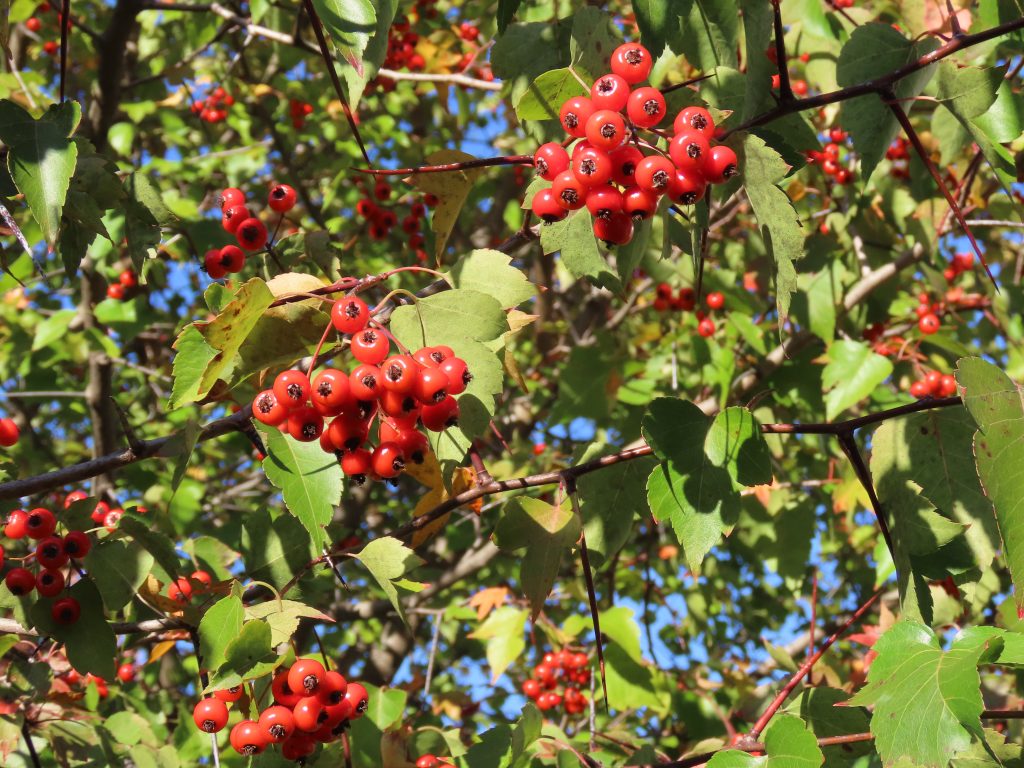
Hawthorn berries by Rebecca Suomala.
Eastern Redcedar
by Diane De Luca and Susan Burkhardt
The name of the Eastern Redcedar is misleading. This dense, slow growing evergreen tree is not a true cedar but a species of juniper that is native to eastern North America. It is considered a pioneer species and can be one of the first trees to repopulate cleared or eroded land. Resistant to extremes of drought, heat and cold, and tolerant of a wide range of soils, it can grow prolifically in many conditions. It is unusually long-lived and has been documented to persist for more than 900 years.
Eastern Redcedar has separate male and female trees. The female trees produce seed cones that are berrylike; blue in color with a white waxy coating. Each cone contains one to three seeds. These persistent “berries” are an important food source for numerous bird species as well as a diversity of mammals including fox, raccoon, skunks, opossum, and coyote. Cedar Waxwings are particularly fond of the “berries” and their name was derived from this tree.
The dense foliage provides important cover and nesting habitat for many birds and small mammals. Chipping Sparrows, Song Sparrows, American Robins, and Northern Mockingbirds use the redcedar as a favored nesting site. Many other species including juncos, Yellow-rumped Warblers and owls use this tree for roosting.
The Eastern Redcedar (Juniperus virginiana) is a distinct species from the low growing native Common Juniper (Juniper communis).
Eastern Redcedar will reach a height of 15 to 30 feet with a spread of 3 to 10 feet. Hardy in USDA Zones 4-7, it will grow in sun or part-sun and in moist or average to dry soil. It is tolerant of deer, drought, salt, erosion and urban environments. Continuously moist soils are not recommended. These trees need airy space to thrive and should be planted 12 to 24 feet apart. In poor conditions where many other plants would not survive, Eastern Redcedars will grow but may remain shrub size.
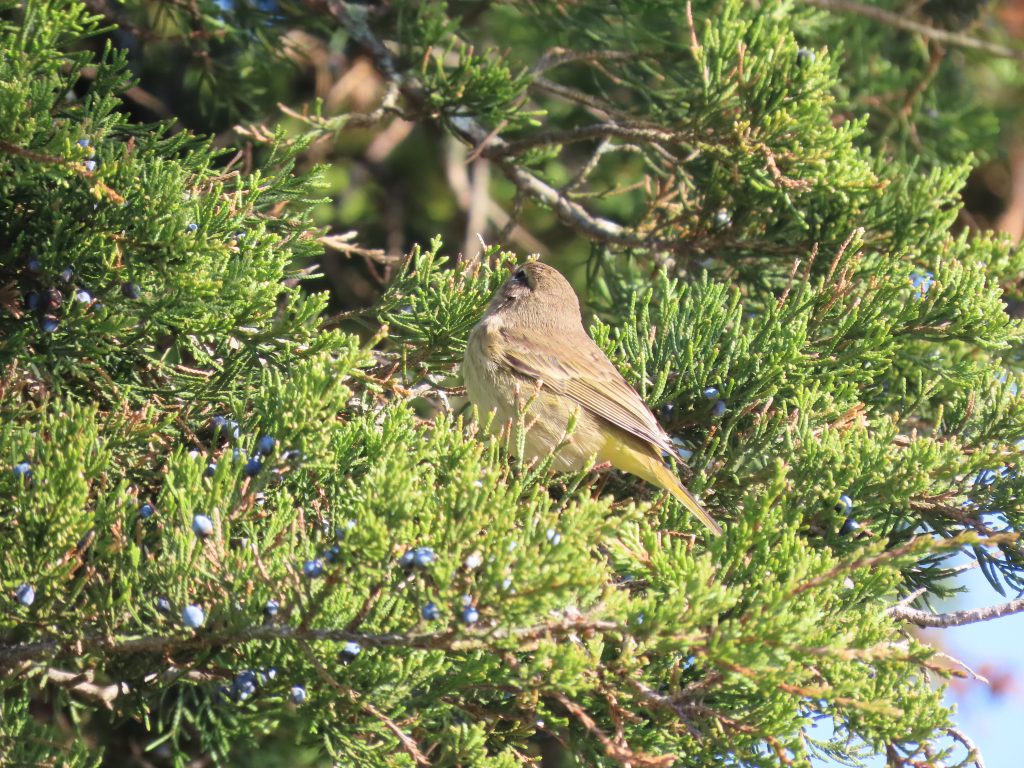
A Palm Warbler foraging in an Eastern Redcedar by Rebecca Suomala.
American Mountain Ash
by Diane De Luca and Susan Burkhardt
American Mountain Ash (Sorbus americana) is a small, understory tree that is native to Eastern North America. This tree typically grows in moist habitat along the borders of swamps and rocky hillsides, and is noted for its open crown, showy white spring flowers, compound leaves, and bright orange-red clusters of fruit in the fall.
The white flowers bloom in May and June and are followed by large clusters of red berry-like fruits. The late spring blooms attract large numbers of native bees. Abundant fruit that persists through the winter makes this tree especially valuable for wildlife. The berries are eaten by numerous birds including Ruffed Grouse, American Robins, Cedar Waxwings, Blue Jays, and Evening Grosbeaks as well as a number of small mammals. The American Mountain Ash is also a favored browse for moose and white-tailed deer. Fishers and snowshoe hare will also browse on the twigs and bark.
This species of Mountain Ash can be cultivated as an ornamental tree for use in gardens and parks. It is hardy throughout Zones 2 through 6 and can reach 15 to 30 feet high. It will thrive in a variety of conditions, including clay soils and partial shade, but prefers moist to average soil and full sun. It is a low maintenance, fragrant plant suitable for naturalizing or use as a specimen. It is tolerant of soil compaction and urban environments.
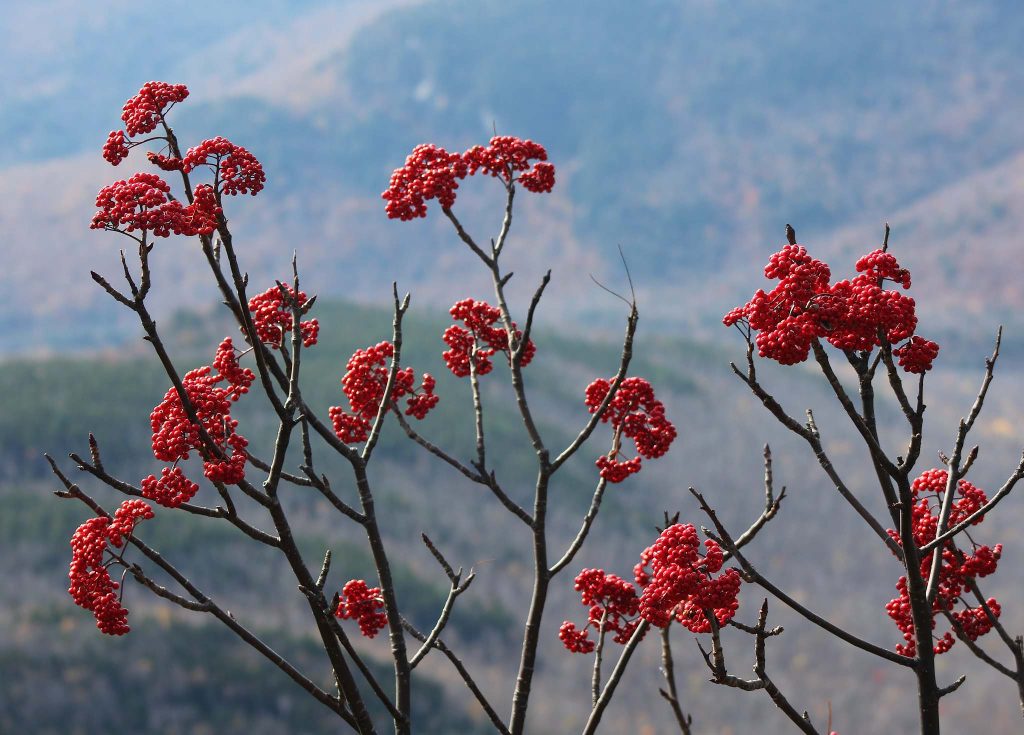
Mountain Ash by Scott Hecker.
Pussy Willow
by Melissa Moore
We may loathe the mud of spring, but all other seasonal signposts are greeted with enthusiasm. Pussy Willows are one of the first to appear signaling the end of another long winter.
Pussy Willows (Salix Discolor) are either male plants or female plants. They belong to a group of plants called dioecious which means the plants have male or female reproductive organs in separate individual plants. Holly and Ginko trees belong to the same group. Pussy Willows, or Salix discolor are easy to grow from a rooted cutting or even from seed. If you’re looking for the largest, feathery tufts in March you will need to make sure you have a male plant. Gardners are encouraged to plant more than one pussy willow and check with the nursery staff to see if they have a record of the plant’s sex. If there are large fuzzy gray tufts that burst into a yellow ball of stamens you have a male plant. Female pussy willows have smaller feathery nubs.
The soft tuft that appears in spring is called a catkin. Pussy Willow doesn’t have a showy flower and is fragrance free. The catkins produce copies quantities of pollen grains which are dispersed on the wind. Once pollen is released, it’s an open buffet for many insects. Birds are subsequently attracted to feed on the insects harvesting the pollen. The Xerces Society calls it an important early food source for bees such as mining bees, sweat bees, and honey bees. Pussy Willow is also a larval host plant for up to 18 species of butterflies and moths.
The Pussy Willow prefers moist, wet soil. It will thrive in full sun or part shade. The Pussy Willow grows to a maximum height of 15-20 feet, and will often appear multi-stemmed. Well timed pruning encourages the straightest stems. It is a great specimen tree or landscape tree.
Folklore offers the following account for how this shrub-like tree got its name. At the river’s edge, a litter of kittens was chasing butterflies and accidently fell in. The kittens struggled, and the mother feline caterwauled with a shrill cry seeking assistance. The long, flexible willow trees hugging the moist ground along the river, came to their rescue. They extended their branches into the rushing water where the kittens grabbed on tight and were lifted to safety. The tiny tufts that appear each spring are reminiscent of where the kittens clung to the branches.
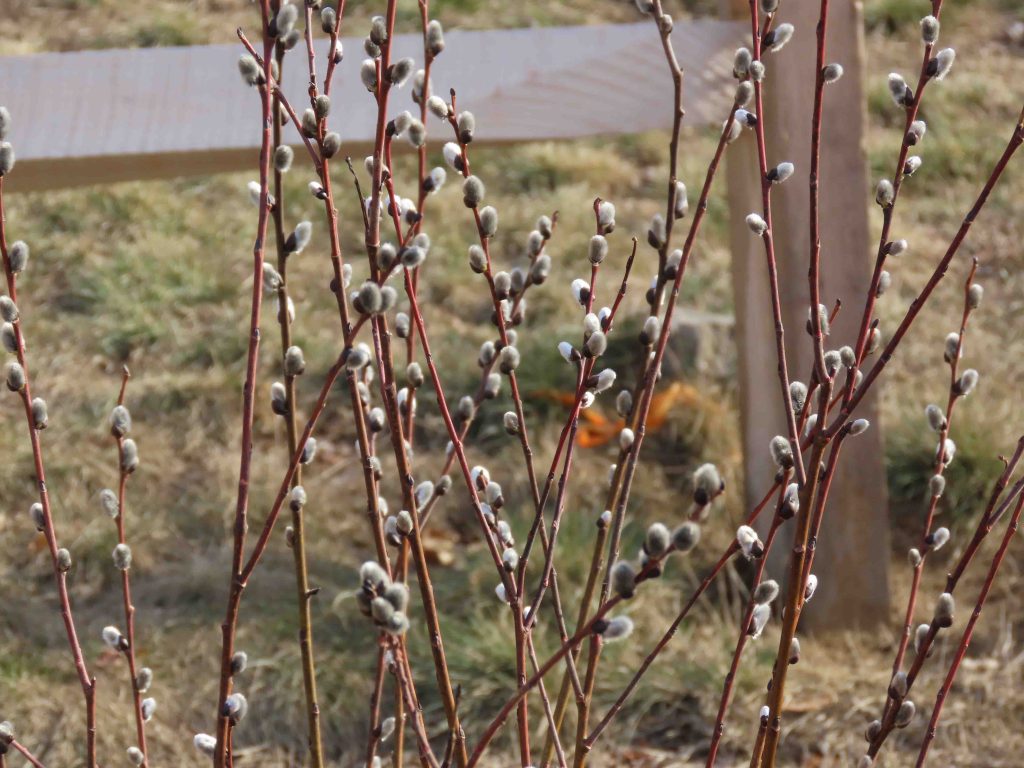
Pussy Willow by Rebecca Suomala.
Winterberry
by Diane De Luca and Susan Burkhardt
Winterberry (Ilex verticillata) is a native deciduous holly species that is typically found in wetlands and along the edges of ponds and streams. It can, however, tolerate well drained soils which makes it a candidate for many garden settings. The common name comes from the abundant clusters of bright red berries that persist through the winter.
Inconspicuous greenish-white flowers in late spring attract butterflies and bees for pollination.
Winterberry has separate male and female plants, and both must be grown in close proximity for the cross pollination that allows the female plants to produce the plentiful red fruit. Winterberry fruit is eaten by close to 50 species of birds including songbirds, winter waterfowl, and game birds. Frequent songbird consumers include Eastern Bluebird, American Robin, Hermit Thrush, White-throated Sparrow, and Cedar Waxwings. Small mammals such as the white-footed mouse also enjoy the fruits and seeds. Because the berries are relatively low in fat content, they are often taken late in the winter when other fruits are scarce.
The dense foliage provides nesting cover for numerous songbirds including Cedar Waxwings and Red-winged Blackbirds. Moose, white-tail deer, and snowshoe hare may also browse the leaves and stems. Although this shrub species is a good provider of wildlife food, its fruits are poisonous to humans and pets.
The red berries which occur on female Common Winterberry plants persist well into winter. Like other hollies, it is dioecious and therefore both male and female plants are required in order for the females to produce berries. Native Winterberries prefer wet locations and acidic soil. They do best in full sun and tolerate salt and urban environments. They are both deer and rabbit resistant. They are useful in rain gardens and can be used as hedges or naturalized.
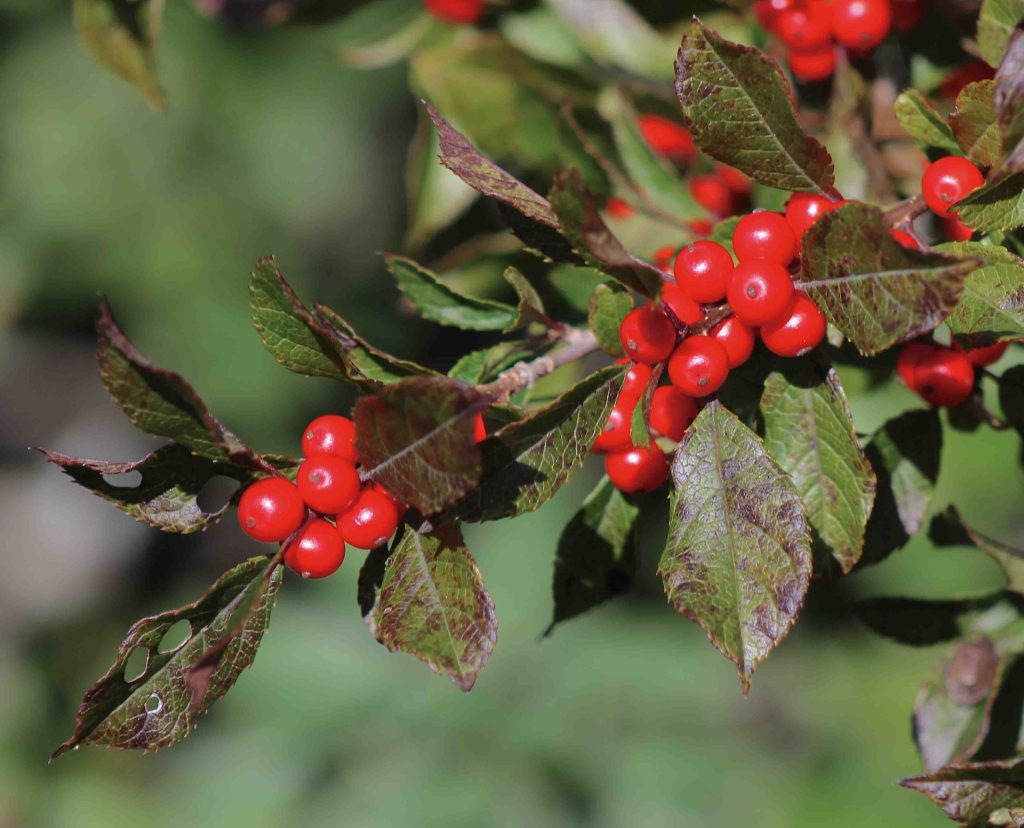
Winterberry fruit by Scott Hecker.
Bunchberry
by Diane De Luca and Susan Burkhardt
Bunchberry (Cornus canadensis) is a woodland plant that forms a carpet-like mat in the shade of moist forests. Often called dwarf or ground dogwood, it is considered a miniature subshrub in the Dogwood family. The colors of fall are evident in the Bunchberry leaves which can persist through the winter.
Clusters of fruit form after the flower is pollinated. The fruit starts off green, gradually turning bright red. In a good fruiting year, red accentuates the green carpet. The Bunchberry fruit may be eaten by black bear, white-tailed deer, chipmunk, snowshoe hare, and a number of birds including Ruffed Grouse, Veery and White-throated Sparrow.
The showy part of the flower structure is composed of four white bracts or leaves with a cluster of small greenish flowers in the center. There is a trigger hair at the top of each flower bud that when tripped explodes open, showering the pollinator with pollen. Scientists measuring the speed of the opening petals have named Bunchberry the “fastest plant in the world”. Pollinators include bumblebees, solitary bees and syrphid flies.
Bunchberry thrives in organically-rich acidic soil. It prefers low-light conditions and is useful as a groundcover under mid-height woody shrubs or in open shade gardens. Hardy in Zones 2 to 6, it should be kept watered while it establishes and will spread slowly to form dense colonies.
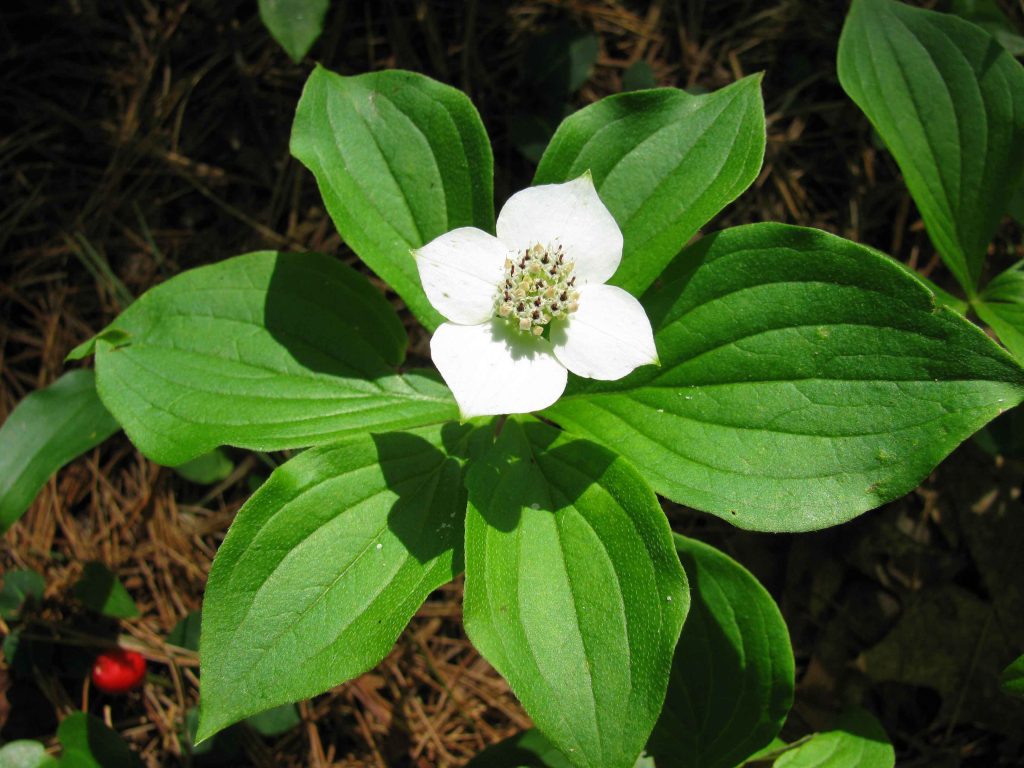
Bunchberry by Diane De Luca.
Partridgeberry
by Diane De Luca and Susan Burkhardt
Partridgeberry (Mitchella repens) is a native perennial that is common throughout the forest understory of Eastern North America. Trailing stems with glossy, evergreen leaves spread into colonies that form a dense carpet on the forest floor. In late fall and winter partridgeberry may be most noticeable as the deep green leaves contrast with the grays and browns of the forest floor.
Small, tubular white flowers grow in pairs along the stem. It attracts a variety of pollinators, but most notably bumblebees. Both flowers must be pollinated to obtain a single scarlet berry. Each berry retains two small depressions where the two flowers joined. Hence the common name of “two-eyed berry”. The bright red fruit ripens by late summer and can persist through the winter. The fruit may be consumed by ruffed grouse, turkey, fox, raccoon, skunk, white-footed mouse, and white-tailed deer.
Gardeners favor the Partridgeberry for winter gardens with its deep green leaves and brilliant red berries. It prefers humus-rich, acidic soil and part or full shade. Hardy in Zones 3 to 8, Partridgeberry will tolerate moist to average conditions but struggles in drought. It is slow-growing.
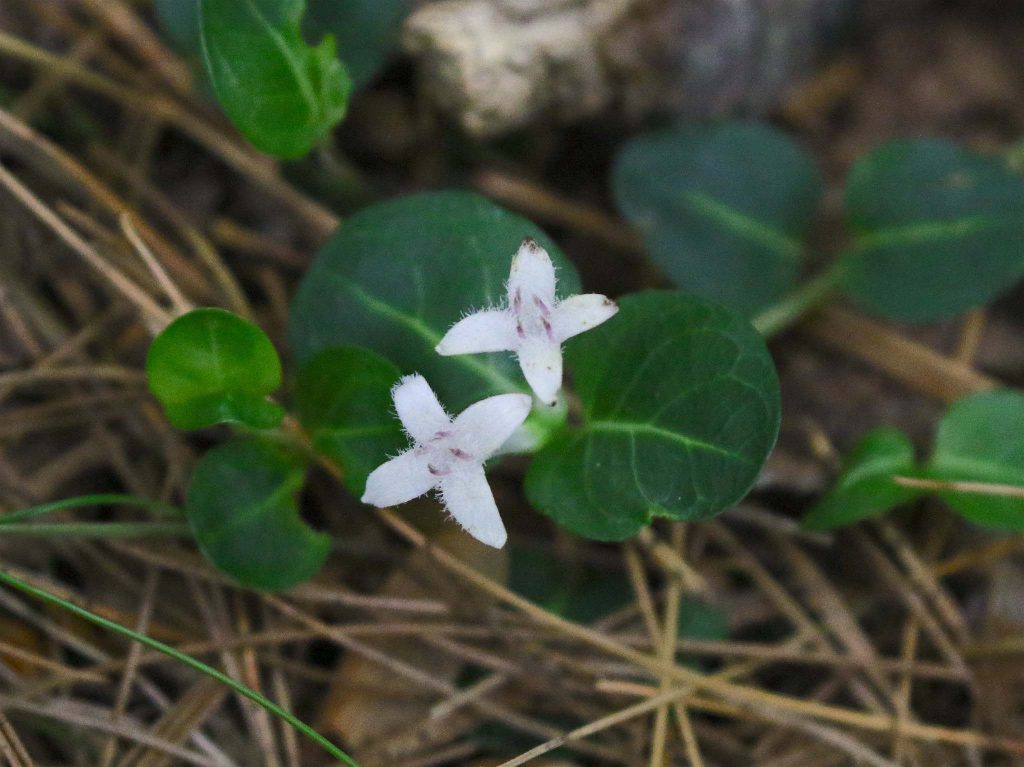
Partridgeberry by Diane De Luca.