NOTE: All banding, marking, and sampling is conducted under a federally authorized Bird Banding Permit issued by the U.S. Geological Survey’s Bird Banding Laboratory.
Before sunrise on summer mornings, while most of the forest is still wrapped in fog, our volunteers at Black Mountain Banding Station are already hard at work opening mist nets and preparing for another day of MAPS banding.
MAPS (short for Monitoring Avian Productivity and Survivorship) is a continent-wide bird monitoring effort coordinated by the Institute for Bird Populations. Using standardized mist netting and banding protocols during the breeding season, MAPS stations help researchers monitor the health of North American songbird populations over time. By studying productivity, survivorship, and population trends, scientists can better understand how birds are responding to habitat change, climate pressures, and other stressors. Black Mountain Banding Station (BMBS) joined the MAPS network in 2024 and the summer of 2025 marked the second year contributing data to this effort.
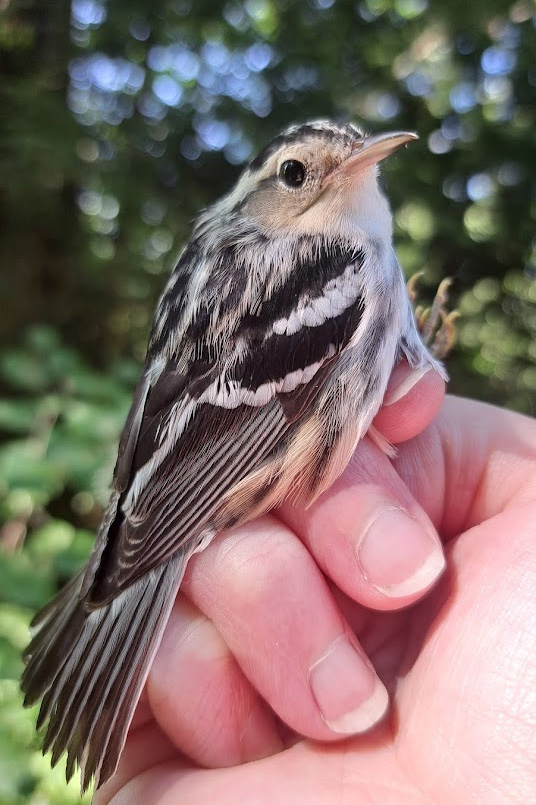
Black-and-white Warbler by Lindsay Herlihy.
From June through early August, our volunteers gathered before dawn to open nets, extract birds, and record data. This season brought exciting new species, returning birds, and plenty of memorable moments, including a Spring Peeper launching itself directly into my eye during the station set up. Thankfully, no frogs or eyeballs were harmed by these hijinks.
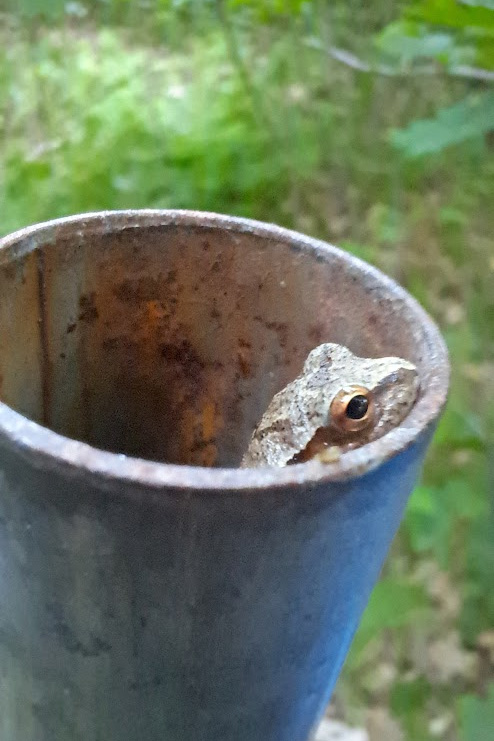
Spring Peeper by Lindsay Herlihy.
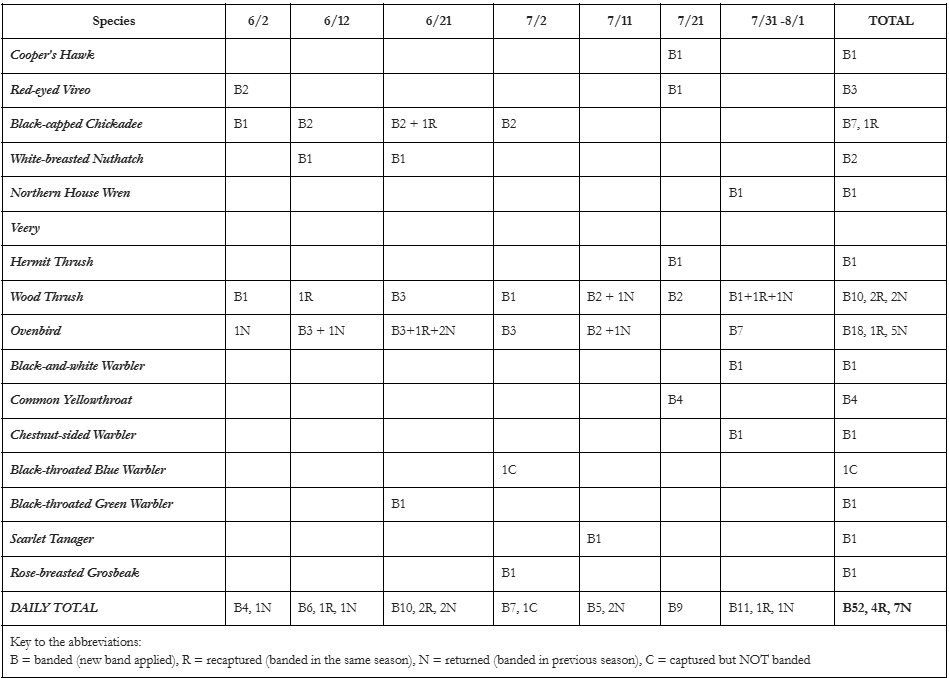
With the addition of three new mist nets, we increased our capture rate compared to last year. BMBS banded 52 new birds in 2025, up from 39 during our inaugural season in 2024. Even more exciting were the six species banded for the first time at the station: White-breasted Nuthatch, Scarlet Tanager, Rose-breasted Grosbeak, Hermit Thrush, House Wren, and an immature female Cooper’s Hawk.
As in 2024, Ovenbird remained our reigning champion for most-captured species. We also banded multiple Wood Thrushes, Black-capped Chickadees, Common Yellowthroats, and other familiar forest breeders. Many captures provided opportunities to teach volunteers about molt patterns, brood patches, ageing techniques, and bird behavior.
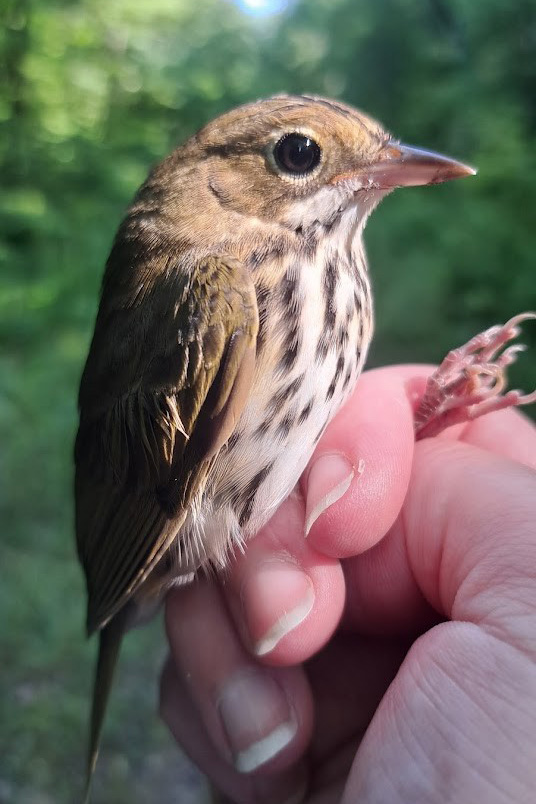
Ovenbird by Lindsay Herlihy.
One especially exciting moment came early in the season with BMBS’s first-ever Red-eyed Vireos in the net. Although we hear them singing constantly from the treetops, this species rarely comes down low enough to reach our mist nets.
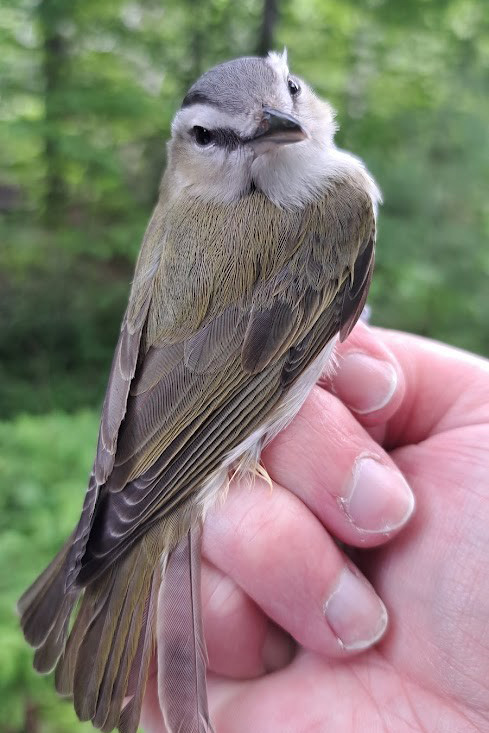
Red-eyed Vireo by Lindsay Herlihy.
The season also highlighted the value of long-term monitoring. Approximately 13 percent of birds banded during our first MAPS season in 2024 returned to the station in 2025. Among those returns were two radio-tagged Wood Thrush from last summer’s Motus tracking project.
Using the Motus Wildlife Tracking System, we were able to follow the movements of tagged Wood Thrush throughout migration and winter. One bird overwintered in Belize before moving north again in spring. Another ultimately returned to Black Mountain Forest after prospecting farther north in New Hampshire earlier in the season. These detections transform familiar birds into remarkable travelers completing enormous migratory journeys. Hearing one of those tagged thrushes singing near the banding station again this summer was especially meaningful.
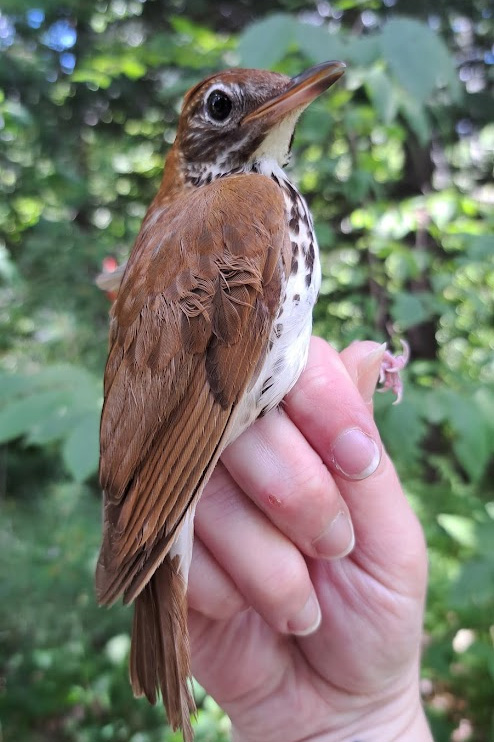
Wood Thrush by Lindsay Herlihy.
The birds, however, are only part of the story. Between net rounds, we admired Eastern Tiger Swallowtails nectaring in the trail, photographed metallic-green weevils inspecting the protocol binder, carefully removed horseflies from mist nets, and discovered fairy rings of mushrooms along old logging roads. Our resident porcupine became a regular visitor, often observing the banding crew from an overhanginging basswood tree before deciding we were much too rowdy and wandering back into the woods.
Perhaps the greatest success of the season, though, was the community itself. Twelve volunteers helped support the station this summer, contributing everything from trail maintenance and net setup to photography, data collection, and bird handling. I am incredibly grateful for the kindness, enthusiasm, and dedication of the volunteers who make this station possible.
MAPS banding is beginning again this year in June at Black Mountain Banding Station. If you are interested in volunteering or learning more visit our website or reach out to Lindsay Herlihy at blackmtnbanding@gmail.com for more information.