
If you’re new to birding, ducks are a great place to start and winter is one of the best times to find them.
While the forests may seem quiet in February, the open water and coastline are full of life. Ducks are often close enough to study with binoculars, and they teach you one of birding’s most important skills: how to read shape, behavior, habitat, and season.
New Hampshire offers an impressive lineup of winter waterfowl. A drive along the Seacoast can reveal Bufflehead, Common Eider, Black Scoter, American Black Duck, Common Goldeneye, and more during the winter. Great winter spots include Odiorne Point State Park, Rye Harbor State Park, Hampton Beach State Park, Hampton Harbor, and Great Bay.
The key to finding ducks in winter is open water. In mild winters, large lakes can host impressive concentrations. In frigid years, when lakes freeze over, ducks are pushed toward open coastal waters and tidal rivers. Either way the Seacoast is the place to be for the most consistent variety.
Dabblers and Divers
Before identifying species, it helps to understand the two general types of ducks: dabblers and divers. These groups are defined by how they feed.
You’ve probably seen the classic image of a duck’s rear end in the air, tipping forward as it searches underwater for food. That’s dabbling. Dabblers feed in shallow water, usually along pond edges and marshes, eating vegetation and aquatic invertebrates. There’s no need for them to dive. Some common dabblers are the Mallard, American Black Duck, Wood Duck, Green-winged Teal, and Gadwall.
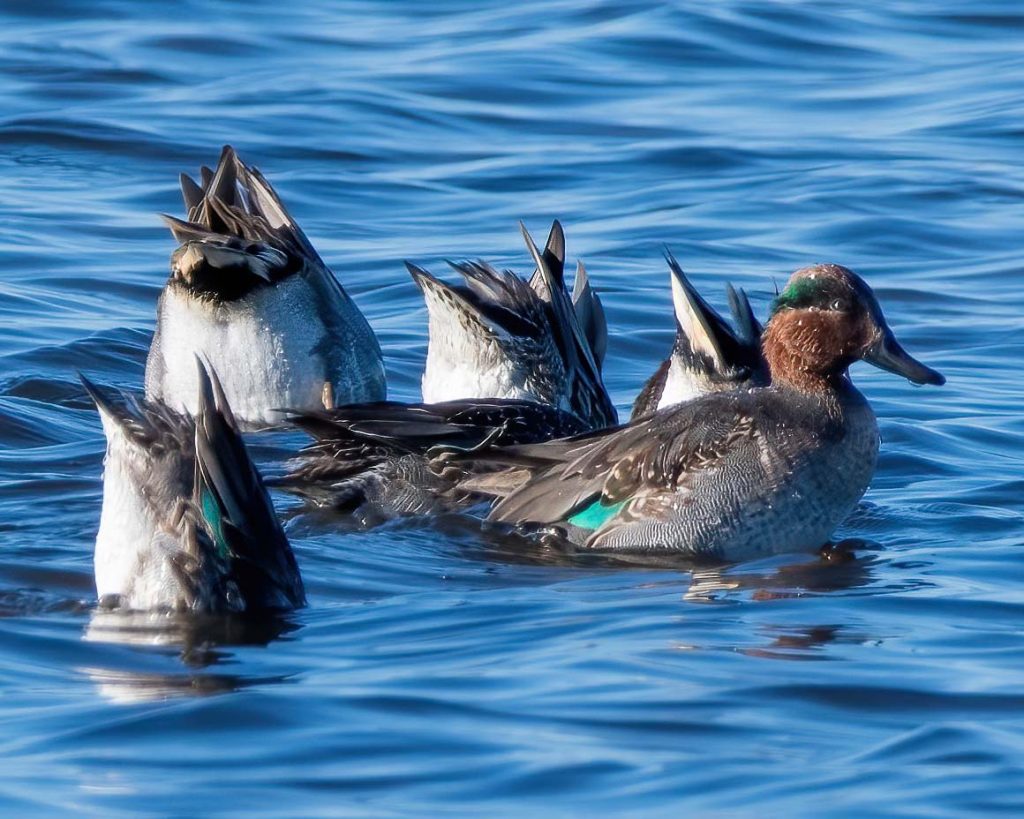
Green-winged Teals showing the dabbling feeding strategy by James Freitas. Note: this species is most often seen during spring and fall migration in New Hampshire.
Divers, on the other hand, disappear beneath the surface. They feed in deeper water, hunting fish, crustaceans, clams, mussels, snails, and aquatic insects.
If you’re watching a diver, it might be visible for a while and then vanish for 30 seconds or even longer. Some common divers are Common Eider, Black Scoter, Common Goldeneye, and Bufflehead.
Chances are you’ve seen both divers and dabblers, even if you didn’t know it at the time. Below are a few favorite species to see in winter to get you started.
Mallard (Anas platyrhynchos)
A medium-sized dabbling duck, the Mallard’s signature field mark is the male’s green head. When you think of a duck, it probably has a green head and goes “quack.” If so, you’re both right and a little wrong. You’re right that the most common duck on the continent is the Mallard, and the male has a green head. You’re a little wrong because the iconic “quack” is mainly the female, whose head is not green. The male’s voice is quieter and raspier.
Mallards, especially females, look like many other ducks. A female Mallard closely resembles an American Black Duck except for the speculum and bill color. Speculum feathers are the bright patch of wing feathers that are especially visible in flight. A Mallard’s speculum is bluish-purple and bordered in white. An American Black Duck’s is iridescent purple with a dark border and little to no white edging. A female Mallard’s bill is orange with some black; a Black Duck’s is olive-yellow. To complicate things further, Mallards and Black Ducks hybridize, making identification even tougher.
You can find Mallards statewide in every season. In summer, drakes molt into eclipse plumage and can resemble females.
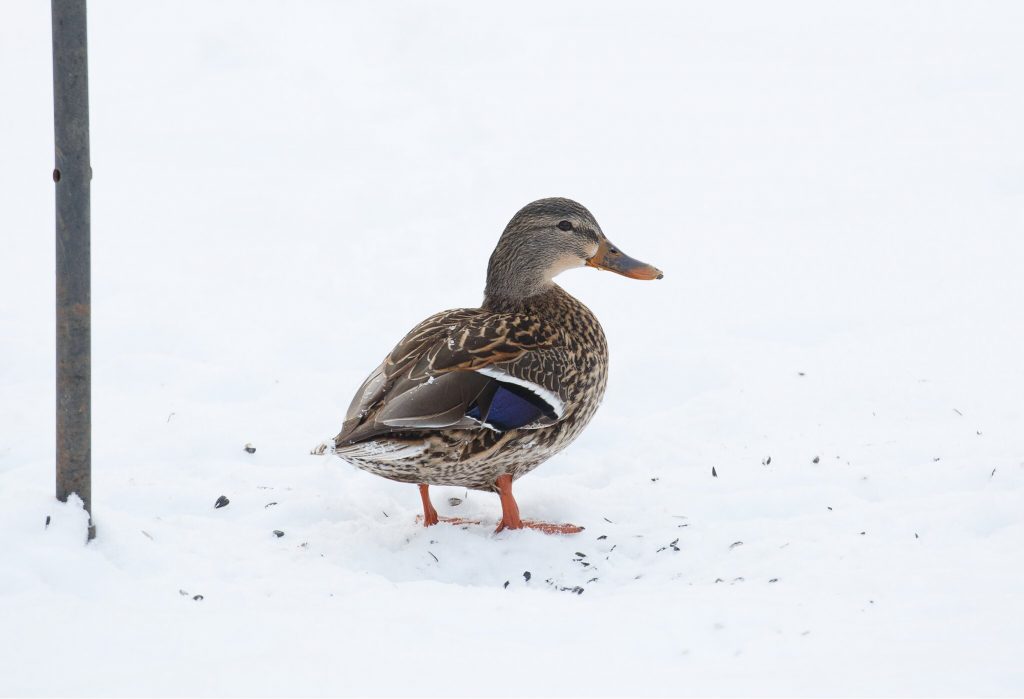
Female Mallard by Len Medlock.
Bufflehead (Bucephala albeola)
The Bufflehead is a small diving duck that pops down and back up like a little cork. A useful size comparison: a Bufflehead is about half the size of a Mallard.
The key field marks, beyond size, are coloration and contrast. The male is boldly patterned in black and white, with extensive white on the wing, underparts, and a large white patch on the back of the head. The female is darker overall with a smaller white spot near the ear.
You’ll find Buffleheads in New Hampshire from late fall through early spring on larger lakes, ponds, rivers, sheltered bays, and coastal waters. Great Bay is a reliable winter location. Try along the water’s edge at Wagon Hill Farm in Durham when the bay is not frozen.
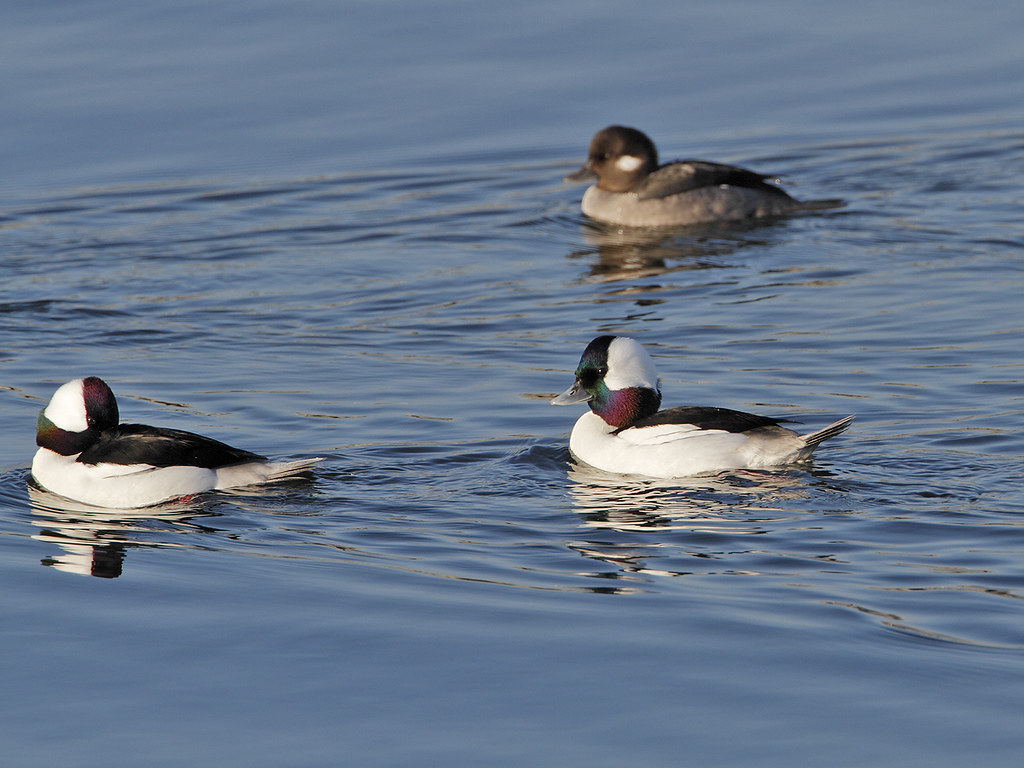
Bufflehead (males in front, female in back) by Len Medlock, 1-7-2013, Newcastle, NH.
Common Goldeneye (Bucephala clangula)
Roughly Mallard-sized, the Common Goldeneye is another winter diving duck to know.
On males, look for a black-and-white body and a small white spot near the base of the bill. In good light, the head can appear glossy green. Females have a chocolate-brown head and gray body. Both sexes have bright golden eyes.
Common Goldeneyes are cavity nesters. They breed in New Hampshire around forested ponds and rivers, and in summer, females can be seen with ducklings.
In winter, they’re found all along the coast, especially at Great Bay and Hampton Harbor. Keep an eye out for the rarer Barrow’s Goldeneye among them.
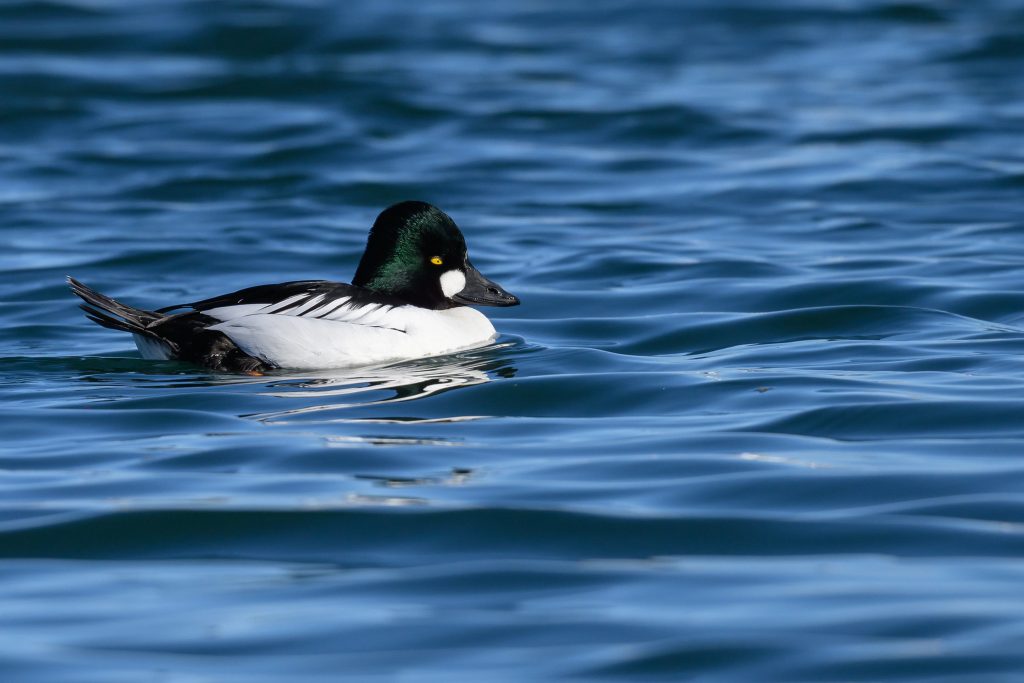
Common Goldeneye by Len Medlock, Rye, NH.
Common Eider (Somateria mollissima)
The Common Eider is our largest duck and, as the name suggests, common along the coast.
Males are striking in black and white with a pale green wash on the back of the head. Females are warm brown and heavily barred, blending beautifully with rocky shorelines.
Eiders often raft together offshore, riding the waves in tight groups. Scan rocky jetties and exposed coastal waters at Odiorne Point State Park or Rye Harbor. In summer, look for crèches of female Common Eiders and chicks rafting offshore.
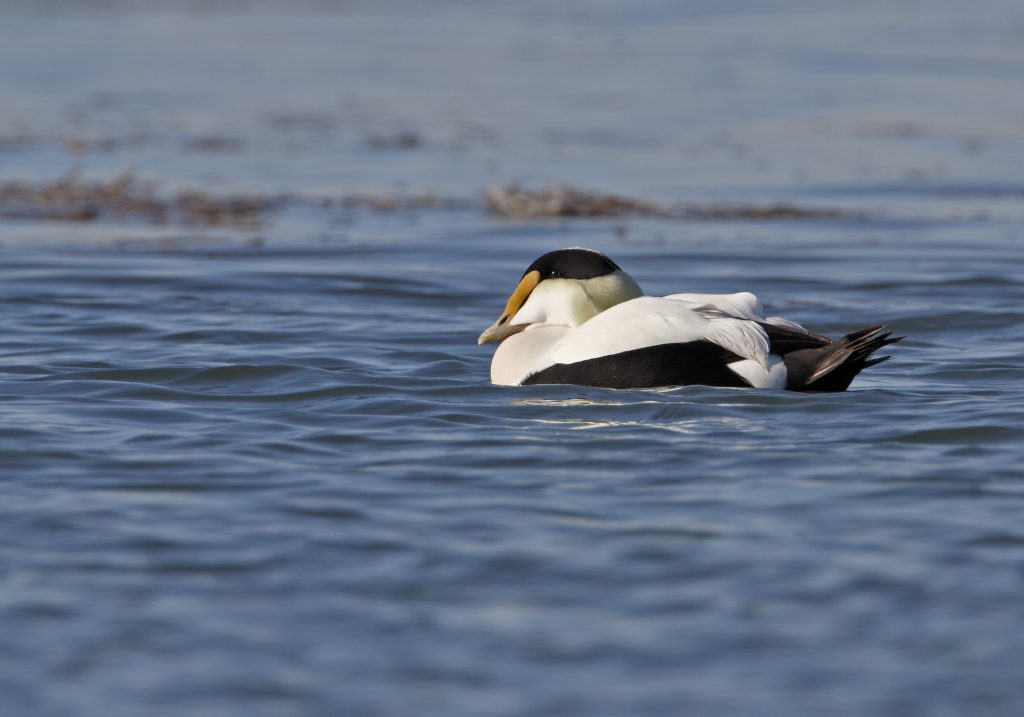
Common Eider (male) by Len Medlock, Hampton, NH
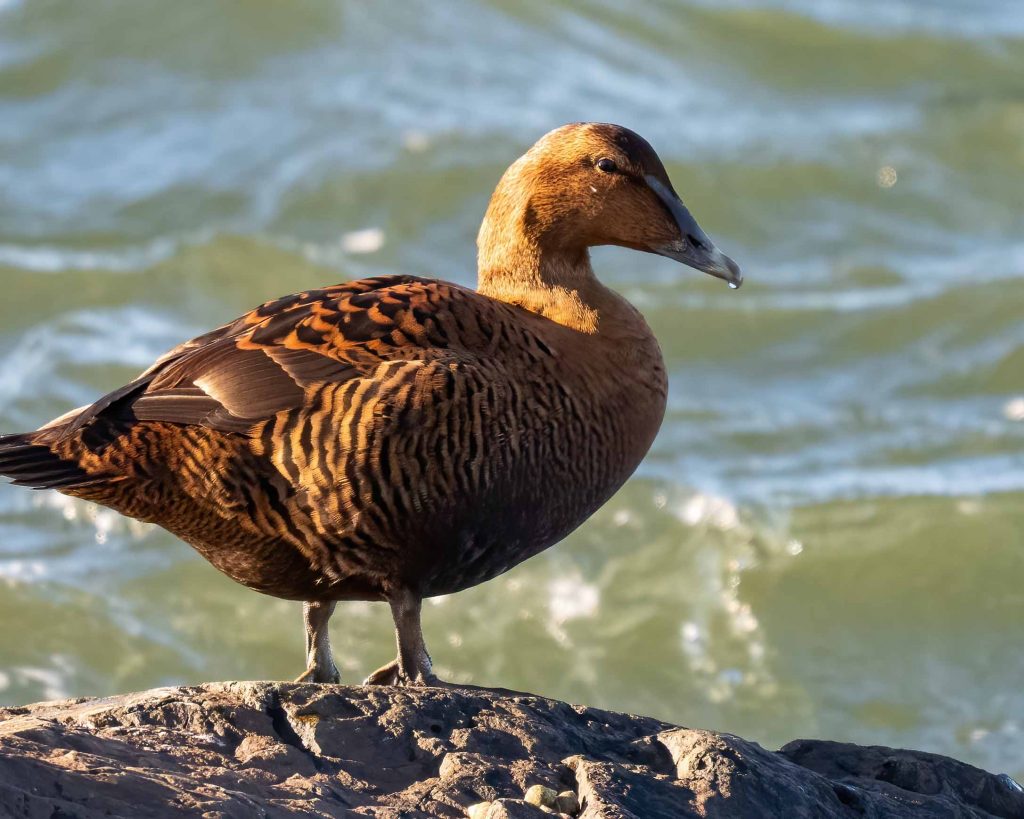
Common Eider (female) by James Freitas.
The Triple Scoters
Winter along the New Hampshire coast can bring three species of scoters:
- Black Scoter (Melanitta americana)
- Surf Scoter (Melanitta perspicillata)
- White-winged Scoter (Melanitta deglandi)
These are true sea ducks, rarely seen inland. All are chunky, dark waterfowl that sit low in the water and dive frequently.
Male Surf Scoters are especially eye-catching, with bold white patches on the forehead and nape and a brightly colored bill. White-winged Scoters show a distinctive white wing patch in flight. Black Scoters are mostly dark, with males showing a bright orange knob at the base of the bill. Scoters are often found in loose flocks offshore, so bring a scope if you have one.
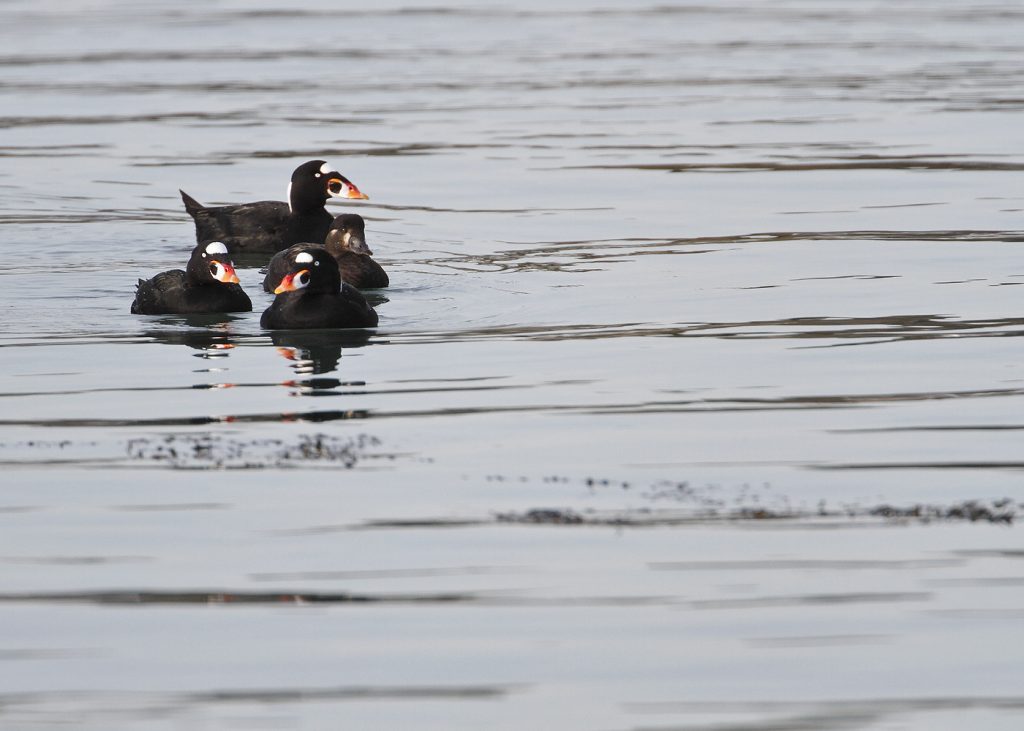
Surf Scoters by Len Medlock, 1-5-2014, Rye, NH.
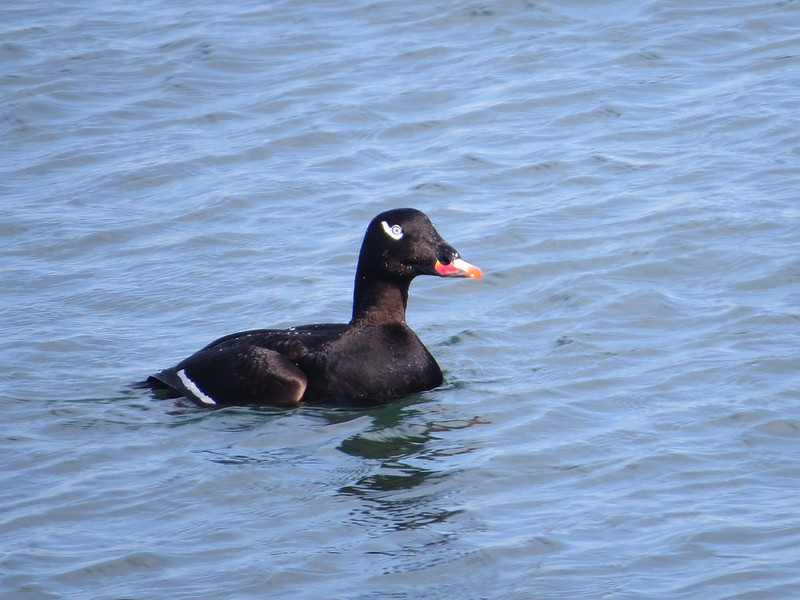
White-winged Scoter by Steve Mirick
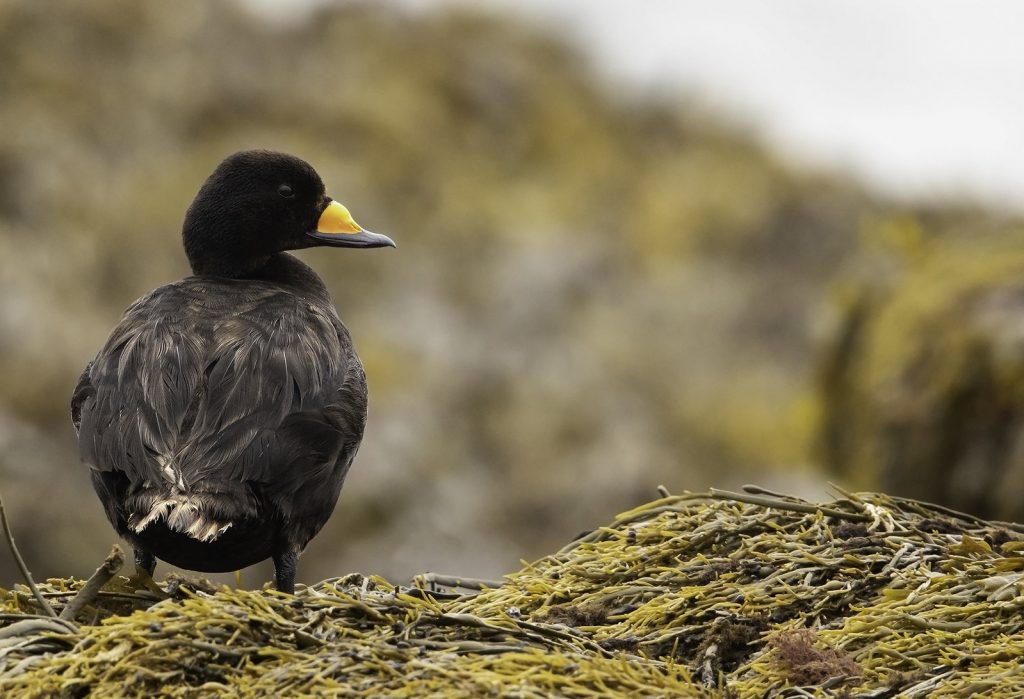
Black Scoter by Len Medlock, 8-12-2018, Plaice Cove, Hampton, NH.
Red-breasted Merganser (Mergus serrator)
These are sleek, diving ducks, often seen at the coast over the winter. Their long, slender bills are built for chasing fish under the water with serrations to help hold onto slipper prey. Both males and females have spiky crests. Males have a dark green head and rusty wash across the chest; females and immatures are gray-bodied with a cinnamon head. They are active hunters, moving surprisingly fast.
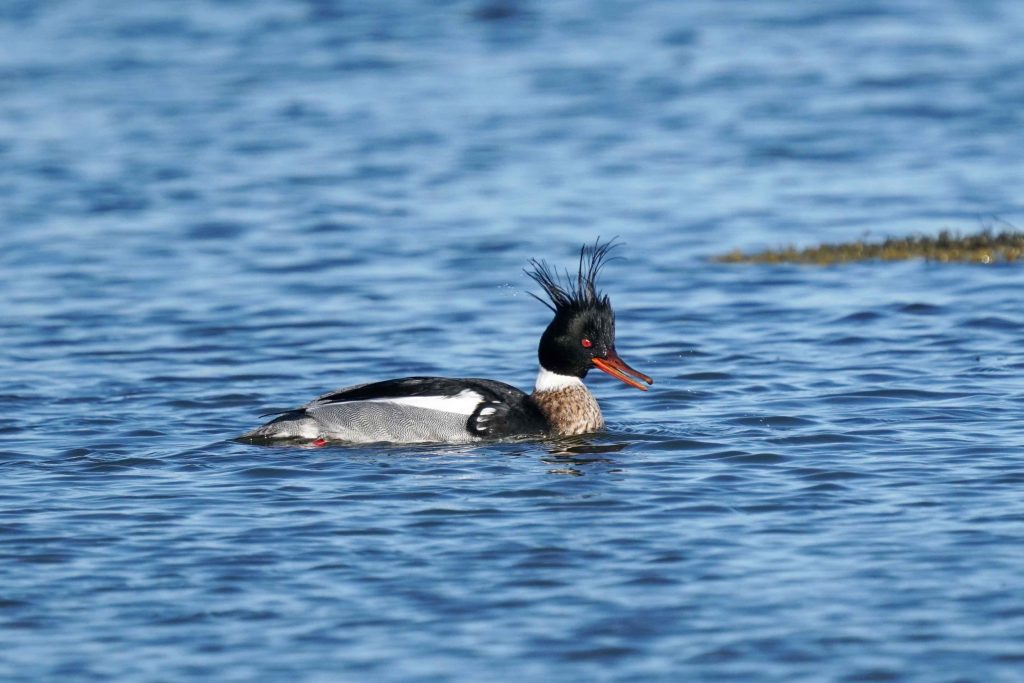
Red-breasted Merganser (male) by Grace McCulloch, Rye, NH.
What to Ask Yourself When You See a Duck
When you spot a duck, pause and ask:
Where am I? Seacoast or inland? Tiny pond, big lake, marsh edge, river?
Dabbler or diver? Tipping up in shallow water, or disappearing underwater?
Size? Bigger or smaller than a Mallard?
Shape? Rounded head? Flat? Peaked?
Plumage? Overall pattern? Speculum color?
Time of year? Winter specialist or year-round resident?
Final Thoughts
In New Hampshire, you can find ducks on large lakes like Winnipesaukee, Newfound, and Sunapee; along rivers like the Merrimack; in marshes and beaver ponds; and (especially in winter) along the Seacoast.
If winter feels slow, look to the water. Ducks remain active, visible, and diverse when many other birds are scarce. As Rosemary Mosco put it, “winter is Weird Duck Time.”
And winter is just the beginning. As the ice recedes and spring returns, new arrivals take their place: Green-winged Teal in flooded fields, Blue-winged Teal following later in the season, Northern Pintail and Northern Shoveler in marshes, mergansers along rivers, and Wood Ducks slipping through wooded ponds. Each season brings a different cast of waterfowl, waiting to be discovered.