
Users of eBird and other Cornell products (e.g., Merlin), may have noticed some changes to bird names in New Hampshire (and beyond, but let’s keep it local) this past fall. What’s a “Hudsonian” Whimbrel? Why are Warbling Vireo and Yellow Warbler “Eastern” and “Northern” all of a sudden? The answer, of course, is that avian systematists (people who study the evolutionary relationships among birds) have been at it again and these three familiar species have each been split into two. The good news for birders is that only one species of each new pair occurs in most places, making identification straightforward.
All three of these splits have been long anticipated and are based on well-documented differences in plumage, song, and behavior that were backed up by genetic evidence. In the case of the Whimbrel, a key difference is the color of the rump: North American birds have a brown one while that of Eurasian birds is white. In fact, these were originally considered separate species when first described but were “lumped” in the early 1900s before new data reversed that decision in 2025. Whimbrels on this side of the Atlantic breed in two areas, the western shore of Hudson Bay (from whence they get their new name) and in Alaska and northwestern Canada. Birds from the Hudson Bay population migrate through New England in the fall. Shorebirds are notorious for vagrancy however, so watch for whimbrels with a large white patch on their back and rump. The Eurasian Whimbrel has been recorded a dozen or so times in New England, although never in NH.
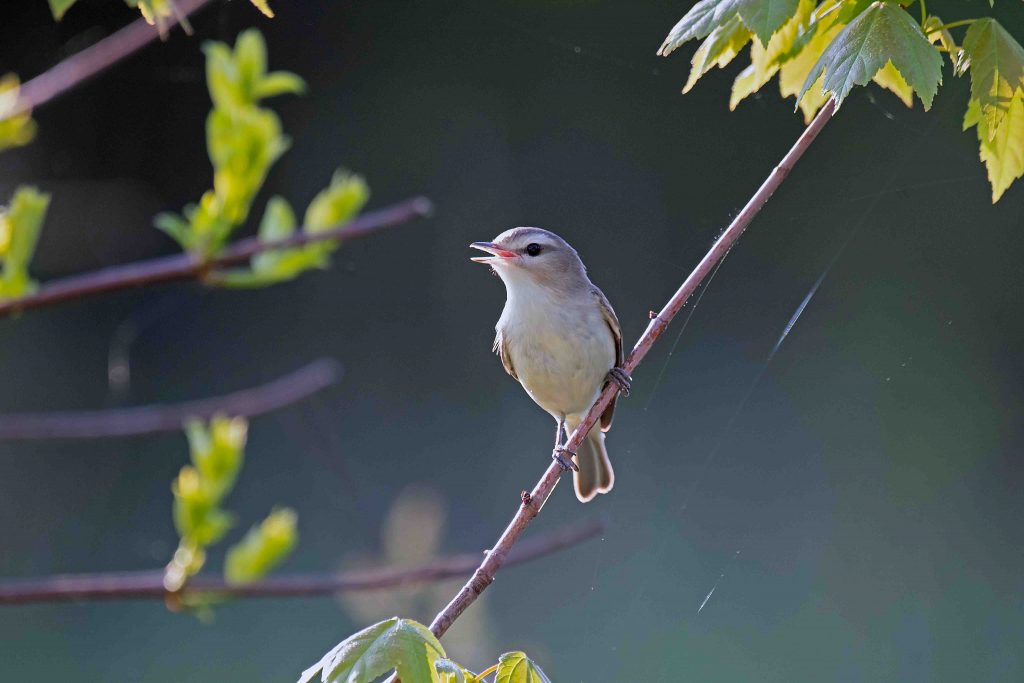
An Eastern Warbling Vireo by Debra Powers, 5-24-2024, Gile Rd, Nottingham, NH. When Debra took this picture it was “just” a Warbling Vireo!
The other two splits affecting birders in New Hampshire are similarly broad in scope. Warbling Vireos occur coast to coast in the U.S. and Canada, but birds on either side of the Great Plains have distinctly different songs. Those from the Rocky Mountains east occur in deciduous forests and thickets along rivers, while those to the west tend to be in more montane habitats, although still near water. They can only be distinguished by song, meaning that finding a vagrant of either the eastern or western species on the opposite side of the country is going to be a major challenge, given that such wayward birds are most likely in fall when they’re not singing.
This brings us at last to the Northern Yellow Warbler, and its tropical counterpart the Mangrove Yellow Warbler. Habitat, plumage, range, and even behavior separate these two close relatives. The Northern Yellow Warbler breeds in brushy fields and wetlands across the U.S., Canada, and western Mexico. It is bright yellow without any rusty coloration on the head and is highly migratory, wintering in Central and South America. The Mangrove Yellow Warbler, as its name implies, is restricted to coastal mangroves from the extreme southern U.S. (south Florida and Texas) to northern South America. It is non-migratory and has a variable amount of rufous on the head. Birds from the Caribbean tend to have a rusty cap, while those on the mainland have the entire head this color. Since this species is non-migratory, it is almost never recorded away from its breeding areas.
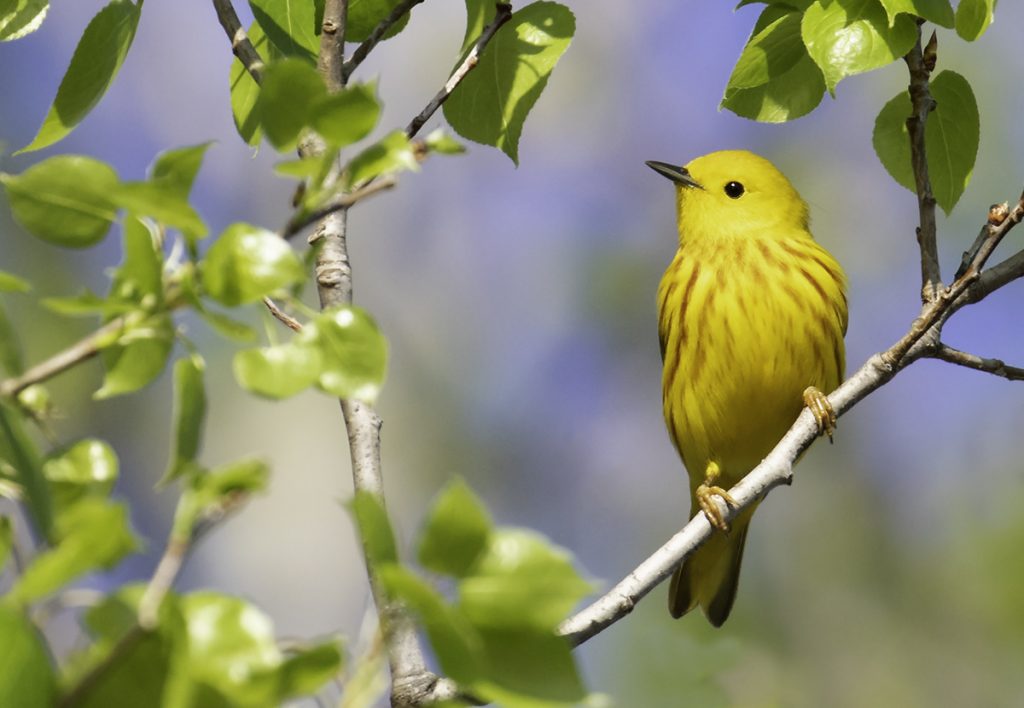
A Northern Yellow Warbler by Len Medlock.
So, while their names have changed, the birds we formerly knew as Whimbrel, Warbling Vireo, and Yellow Warbler have not. And if you travel far enough east, west, or south, there’s an excellent change of adding a new species to your life list! For more information on these recent taxonomic changes, visit https://ebird.org/news/2025-taxonomy-update.