
From June through July of 2025 (the summer season) birders reported 251 species of birds in New Hampshire. This was right in line with the last several years of reporting, and the second highest species count for the summer behind 2021 when 253 summer species were reported.
A warm and very wet spring carried on into June followed by hot and dry weather dominating in July. This July was in fact the eighth hottest on record for the state. Perhaps related to the weather, many birders felt that birds were moving earlier than normal this year. Indeed, an unusually high number of rare birds were reported in the first half of June this summer. High heat does reduce bird activity, but also birder activity, so it’s possible that played a role in our perception of the birds of the summer of 2025.
Rare and Notable Vagrants, Chronological Order
A Swallow-tailed Kite was photographed by Chris Gagnon in Chichester on June 4, and another report of a Swallow-tailed Kite came from Nicole Mitchell on July 3 near Merrimack. Aside from an individual seen by many in 2020, this species is rarely reported. Most reports have involved soaring birds flying over highways and disappearing past the trees without photographic evidence. A curious phenomenon has been occurring just to our south on Cape Cod where individual birds have been spending the summer over the last few years. Generally, this is a species whose range extends only as far north as the Carolinas.
On June 5, Debbie Lyons reported and photographed a Lark Bunting at Odiorne Point State Park in Rye. The bird continued in the area through June 7 with many able to see it. The last record of this species in the state was in the summer of 2021. This Lark Bunting is only the eighth modern (eBird) record of this species in any season. It is a grassland species that normally spends the summer in the upper Midwest and winters in huge flocks down in Texas and Mexico.
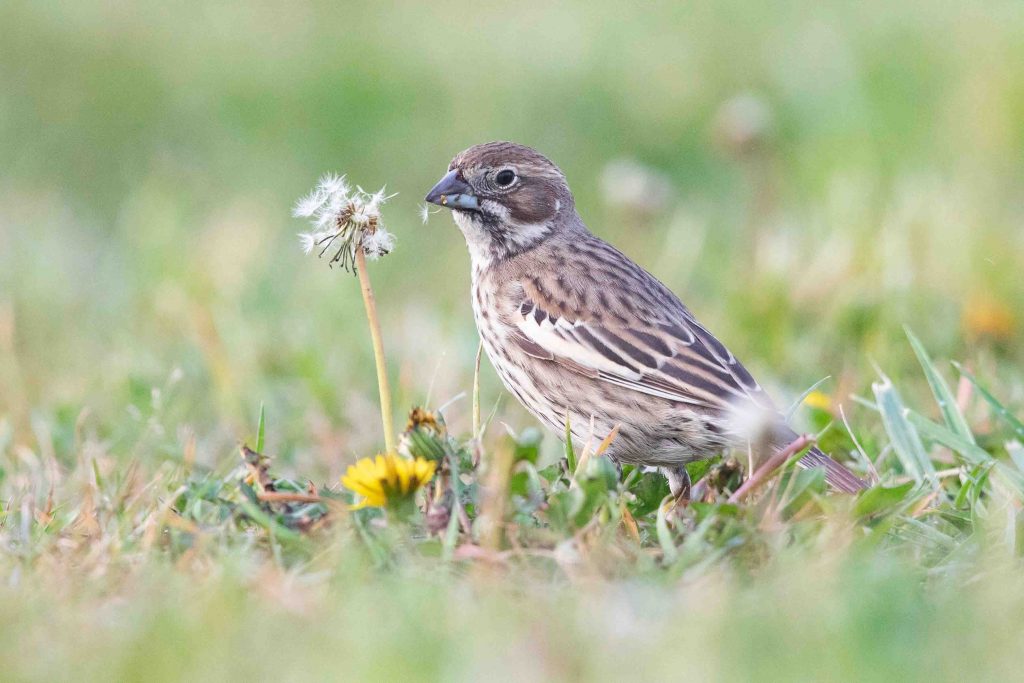
Lark Bunting by Cameron Johnson, 6-6-2025, Odiorne State Park, Rye, NH.
Shoals Marine Lab (SML) Seabird Technician Joe Brosseau photographed a Sabine’s Gull on June 8 at the Isles of Shoals. This species breeds on the tundra and is not frequently seen as far south as our coast. There are five previous records this century, one of which was a lingering individual in 2009.
For the second year in a row, Cerulean Warbler was reported at Wantastiquet Mountain near the Connecticut River in Chesterfield and Hinsdale. Scott Spangenberg first saw it on June 6, and other birders continued reporting it through June 13. This is a much later first detection than last year, but the end date is similar. I think it’s likely birders were more excited to see this species last year and fewer put in the effort to see it again in 2025.
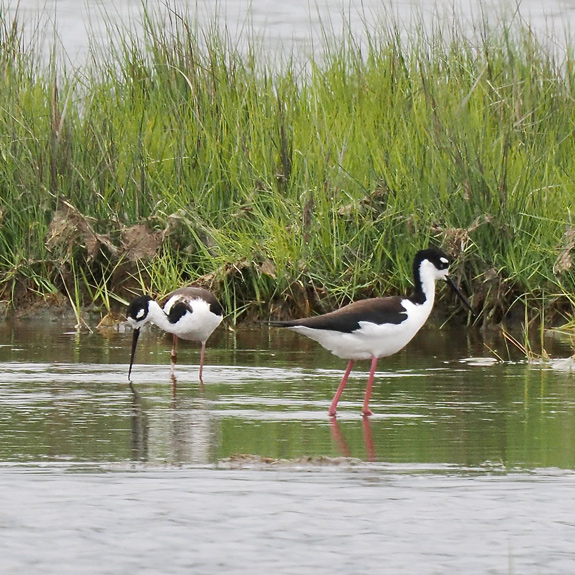
On June 9, Stuart Varney photographed two Black-necked Stilts at Odiorne Point and a number of other birders were able to see the birds that day. Black-necked Stilts typically don’t stray north of the Carolinas on the east coast, but this summer there were individuals and pairs reported all over the New England coast and up into the Maritimes. There are only three previous New Hampshire records in eBird, including one in each of the last two springs.
Another notable bird reported at the Isles of Shoals by the SML staff and photographed well by SML intern Ben Kerstetter, was a Royal Tern on June 11. This is a species that breeds as far north as the mid-Atlantic coast and has only been reported in New Hampshire in half of the last ten years.
A Bridled Tern was seen at the Shoals on White and Seavey islands during the summer of 2024 which sparked a major birding event. Countless birders traveled out to the Shoals hoping to catch a glimpse of this incredible rarity that stuck around into early August. This year, a Bridled Tern (could it be the same one?!) was reported by SML staff member Kayla Cannon on June 13 and continued to be seen through the end of the summer season, almost exclusively by SML staff. This remains a phenomenal rarity as the nearest place to somewhat reliably see this species might be a pelagic trip off Cape Hatteras, followed by the Caribbean.
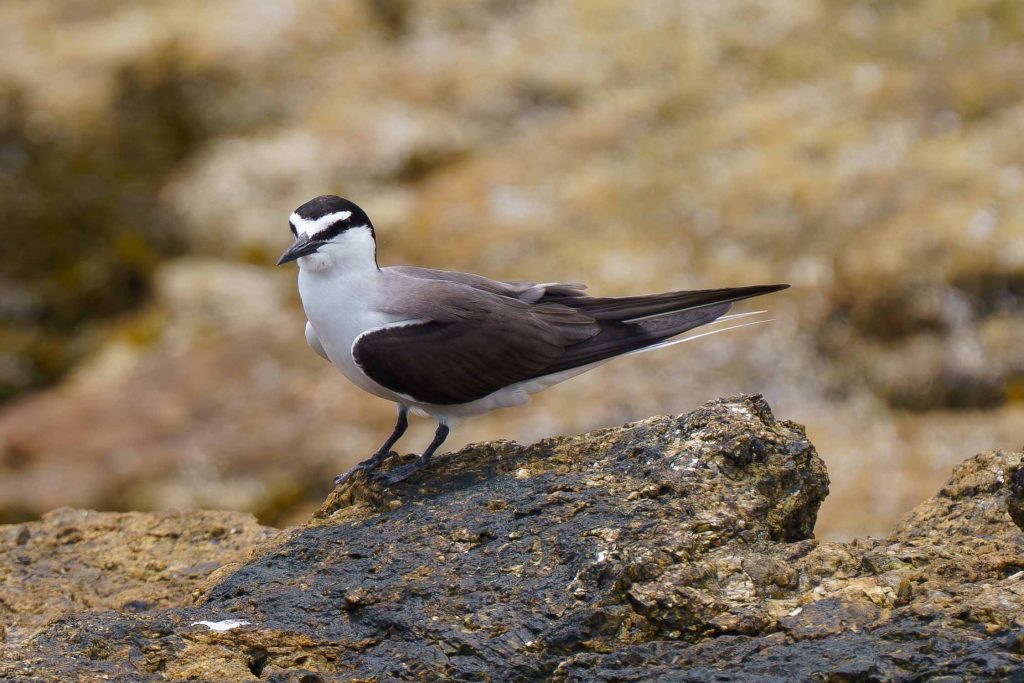
Bridled Tern by Marshall Mumford, 7-7-2025, Isles of Shoals, White and Seavey Islands, Rye, NH.
Painted Buntings have been reported in about half the years of this century, but only twice previously during the summer season when breeding birds usually travel no farther north than the Carolinas. More typically, they show up at our bird feeders during the winter after dispersing from the breeding grounds. Thus, an adult male Painted Bunting photographed on June 20 by Michelle Luongo in Chatham, Carroll County is considered very rare indeed.
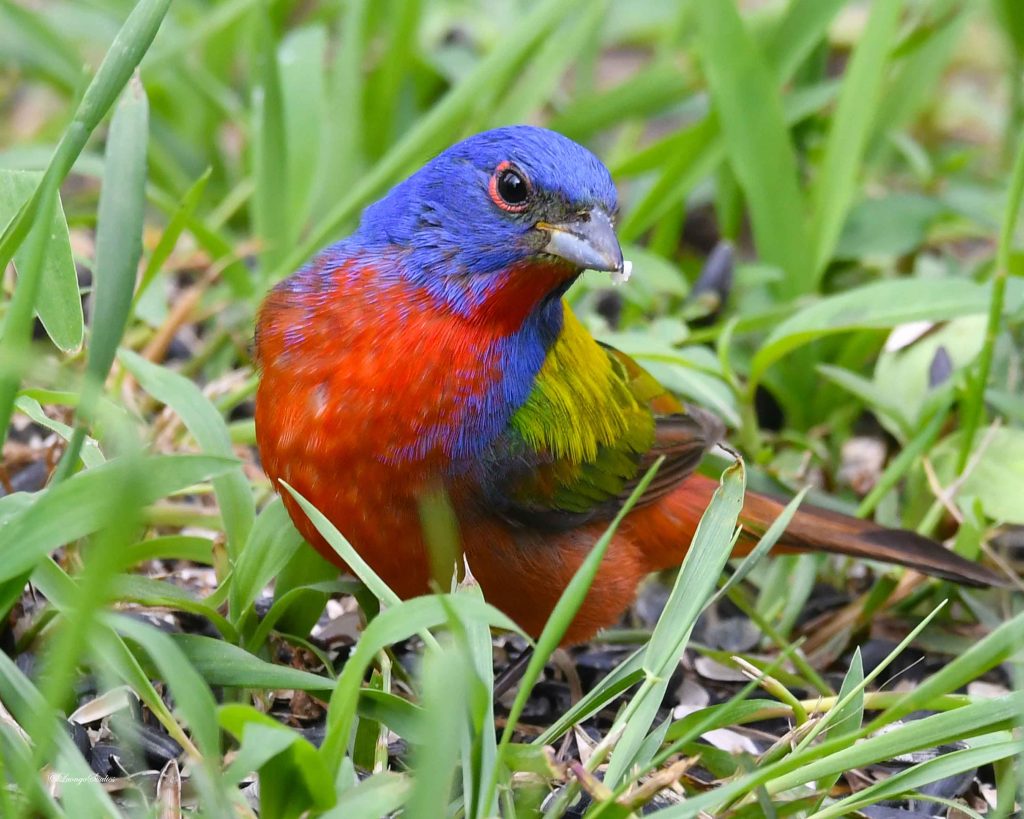
Painted Bunting by Michelle Luongo, 6-20-2025, Chatham, NH.
In a similar vein, though reported most years during spring, and occasionally fall migration, a Summer Tanager reported from Antrim on July 15 by Marion Joette is only the third accepted summer record in the modern eBird era. This species normally breeds only as far north as New Jersey.
Highlights, Generally in Taxonomical Order
A Ruddy Duck reported on June 26 from the Rochester Wastewater Treatment Plant by Dan Hubbard is notably early for fall migration which is when they are usually found, although a few also turn up in the spring.
There were a couple of interesting shorebird reports from inland locations this summer. North-bound Black-bellied Plovers are commonly found on the Seacoast into early June, and they’re reported returning beginning in early July. A pair of Black-bellied Plovers found by Kyle Jones on June 1 at Moore Reservoir was not only a somewhat late migrant. This was also the first report of this species in Grafton county in nearly a decade, and the first summer inland report of the species since 2008.
Further south along the Connecticut River, a Ruddy Turnstone photographed by John Ludlam in Hinsdale on June 2 is the first summer inland record for the species in ten years. The following day, June 3, Donna Keller found the same species (possibly the same bird) in Swanzey.
Last year Stilt Sandpipers migrated through notably early, and this year they were a week earlier still! A group of three Stilt Sandpipers were reported on July 9 from Hampton by Holly Bauer and Steven Mirick.
Least Bitterns seem to have been doing well the last few years in the state, especially in the southern region. A Least Bittern found in Colebrook on July 2 by Aubrie Giroux is now the northernmost record for a live individual of the species in the state. The two previous modern records in Coos County include a 1997 bird in Pondicherry and a deceased bird from downtown Colebrook in 2010.
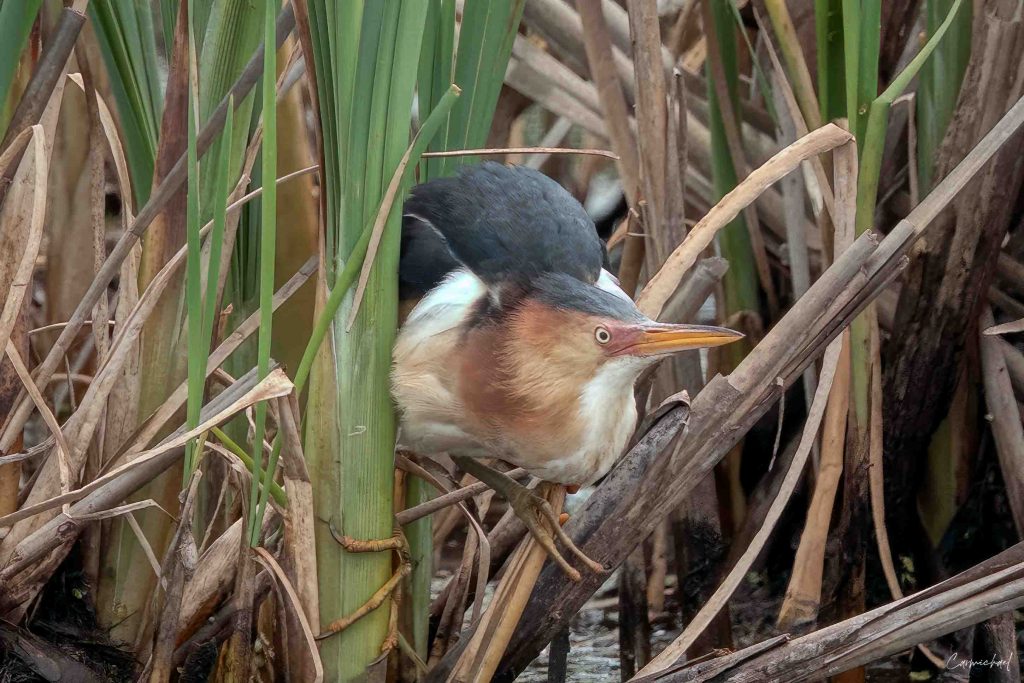
Least Bittern by George Carmichael, 6-6-2025, Airport Marsh, NH.
A Black-headed Gull was reported on July 13 from Hampton by Cameron Johnson and continued to be reported into the next day. This species is not common during any particular time of year, but it is particularly uncommon during the summer. This is only the tenth summer state record in eBird.
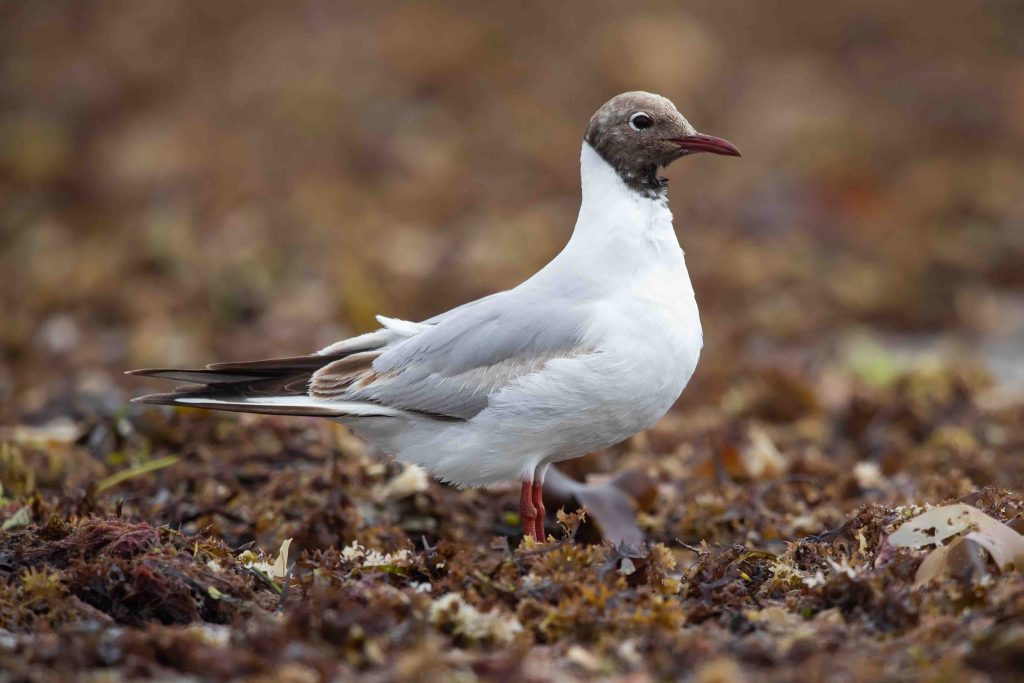
Black-headed Gull by Cameron Johnson, 7-13-2025, Bicentennial Park, Hampton, NH.
The SML staff report from the Isles of Shoals indicated similar tern colony counts to last year with 3,246 Common Tern nests, 131 Roseate Tern nests, and for the third year in a row, zero Arctic Tern nests. Productivity for Common Terns and Roseate Terns was average. Nest monitoring of Black Guillemot found 62 nests this summer (up from 48 in 2024 and 41 in 2023).
Away from the coast, an Arctic Tern was seen by Dick Dionne, Paul Charron, and Lori Charron on June 21, at Lake Umbagog. Surprisingly, this is not only the first confirmed eBird record of this species in Coos County, but the first confirmed summer record anywhere away from the coast
Summer reports of Caspian Tern are equally as likely from the North Country and Lakes Region as from the Seacoast, with the species reported somewhere in the state in roughly ten out of the last 20 years. This summer was notable for the number of reports and individuals as well as the variety of locations. On June 6, Katrina Fenton photographed a Caspian Tern at Lake Umbagog. On June 20, Rob Woodward and Steve Mirick may have separately seen the same individual Caspian Tern at Rye Harbor and Jenness Beach, respectively. On June 21 Lori Charron, Paul Charron, and Dick Dionne photographed three Caspian Terns at Lake Umbagog. Finally on July 6, Jessica Vaughan recorded two Caspian Terns at the Pondicherry National Wildlife Refuge. This species is known to breed on Lake Champlain as well as in the Canadian Maritimes and has been increasing in number for decades, so there is room for speculation as to the origin of these birds.
Red-headed Woodpeckers have been reported with increasing frequency though those records are often unsupported or poorly documented. In addition, confusion with the similarly-named Red-bellied Woodpecker, often calls these reports into question. On June 27, Eric Polzer photographed a Red-headed Woodpecker at feeders at a private residence in Cheshire County.
On June 21, Gabriel Roxby recorded audio of an Acadian Flycatcher in Hancock. The bird was resighted and photographed by others the following day.
Dick and Joanne Dionne found and photographed a Willow Flycatcher in Colebrook on July 15. This is the third northernmost record for this species in the state.
Blue-gray Gnatcatchers can be found nearly anywhere south of the Whites, but reports in the North Country are few, so a bird reported by Bill Lisowsky on June 21 in Whitefield is notable. The species has been reported from Coos County about once a year over the last decade.
A Lark Sparrow was reported on June 2 by Mike DiGioia in Lee. This species has been reported in the state at least once each year during the last decade, usually during the fall, but this is only the second ever summer record.
Bernard Foy reported a Clay-colored Sparrow on June 16 in Monroe and Pam Hunt and Unity Dienes found another in Franconia on June 19. These are only the fourth and fifth summer reports for this species in the last decade.