
On a cold morning in late January, my yard in Hampton, New Hampshire looked a little different than usual. Instead of the quiet rhythm of chickadees and nuthatches moving between feeders, small groups of bundled-up birders were walking the snowy paths we created around our property, binoculars raised, scanning the trees and brush.
They had come for the Super Bowl of Birding, an annual winter event organized by Mass Audubon. However, what made this stop especially exciting was that my yard had become host to not just one rare visitor, but two.
Seeing the joy on people’s faces as they watched birds they might never otherwise encounter was incredibly rewarding. The moment, however, was also the culmination of something that had been growing quietly for years, the transformation of our simple yard into a small wildlife sanctuary.
It all started with a simple idea.
The Beginning of a Backyard Habitat
Like many bird lovers, I began with feeders.
At first, the goal was simply to bring a little life to the yard during the long New Hampshire winters. A few feeders hung from a tree quickly attracted the usual suspects: Black-capped Chickadees, Tufted Titmice, White-breasted Nuthatches, Northern Cardinals, Eastern Bluebirds, and a variety of woodpeckers.
But over time, I became more curious about what else might bring birds in. The more I learned, the clearer it became that feeders alone were just part of the story. Birds need much more than seed. They need shelter, water, and natural food sources throughout the year.
So the yard slowly began to change.
Instead of thinking only about what looked good to people, I started thinking about what the landscape might look like from a bird’s perspective.
Where could they hide from predators? Where could they find insects in spring? Where could they shelter from winter winds?
That shift in perspective changed everything.
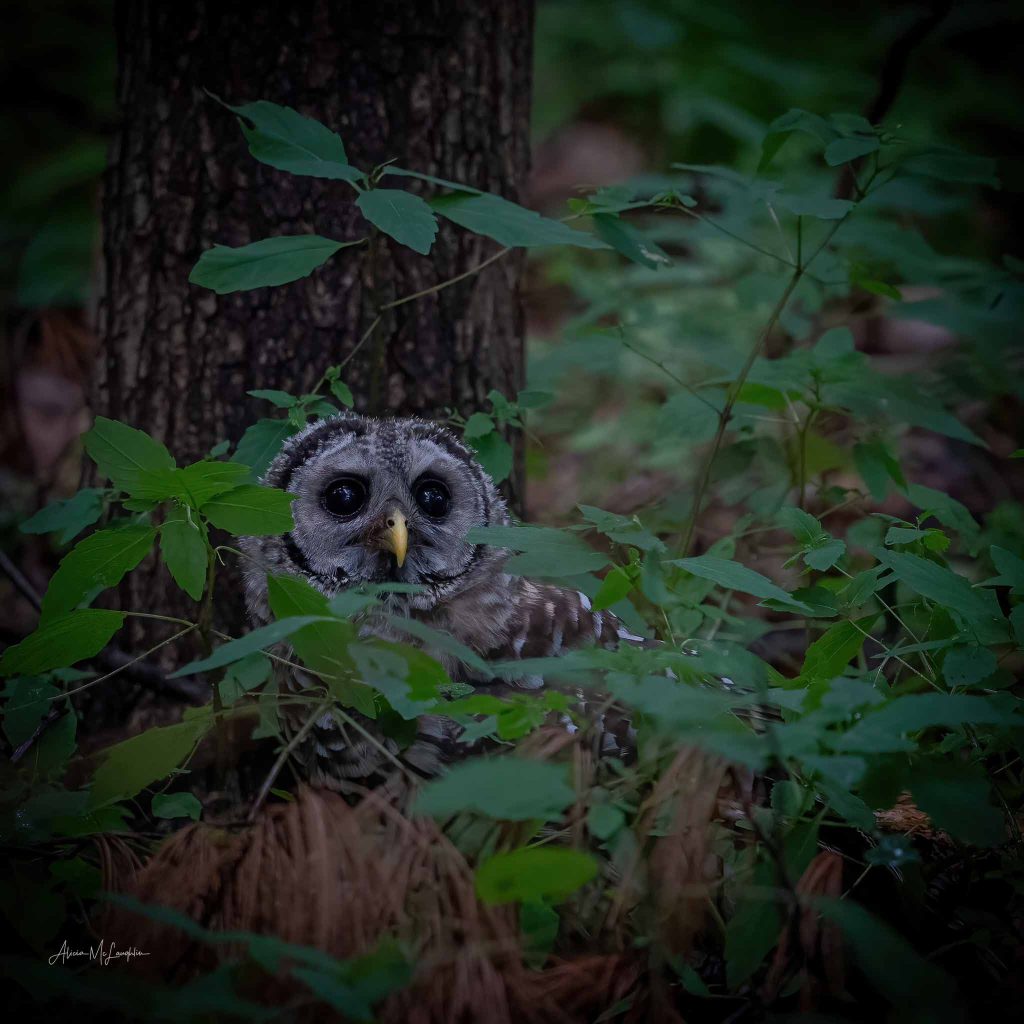
A Barred Owl watches from Alicia’s backyard. Photo by Alicia McLaughlin.
Designing with Birds in Mind
Creating a wildlife-friendly yard doesn’t require acres of land. What matters most is structure and diversity.
One of the most important elements is layering, just like a natural forest. Birds use different levels of vegetation for different purposes, so having a mix of tall trees, shrubs, and ground cover made a huge difference for me.
Evergreen trees and dense shrubs provide winter protection from wind and snow. Deciduous trees offer perches, nesting sites, and insect life during the warmer months.
Brush piles and tucked-away corners that might look messy to us can actually be prime real estate for birds seeking safety.
Water is another essential feature.
In the warmer months, I offer several bird baths, including two fountains that keep the birds and small wildlife hydrated. In winter, when natural water sources freeze, I provide two heated bird baths that are an essential lifeline to the birds that chose my yard as their safe haven. I’ve watched birds line up along the edge on freezing mornings, waiting their turn for a drink or quick bath.
It’s amazing how something so simple can dramatically increase bird activity.
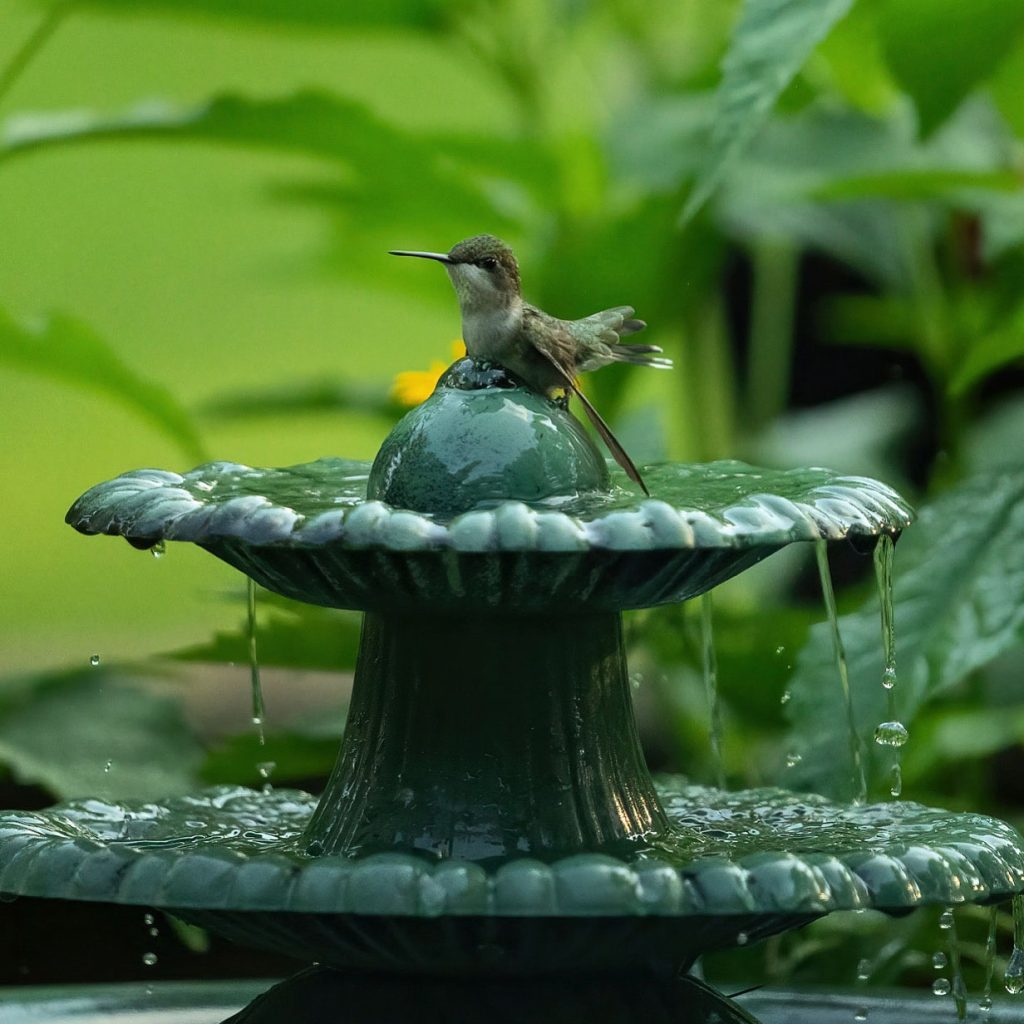
Ruby-throated Hummingbird by Alicia McLaughlin.
The Power of Native Plants
If feeders bring birds to the yard, native plants keep them here.
Native plants support local insects, which are the foundation of the food chain for many bird species, especially during nesting season when protein-rich insects are essential for raising their young.
Over time, I began incorporating plants that provide both food and shelter. Berry-producing shrubs are especially valuable, offering nutrition well into fall and winter.
For the past twenty-one years, I’ve added trees, bushes and shrubs to our landscape. Winterberry holly is a favorite, its bright red berries lingering long after the leaves have dropped. Our hawthorne trees, serviceberry, dogwood, crabapple and viburnum also attract a variety of birds when fruit ripens.
Even plants that don’t produce berries can be important. Many seed heads such as coneflower and black-eyed susans that are left standing through winter feed finches and sparrows, while dense shrubs such as rhododendron and boxwoods offer safe nesting sites in spring.
The more native plants you add, the more the yard begins to function like a natural ecosystem rather than just a landscaped space.
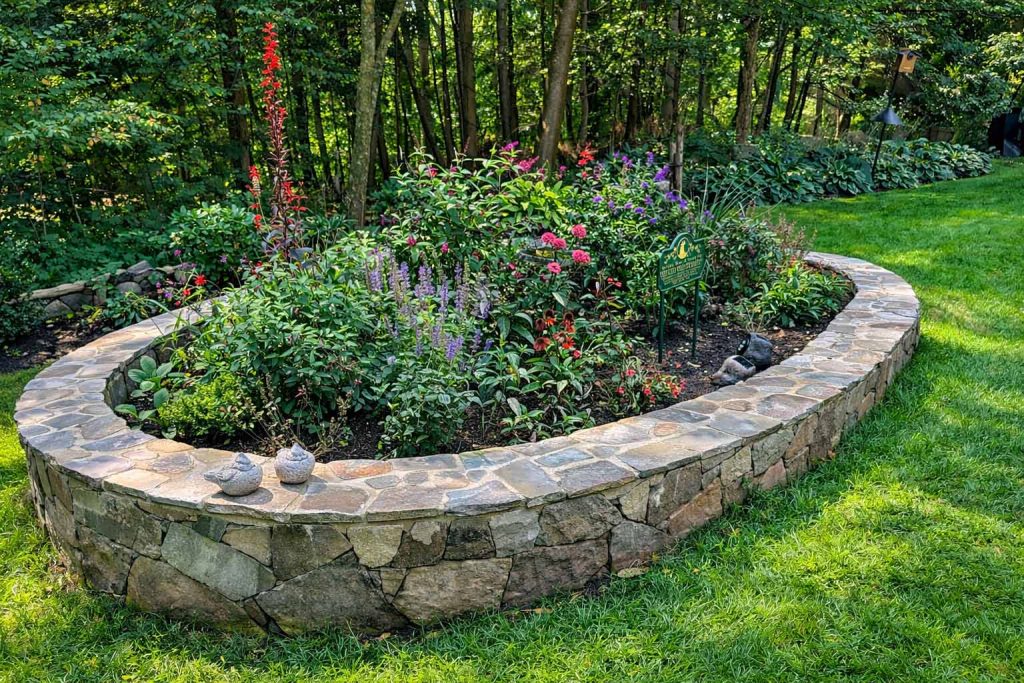
Alicia’s garden. Note the flower beds for pollinators but also the shrubs closer to the forest and then the layers of forest in the back. It is all about leaving some wild areas for wildlife.
Supporting Birds Year-Round
Bird activity changes dramatically with the seasons, so maintaining habitat year-round is key.
In spring and summer, the yard becomes a place for nesting and raising young. During this time, pausing on our yard cleanup can make a big difference; fallen leaves and natural debris support insect life that birds depend on.
Autumn brings migration, when birds passing through are looking for quick meals and safe resting spots. The past few years we’ve gotten a variety of warblers that have passed through. It is always an exciting time for this bird lover.
Winter, which can seem quiet, is actually one of the most rewarding seasons. With fewer natural food sources available, feeders, native plants, and open water become critical resources. In the bird world, the chirp in the air is that the McLaughlin sanctuary has it all.
On snowy mornings, the yard can feel like a gathering place for the neighborhood birds. Last winter, I had 21 Eastern Bluebirds during a snowstorm. If you feed them, they will come.
Unexpected Visitors
Even with careful planning, you never quite know who might show up.
Over the years, I’ve welcomed a wide variety of species, from colorful finches, grosbeaks, warblers, owls, and woodpeckers to winter visitors that appear only in certain years.
But nothing quite compared to the excitement of hosting a Painted Bunting, an extraordinarily rare sight in New Hampshire.
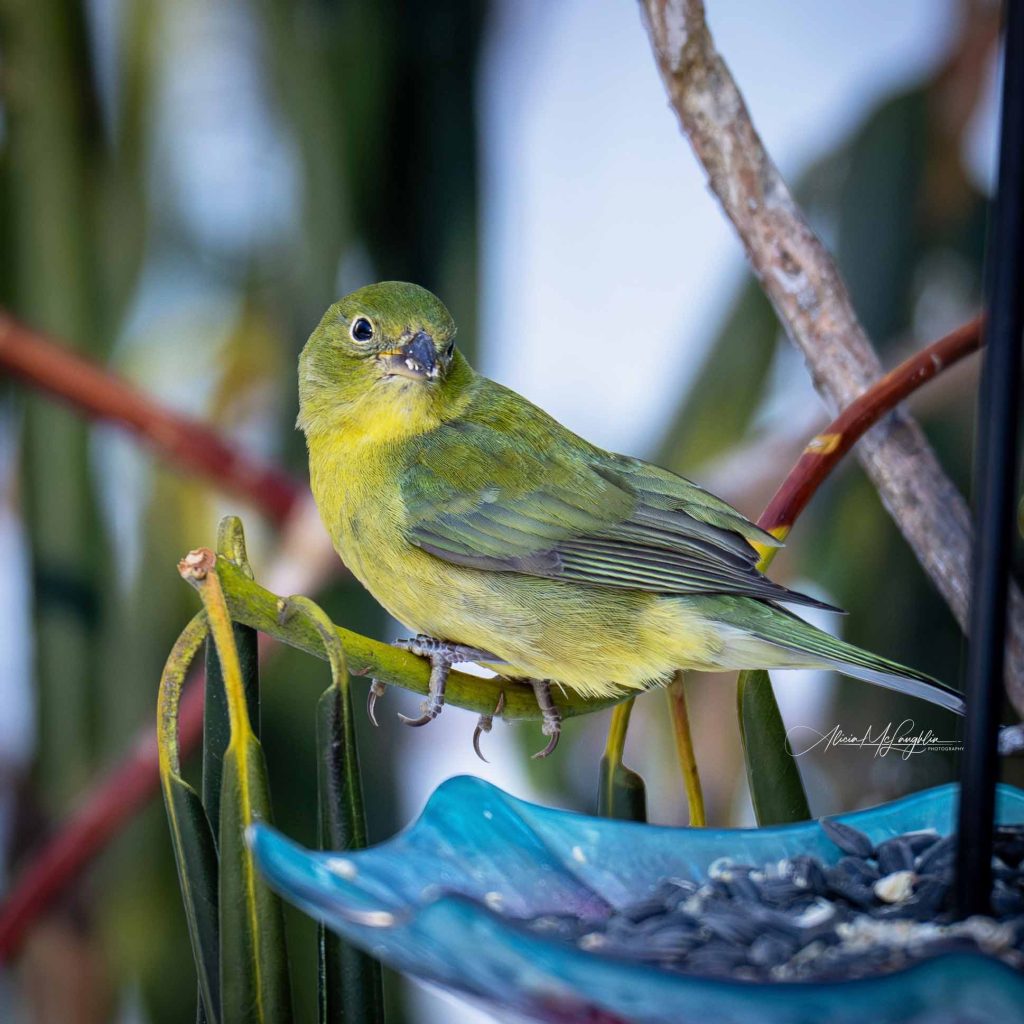
A rare bird visits Alicia’s yard! Painted Bunting by Alicia McLaughlin.
Word spread quickly through the birding community, and before long birders from around the region were coming to observe this stunning bird. Watching people experience it, some seeing the species for the very first time, was unforgettable.
The joy was contagious.
When the teams arrived during the Super Bowl of Birding and discovered that another rare species was also visiting the feeders, the excitement multiplied.
For a day, my small yard had become a destination.
The Joy of Sharing Birds
One of the most surprising parts of this journey has been how birding connects people.
Neighbors stop to ask what’s visiting the feeders. Fellow birders share tips and sightings. Events like the Super Bowl of Birding bring people together in celebration of something simple and beautiful.
What began as a personal hobby has become something much bigger, a way to contribute to the local ecosystem and share the wonder of birds with others.
Every yard has the potential to become part of a larger network of habitat.
Even small changes, adding native plants, providing water, reducing pesticides, can make a meaningful difference.
Sometimes, if you’re lucky, those changes might even invite a rare visitor to stop by.
A Backyard That Keeps Giving
The best part of creating a bird-friendly yard is that it never stops evolving.
Each season brings new activity, new species, and new moments of discovery.
You never know what might appear on the feeder tomorrow morning.
That sense of anticipation, the possibility that something extraordinary could arrive at any moment, is part of what makes birding so joyful.
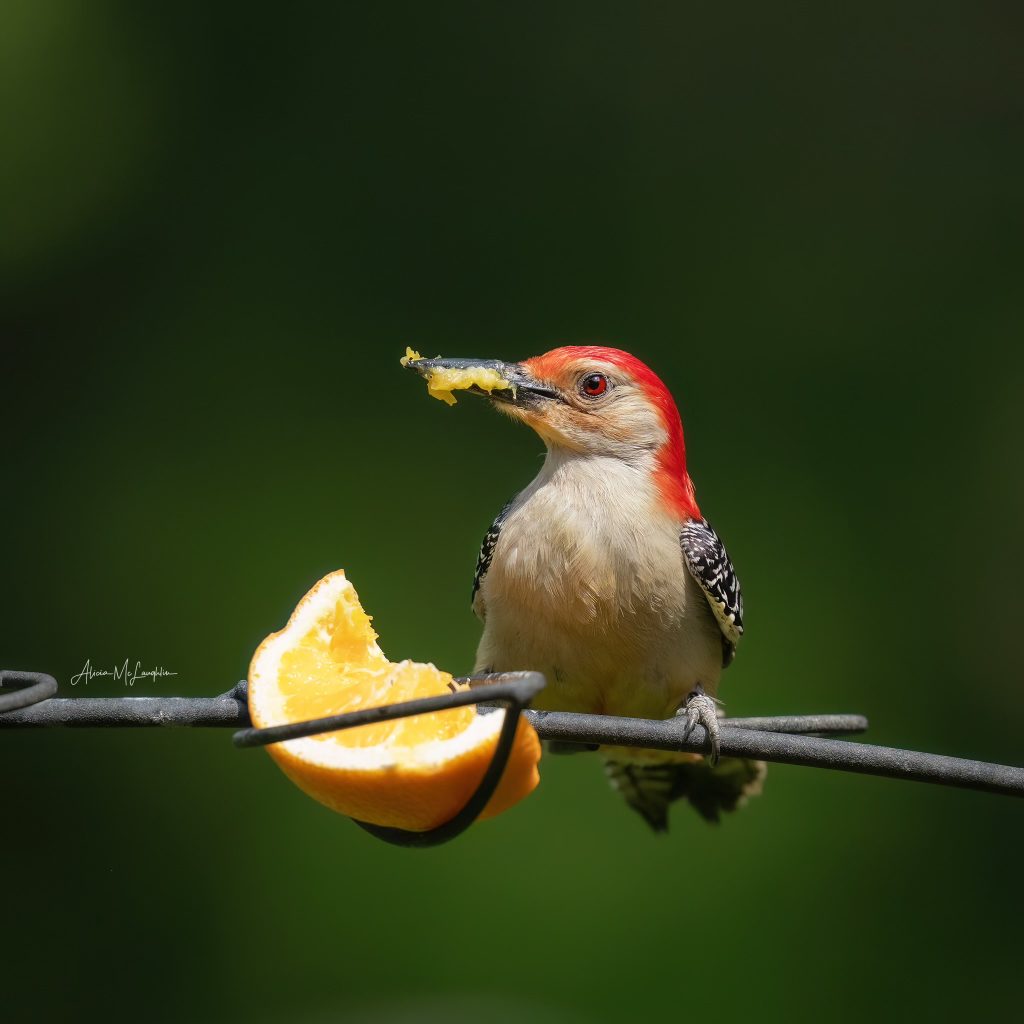
Red-bellied Woodpecker by Alicia McLaughlin at an orange feeder in the spring.