
Editor’s Note: This article was originally published in the Summer 2024 issue of New Hampshire Bird Records.
Birds’ feathers are as dazzling as they are diverse. The oil-slick shine of a raven’s back. The orange pop of an oriole against a forested backdrop. A flash of red on the shoulders of the Red-winged Blackbird. But behind the beauty lies an intricate and fascinating process that defines each bird’s plumage. Birds’ colors are thanks to a combination of pigments and structural features that work in harmony to create the unique appearance of every species. Many visible plumage colors result from an interaction between one or more pigments and structural characteristics. It is a world of color that goes beyond what the human eye can see, and it begins with two primary mechanisms: pigmentation and structure.
Pigmentation: Nature’s Palette
Birds’ feathers gain their hue via three categories of pigments, each responsible for different shades. These pigments come from both the food they eat and the way their bodies process natural elements.
Carotenoids, for instance, are pigments derived from plants. Found in everyday foods like carrots, pumpkins, and sweet potatoes, carotenoids are the reason birds may sport brilliant yellows, oranges, and reds. Yellow Warblers, for example, owe their striking golden feathers to the carotenoids in their diet. Plants rich in carotenoids include Cloudberry, Blueberry, Mulberry, and Elderberry. Some birds eat the plants directly, while sometimes carotenoids come from other sources. A Yellow Warbler’s carotenoids come from the insects in their diet which in turn feed on plant sources rich in carotenoids. When carotenoids are consumed during a bird’s molting period the pigment is deposited in their feathers.
Then there is melanin, the same pigment that contributes to the color of human skin. Melanin in birds gives rise to a spectrum of colors, ranging from deep blacks to rich browns and soft yellows. And besides color, melanin provides strength. Feathers that contain high concentrations of melanin are more durable and better able to withstand the wear and tear of flight. This is why birds, even those with mostly white feathers, may have black tips on their wings or tails. The areas of the wing most subject to friction are reinforced by melanin, helping to keep them strong for the long journey ahead.
The third pigment class, porphyrins, is a more elusive contributor. These pigments, a result of modified amino acids, produce colors ranging from soft pinks to deep reds and browns. Porphyrins have an added trick: they fluoresce vivid red when exposed to ultraviolet light. This characteristic is a defining feature of certain species, such as owls and pigeons, lending a mysterious glow to their feathers when seen under the right conditions. The browns in owls and grouse result from an interaction between melanin and porphyrin.
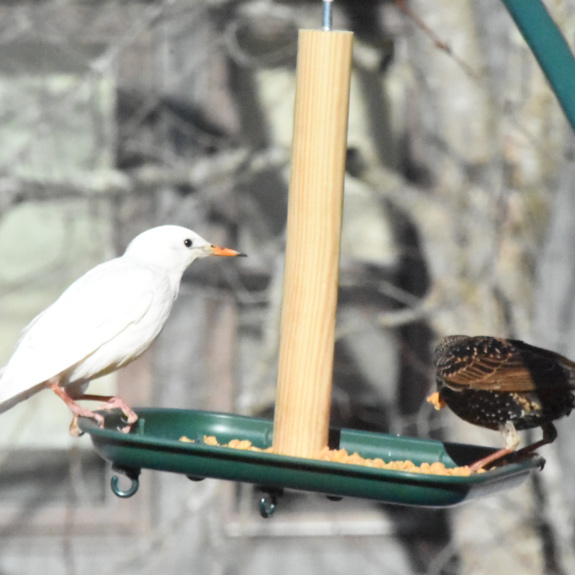
In the absence of pigment, however, feathers that reflect the full spectrum of visible light appear white. Species like the Snowy Owl and gulls boast bright white bodies, but individuals of typically colorful species can be the same white in cases of albinism or leucism, when due to genetics, a bird may lack pigment entirely or in patches.
Structural Coloration: The Magic of Light
While pigments create the foundational colors, the structure adds another layer of complexity. Some bird species have developed intricate feather structures that interact with light in stunning ways, producing colors that seem to shimmer and change depending on how the light hits them.
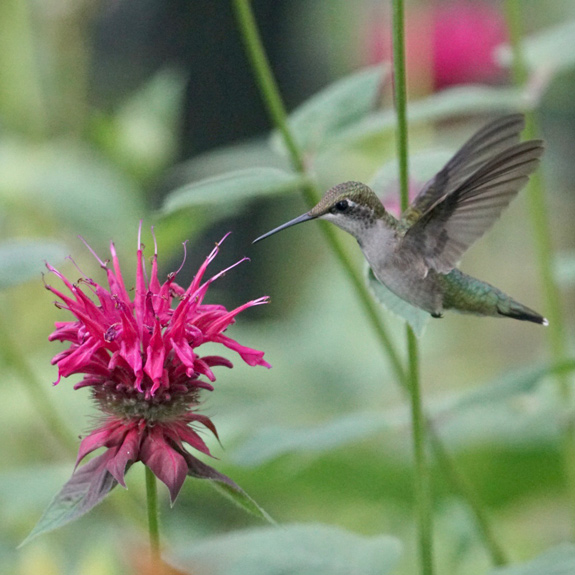
Take, for instance, the Ruby-throated Hummingbird. Its iridescent feathers are not the result of pigments but of the physical structure of the feathers themselves. Air pockets, or vacuoles, created by an organized lattice of structural proteins in the feathers act like a prism, bending and refracting light into brilliant blues, greens, purples, and violets. The effect is not a simple reflection of light, but rather the bending of light waves, causing the colors to shift depending on the angle of the light. The result is an almost magical, ever-changing display of color that seems to glow from within.
Then there are birds like the Eastern Bluebird and the Blue Jay, whose feathers appear blue not because of pigments, but because of the way light interacts with tiny air pockets in the feathers. These microscopic structures reflect blue wavelengths and absorb other color wavelengths. This type of coloration is known as structural coloration. Interestingly, when a feather from a Blue Jay is backlit or ground into powder, the blue fades, and the brownish color of the underlying melanin shows through. Blue, in this case, is not an inherent color of the feather, but the result of a fascinating interplay between light and structure.
A Hidden Spectrum: Ultraviolet Vision
Birds live in a world that is far richer in color than the one we see. While humans can perceive only a fraction of the light spectrum, many bird species can see part of the ultraviolet (UV) range, which is invisible to us. This gives them the ability to see patterns and hues that remain hidden from human eyes. Feathers that appear dull to us reflect brightly in the UV spectrum, revealing intricate patterns and vibrant details.
Some birds use UV coloration as a means of communication. Feathers that look simple and monochromatic to us may be breathtakingly colorful to a bird, and subtle patterns that escape our notice may play a key role in their behavior and interactions.
The Colorful Language of Birds
The colors of birds tell stories—of diet, survival, and attraction—and often speak of things we cannot see. Pigments, light, and structure work together in ways that create not only beauty but resilience, function, and communication.