
This past Spring, I decided to challenge myself for the birds and for my curiosity. As a student interested in technology and data, I saw an opportunity to turn my passion for birding into something more structured. Every day for the month of May, I visited the Seabrook Town Forest and documented the experience through a Substack publication, tracking daily patterns along the way during the peak month of spring bird migration. It turned out to be one of the most unforgettable experiences I’ve ever had.
My process was simple but consistent. I committed to visiting the Seabrook Town Forest every single day in May regardless of weather conditions or how busy I may have been. I tracked each visit using eBird checklists, took field notes, and captured as many moments as I could with my camera. Every evening, I wrote a Field Focus entry on Substack, reviewing the day’s highlights, patterns I noticed, and reflections on what the birds were telling me. It became part routine, part meditation, and a rewarding way to build data, memories, and connection.
Before May even began, I had already seen signs that this spring would be something special. Throughout April, I made several visits to the Town Forest, and just one week before the challenge started on April 25, I experienced one of the most unusual yet productive mornings I’ve ever had there. Early-arriving warblers were already moving through, including Prairie Warbler, Blue-winged Warbler, and six Black-and-white Warblers. As if that wasn’t enough, a Little Blue Heron dropped into the pond and landed right in front of me. It felt like the first clear sign that May would be unforgettable.
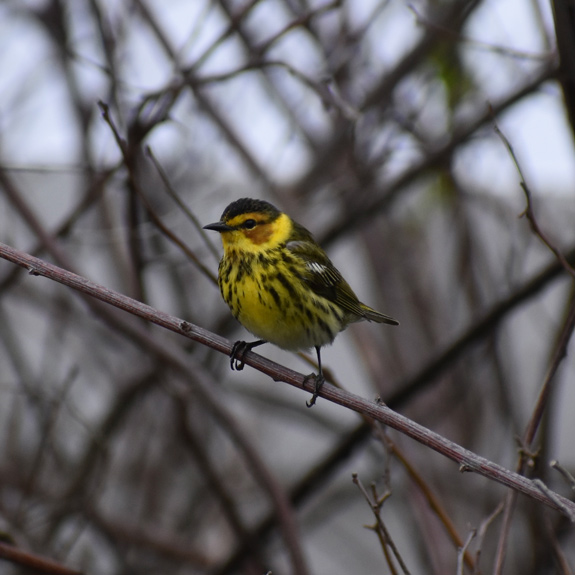
After starting the month with a few steady days of birding, May 4 arrived. The day that truly marked the peak of what seemed to be an early migration. I arrived around 11:30 am, delayed by morning rain, and on the way received a text from the NH Rare Birds Group that a fallout was underway along the seacoast. I knew instantly what kind of day I was walking into. When I reached the trail, the trees were alive and the air was filled with movement. From Northern Parula to Black-throated Green Warblers and everything in between, the forest was buzzing with birdsong. After a four-hour walk back and forth through the Town Forest, I met up with many other birders and spent a good part of the day sharing sightings and searching for migrants together. By the end, I had already surpassed my single-checklist goal of 60 for the month with 64 species, highlighted by Cape May, Nashville, and Magnolia Warblers. That day alone also pushed my warbler total to 18 of my 20-species goal. May 4 Field Focus Post
On May 12, after a busy morning, I decided to grab a late lunch and texted my girlfriend to see if she wanted me to bring her something at work. I left the house and drove less than a minute before I realized I hadn’t even been to the Town Forest yet. I figured I could always go back and grab my gear and go after dropping off her food, but something told me to grab it now. I pulled into a neighborhood on my street to make a quick loop, and that’s when I saw a sparrow-sized bird with white outer tail feathers hop from the road into someone’s yard. This was definitely a bird I had never seen before. By the time I looped back, it had vanished.
On my way to deliver lunch, I kept turning the sighting over in my head, more and more convinced it might have been a Lark Sparrow, and hoping it would still be there when I returned. I rushed home, grabbed my gear and headed right to where I had seen the bird. After walking the loop a few times with no luck, I decided to stick around in the exact place I saw it, hoping that it would show up. That’s when I heard an unfamiliar song come from a bush behind someone’s house. Merlin Sound ID didn’t recognize it, so with my assumption that it was a Lark Sparrow, I quietly played its song up to my ear. The song was identical, and at that moment, the bird flew over my head and landed in a yard beside me. It was indeed a Lark Sparrow, a vagrant species here in NH, more common to be seen in the fall than the spring but rare nonetheless. Friend and respected birder Jim Sparrell said, “It seems like finding a good bird is a lot of luck, and knowing it when you see it.”, I couldn’t agree more. This miracle bird cost me a visit to the Town Forest that day, but it was well worth it. May 12 Field Focus Post
After a couple of more thrilling weeks filled with warbler fallouts, a Big Day, and a community field trip through the Town Forest, the month ended on a quieter note. On May 31, I was joined by my brother for my final walk of the challenge. It was a beautiful afternoon, sunny but comfortable, with 39 species of birds, a resting Painted Turtle, and three baby groundhogs. At this point in the month, the birds were quiet, and the slower pace of birding really allowed me to take it all in. It was a calm, peaceful close to an unforgettable month and it felt like the perfect way to turn the page.
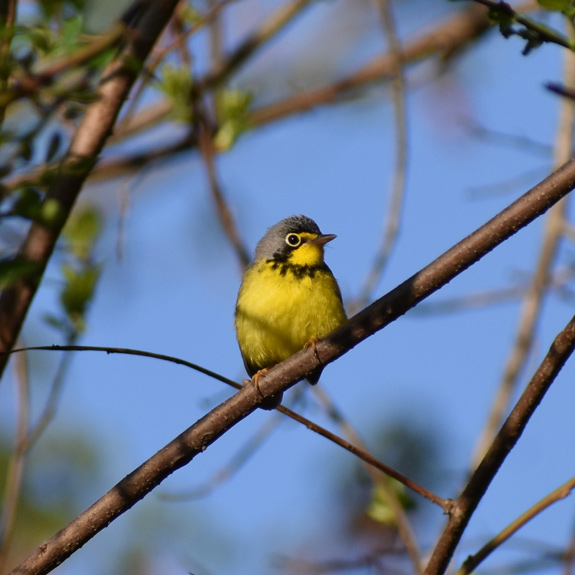
This was without a doubt my best month of birding since I began in 2022. I couldn’t have enjoyed this challenge more, birding in downpours, meeting new people, and sharing this place with the birding community. This experience pushed me to grow and mature as a birder in ways I had not expected. By the end of the month, I had tallied 111 species at the Seabrook Town Forest, surpassing every goal I had set for myself. With how rewarding it was during spring migration, I am already planning to do it again this October for fall migration. My goal is to make this a yearly tradition, using the data from both spring and fall challenges to compare migration patterns at Seabrook Town Forest and contribute to a broader understanding of migration in New Hampshire. In the end, it’s more than just checklists, it’s about deepening our connection to the birds, the habitat, and each other. I look forward to seeing what October will bring and to sharing those moments once again with the birding community.
Check out Ashton’s article on how to bird Seabrook Town Forest.